Expect roughly $700 to $1,600 per opening installed for a standard vinyl replacement unit. That is where the window replacement cost in Simcoe County sits for most homes built between 1960 and 2010, and a whole-house project of 12 to 16 openings usually lands between $10,000 and $26,000 before rebates. Large picture windows, bay and bow assemblies and full-frame brick-to-brick work run above that band.
Two quotes for the same house can differ by 40 percent without either one being wrong. They are usually pricing different work. Here is how the number is built, what legitimately moves it, and how to read a quote so you are comparing the same job.
What you are actually paying for
A line on a window quote is a finished, sealed, trimmed opening, not a window in a box. On a typical replacement job the money splits roughly like this.
- The unit itself, 45 to 60 percent. Frame, sash, sealed glass unit, hardware, screen, factory finish.
- Labour, 20 to 30 percent. Removing the old window, setting, shimming, levelling and fastening the new one square.
- Sealing and finishing, 10 to 20 percent. Low-expansion foam, backer rod, exterior caulking, aluminum capping or new brickmould, interior casing.
- Disposal and overhead, 5 to 10 percent. Old sash and glass hauled away, drawings when an opening changes size, warranty administration.
If finishing does not appear anywhere on the quote, ask where it went. Unfinished exterior trim is the most common reason a cheap job turns expensive two winters later.
Typical installed price by window type
These are 2026 market ranges across Simcoe County for a supplied-and-installed ENERGY STAR unit, before rebates and before tax. Your own numbers depend on size, access and the condition of the opening.
| Window type | Typical installed range (CAD) | What drives the spread |
|---|---|---|
| Slider, up to about 1200 x 1200 mm (4 x 4 ft) | $600 – $1,100 | Glass area, double vs triple glazing |
| Casement | $750 – $1,500 | Multipoint hardware, compression seal, screen |
| Awning | $700 – $1,300 | Width limits, operator quality |
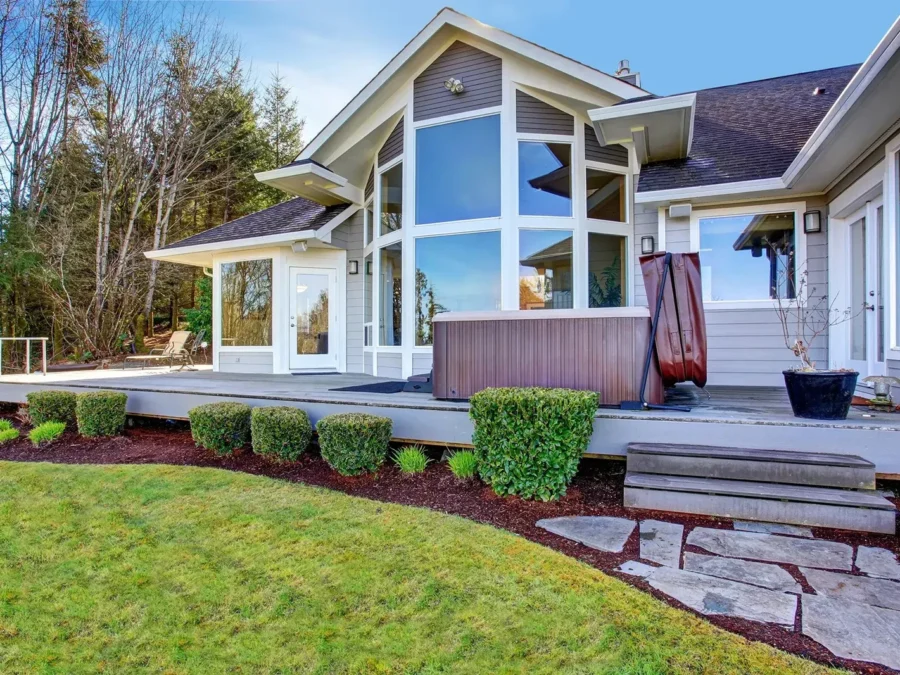
| Picture / fixed, large | $900 – $2,200 | Glass weight, tempered glass, extra hands or lift |
| Bay or bow | $2,500 – $6,000 | Seat board, roof, header support, insulation |
| Basement egress, new or enlarged opening | $3,000 – $6,000+ | Concrete cutting, lintel, window well, permit |
The factors that move the number most
Installation method
Retrofit, also called insert installation, keeps the sound existing frame and fits the new unit inside it; the exterior is finished with bent aluminum capping. Full-frame, or brick-to-brick, strips the opening back to the rough framing and rebuilds the jamb, insulation, air seal and brickmould.
Full-frame typically costs 15 to 20 percent more per opening and takes about twice as long on site. It is the only honest option when the sill is rotted, the frame is racked out of square, or you want a continuous air barrier and insulation across the full wall depth.
Glass package
Low-E coating, argon fill and a warm-edge spacer are the baseline, not an upgrade. Moving from double to triple glazing adds roughly $120 to $180 per window, or 20 to 30 percent on smaller units.
ENERGY STAR in Canada has used a single national standard since 2020, so there are no climate zones to argue about. Certification requires a U-factor of 1.22 W/m²·K (0.21 Btu/h·ft²·°F) or lower, or an Energy Rating of 34 or higher. The Most Efficient tier asks for U-factor 1.05 or lower, or ER 40 or higher. Anything below ER 34 has no business in a Simcoe County wall. Our guide to energy-efficient windows for Barrie winters covers how those numbers behave in practice.
Size, shape and operation
Price scales with glass area, not with window count. A casement costs more than a slider of the same size because of the hardware and the compression seal. Arched heads, transoms and mulled combinations add shop time. Tempered or laminated safety glass, required where the Ontario Building Code calls for it including glazing in and beside entrance doors, is priced in rather than optional.
Access and site conditions
Second-storey openings over a deck, walkout basements, stone and stucco facades and cathedral-height picture windows all add labour. Lift or scaffold time should show up as a real line, not disappear into a round number.
What is specific to Simcoe County
- Allandale and east-end Barrie bungalows and side-splits, 1960s to 1980s. Original wood frames are often soft at the sill after fifty winters. Budget for full-frame on at least the exposed elevations.
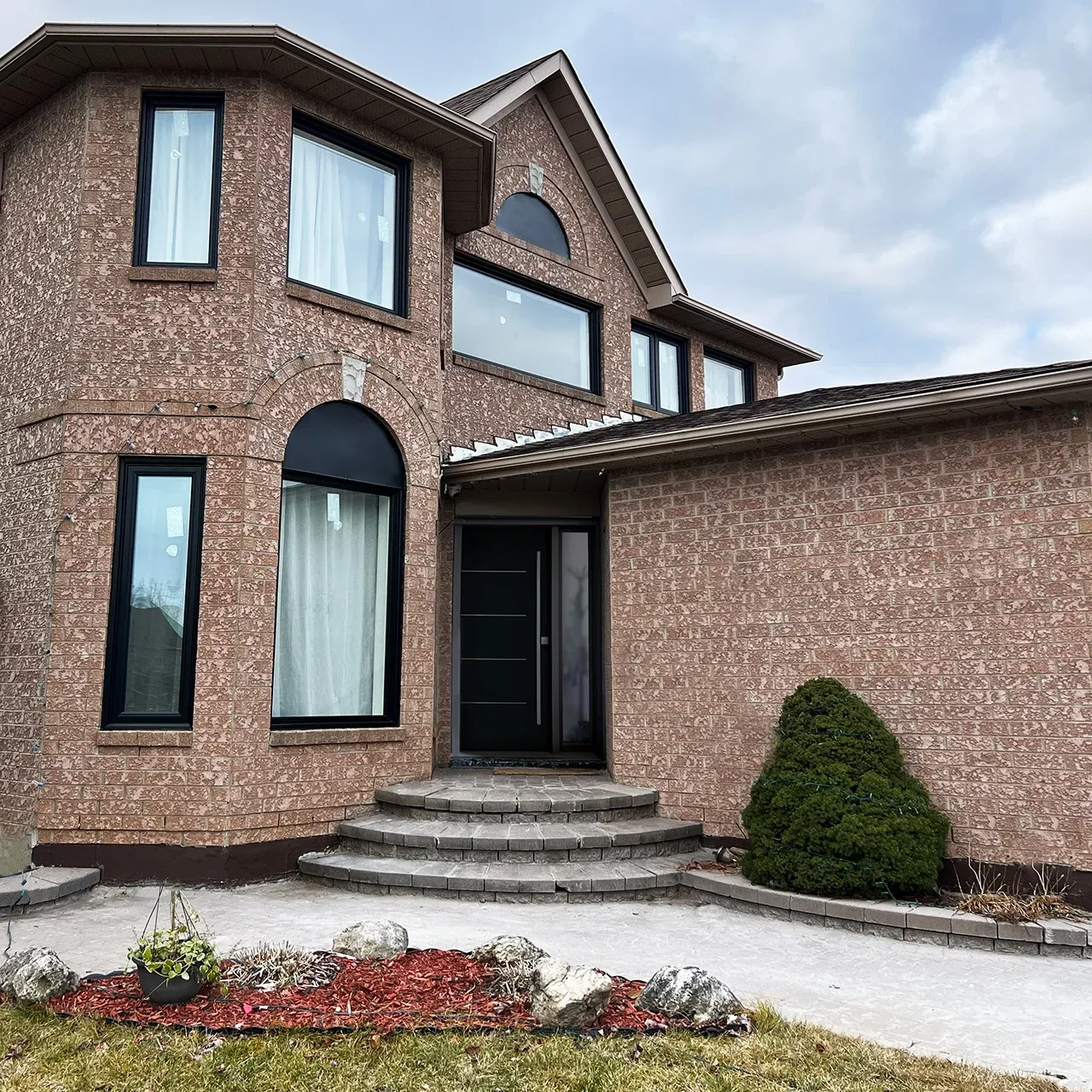
- South Barrie, Innisfil and Bradford subdivisions, 1995 to 2010. Early vinyl and aluminum-clad units with failed seals. Frames are usually square and sound, so retrofit is the sensible call and pricing stays at the low end of the table.
- Orillia and Midland century homes. Non-standard openings, deep casings and cast sills. Everything is custom-sized, which adds both cost and lead time.
- Wasaga Beach, Collingwood and the Kempenfelt Bay shoreline. West-facing walls take driven snow and sustained wind off Georgian Bay and the bay. Better weatherstripping, triple glazing and careful capping earn their keep here in a way they do not on a sheltered lot east of Highway 400.
- Converted three-season cottages around Lake Simcoe. Single glazing and undersized headers are common, so structural work often appears on the quote.
How to read a quote, line by line
Ask for these in writing before you sign. A contractor who will not put them on paper is telling you something useful.
- Manufacturer, series and model per opening, not “premium vinyl”.
- Glass build spelled out: Low-E type, argon or krypton, spacer type, tempered where required.
- U-factor and ER for each unit, plus the ENERGY STAR certification.
- Install method per opening: retrofit or full-frame.
- Exterior finish: aluminum capping in a named colour, or new brickmould.
- Interior finish: who returns the drywall, who supplies and installs casing, who paints.
- Removal and disposal of the old units.
- Warranty split: product term and installation term, and whether either transfers if you sell.
- Deposit percentage and payment schedule.
- HST shown as its own line.
We name the installers on our paperwork because the crew is ours, with no subcontracting, and the installation warranty is written by the same company that supplies the product. Ten-plus years of Simcoe County openings is what makes a fixed price possible before the wall is open.
Rebates and tax in 2026
Short version: the large federal grant is closed, and one provincial program still pays.
- Canada Greener Homes Grant stopped accepting new applications on 31 December 2025, and the interest-free Greener Homes Loan ended on 1 October 2025. Ontario’s Home Efficiency Rebate Plus (HER+) is no longer taking new applicants either. Ignore any quote that still counts on them.
- Home Renovation Savings Program, run by Save on Energy with Enbridge Gas, pays $100 per rough opening for ENERGY STAR certified windows and doors. It works through the bundle route: a pre-upgrade home energy assessment, itself rebated up to $600, plus at least two eligible upgrades. Confirm current terms on the program site before signing, because the eligible-measure list changes.
- Canada Greener Homes Affordability Program is an $800 million federal program delivered by the provinces for low- to median-income households, using no-cost direct installation. Eligibility and the measure list are set provincially.
- HST at 13 percent is the last big number on the page. TopView covers the HST on window and door replacements, so on a $20,000 project that is $2,600 that stays in your account.
If you are spreading the cost, our breakdown of window and door financing in Ontario covers what lenders and dealers currently offer.
Five things that quietly inflate a quote
- “Starting at” pricing built on the smallest window in the house.
- A deposit above one third of contract value on a standard ordered job.
- Discounts that expire at the end of the sales visit.
- Glass described only by brand name, with no U-factor or ER anywhere.
- Interior finishing quietly assigned to the homeowner in the fine print.
Your next step
Get two or three quotes measured on site rather than over the phone, then line them up against the ten points above. Browse styles and glass options on our replacement windows page, or book a measure in Barrie, Innisfil, Orillia, Bradford, Wasaga Beach or anywhere across Simcoe County and York Region at (647) 448-8439 or 1-800-917-0317.