
A proper winter window and door maintenance round takes about 90 minutes for an average Ontario house, and October is the month to do it — while exterior sealant is still warm enough to cure and the hardware is dry enough to clean. Three jobs deliver most of the benefit: clean and lubricate every moving part, check each weatherseal for real compression, and clear the weep holes so meltwater drains instead of freezing inside the frame.
Skip it and the failures are predictable. In Barrie, Innisfil and the lake-effect belt east of Highway 400 we get the same three January calls every year: a casement crank that seized because the operator was never cleaned, a front door that will not latch because the hinge screws pulled out of a swollen jamb, and a garage door whose brittle bottom seal let a drift build up inside the garage. All three are 15-minute jobs in October.
When to do what
| Timing | Task | Why then |
|---|---|---|
| Early October | Exterior caulking and sealant repairs | Most exterior sealants need roughly 5 °C or warmer to cure properly |
| Mid October | Wash frames and tracks, lubricate hardware, adjust strikes and thresholds | Components are dry and easy to clean; adjustments hold before the frame chills |
| Late October | Weatherseal inspection, weep holes, garage door seal and safety tests | Last comfortable window before the first hard frost |
| November | Swap storms and screens, set the humidistat for winter, place a hygrometer | Humidity control has to be in place before the first cold snap |
| January thaw | Re-check weep holes and door thresholds for ice | A freeze-thaw cycle is when trapped meltwater does its damage |
| March | Repeat the lubrication round, note anything that stuck all winter | Road salt and grit have to come off before spring |
Windows: the fall walk-around
Weatherstripping
Close and lock each sash, then slide a business card between the sash and the frame. If it moves freely along a run, the seal is not compressing. Look for EPDM or foam that has flattened, torn at the corners, or pulled out of its kerf. On casement and awning windows, check that the compression seal contacts evenly around all four sides — uneven contact usually means the hinge or the keeper needs adjusting, not that the seal is worn.
Hardware and locks
Operate every window fully. A crank that binds is almost always a dirty operator arm or a worn gear, not a broken window. Clean the arm track with a dry cloth before you lubricate anything — lubricant applied over grit accelerates wear. Tighten loose keeper screws and confirm each multi-point lock throws all its cams, because on a casement the lock is what pulls the sash into the seal.
Weep holes
Slider and picture window frames drain through small slots on the exterior sill. Vacuum them out and flush with a cup of water. Blocked weeps hold water in the frame, and when it freezes it can crack the sill and push the glazing bead. Never caulk a weep hole shut — this is one of the most common self-inflicted problems we find.
Caulking, capping and glass
Walk the exterior. You are looking for split sealant at the brickmould, gaps where aluminum capping meets the frame, and lifted joints at the head. Clean Low-E glass with a soft cloth and a mild solution only. Abrasive pads, razor blades and ammonia-heavy cleaners damage coatings and are excluded from nearly every glass warranty. While you are at the glass, note any haze between the panes — our guide on reading winter window condensation explains what that means.
Entry and patio doors
- Door sweep and threshold. Most adjustable thresholds have screws under caps along the sill. Raise until the sweep contacts without dragging — you should feel resistance closing the door, not fight it.
- Hinge screws. Replace one screw per hinge with a 75 mm (3 in) screw that reaches the framing. This is the single fastest fix for a door that drops and stops latching.
- Strike plate alignment. If the latch scrapes, the door has moved. File or shim the strike now; a door that will not close fully has no seal at all.
- Multi-point hardware. Lift the handle and throw the lock while the door is open. Every hook and roller should extend smoothly. Lubricate the rollers and keeps, not the lock body.
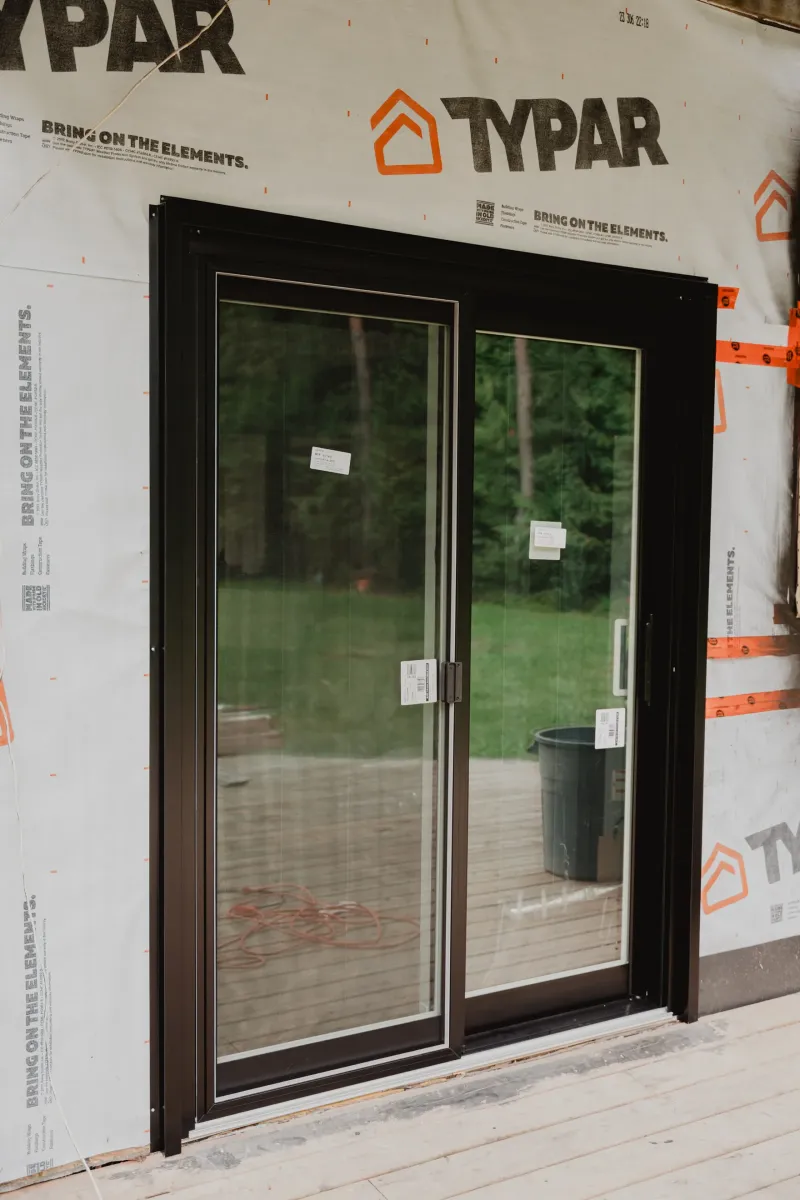
- Sliding and French patio doors. Vacuum the track — grit is what destroys rollers. Check the interlock stile seal where the panels meet, and confirm the sill drains. Details on the systems we install are on our patio and garden doors page.
- Basement bedroom windows. If a window serves as egress, confirm it still opens from inside without tools. The Ontario Building Code requires an unobstructed opening of at least 0.35 m² with no dimension under 380 mm — a swollen sash or an added security bar can quietly put you offside.
Garage doors: the biggest hole in the envelope
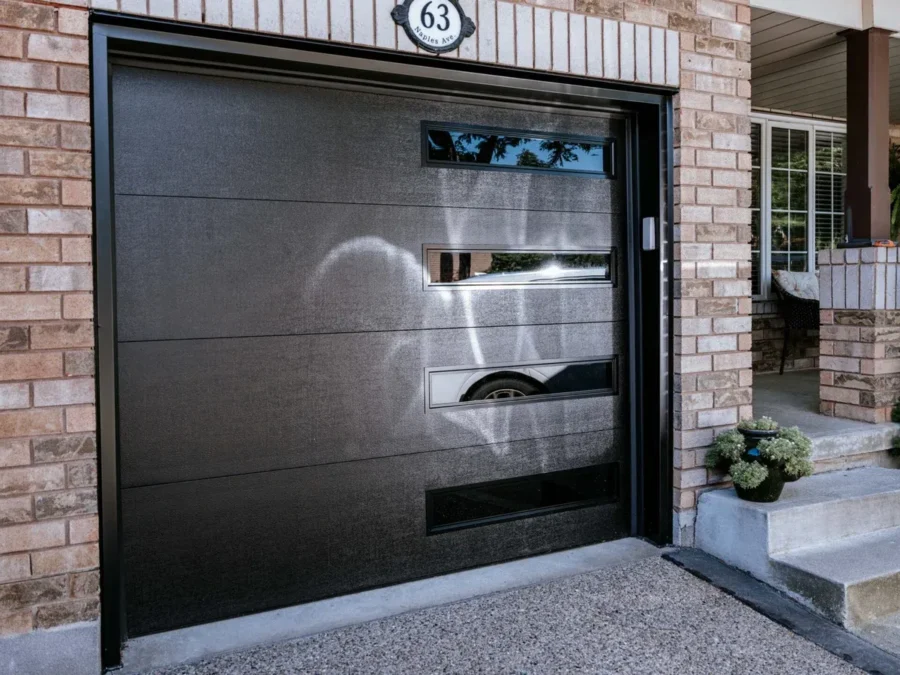
An attached garage door is usually the largest single opening in the building, and it is where most of the winter heat loss and drifting snow comes from. Five checks:
- Bottom seal. Close the door and look for daylight. A seal that has gone hard or cracked will not conform to an uneven slab. Replacement bulb seals slide into the retainer and are a genuine homeowner job.
- Perimeter stop moulding. The vinyl stop along the jamb should press against the door face along its full height.
- Rollers, hinges and bearings. Wipe, then apply white lithium grease or a purpose-made garage door lubricant to the rollers and hinge pivots. Keep it off the tracks themselves — tracks should be clean and dry.
- Safety tests. Photo eyes should be mounted about 150 mm (6 in) above the floor and aligned so the indicator lights stay steady. Then lay a 38 x 89 mm (2×4) flat in the door path and close: the door must reverse on contact. If it does not, the opener needs service before winter.
- Springs, cables and drums. Look, do not touch. Frayed cable or a gap in a torsion spring coil is a service call, full stop.
If your door is uninsulated steel, the fall inspection is also the moment to price the upgrade. The insulated doors we install are rated R-12 and above, which changes what an attached garage does to the rooms above it.
What to lubricate with — and what will wreck the hardware
| Component | Use | Avoid |
|---|---|---|
| Vinyl sash tracks, jamb liners, slider rollers | Dry silicone spray, applied to a cloth then wiped on | Oil-based sprays — they hold grit and stiffen in the cold |
| Casement and awning operators, hinges | Dry silicone, or light machine oil if the manufacturer specifies it | Heavy grease that thickens below -20 °C |
| Deadbolts and lock cylinders | Dry graphite or PTFE powder | Any wet lubricant — it gums, collects dust and freezes |
| Multi-point door hardware | Silicone on rollers, hooks and keeps | Solvent sprays that strip the factory grease from the gearbox |
| Garage door rollers, hinges, bearings | White lithium grease or garage-door-specific lubricant | Grease on the tracks; anything on nylon roller wheels’ contact face |
| Rubber weatherstripping and bulb seals | Silicone spray or a rubber conditioner | Petroleum products — they harden and crack EPDM |
One clarification worth making: WD-40 is a water-displacing solvent, not a long-term lubricant. It will free a stuck part once, but it strips the factory grease and leaves the component drier than it was, and the residue collects dust. Use it to clean if you must, then lubricate properly afterward.
Five habits that quietly void a warranty
- Razor blades and abrasive cleaners on Low-E glass. Coating damage is almost universally excluded.
- Aftermarket film or tint on a sealed unit. It changes the thermal load on the glass and most manufacturers exclude stress cracks and seal failure that follow.
- Painting vinyl frames a dark colour. Dark finishes drive up surface temperature and can warp the profile; this voids frame coverage on most vinyl products.
- Caulking weep holes shut. Blocked drainage causes exactly the water damage the warranty then declines to cover.
- Drilling the frame for security bars, A/C brackets or blind hardware, and repairs by anyone other than an approved installer.
Some manufacturers also require registration within a set period after installation. Find your paperwork now rather than in January — and keep the installation invoice, because product and workmanship coverage are usually separate documents.
Winter-specific: ice, salt and snow
- Never chip ice off a threshold or sill with a metal tool. Warm water and patience; a scratched aluminum sill corrodes.
- Keep de-icing salt away from door sills and thresholds. Sand or a chloride-free product is safer for aluminum and for the concrete near a patio door.
- Do not let snow bank against a garage door or drift onto a basement window well — sustained load bends panels and blocks egress.
- During a thaw, clear the sills so weep holes can actually drain before the next freeze.
- Check frame corners for frost after a deep-freeze week. Frost inside the frame is air leakage, and it is worth a service call rather than a spring project.
Maintenance or replacement?
Maintenance fixes hardware, seals, drainage and alignment. It does not fix a failed sealed unit, a rotted wood jamb, an out-of-square opening or a frame that was never air-sealed properly at installation. If you are seeing drafts you cannot trace to a seal, condensation that persists at sensible humidity, or operating problems on more than half your windows, you are into replacement territory.
On costs: Ontario’s Home Renovation Savings Program, run by Enbridge Gas with Save on Energy, currently offers $100 per rough opening for ENERGY STAR certified windows and doors. The federal Canada Greener Homes Grant closed to new applications at the end of 2025 and the associated Greener Homes Loan ended on 1 October 2025, so ignore any quote that still counts on them. Program terms change, so confirm what is live before you budget — our guide to rebates and financing in Ontario tracks the current picture.
Your next step
Work the checklist in one October afternoon and write down anything you could not resolve. That short list is exactly what a technician needs to quote accurately, and it is far cheaper to act on in October than in a January cold snap.
TopView Windows & Doors has served Simcoe County and York Region for more than ten years with our own installation crews — no subcontractors — and we warranty both the products and the workmanship in writing. We currently cover the HST on window and door replacements. Call (647) 448-8439 or 1-800-917-0317, or email info@topviewwindows.com to book an assessment before the first frost.