
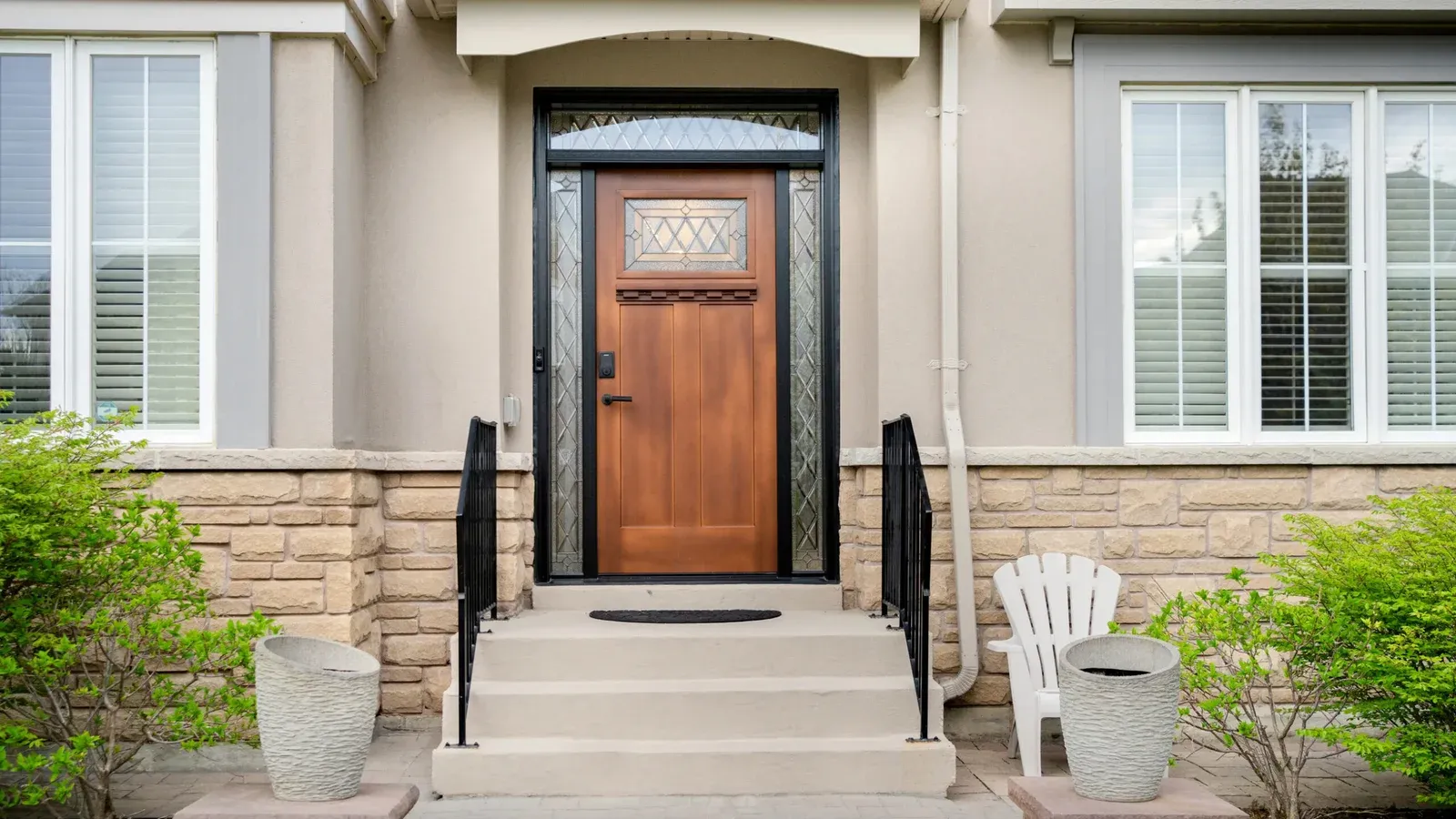
Fibreglass doors: wood grain that survives a Canadian year
A fibreglass skin does not rust, does not swell and does not need refinishing every third spring. The moulded grain takes stain like oak, the core runs to R-11, and the slab stays flat through the 60-degree swing between a January night and an August afternoon. It is the door we fit most often on exposed elevations.
- Up to R-11 core
- Stainable wood grain
- We cover the HST — 13% off
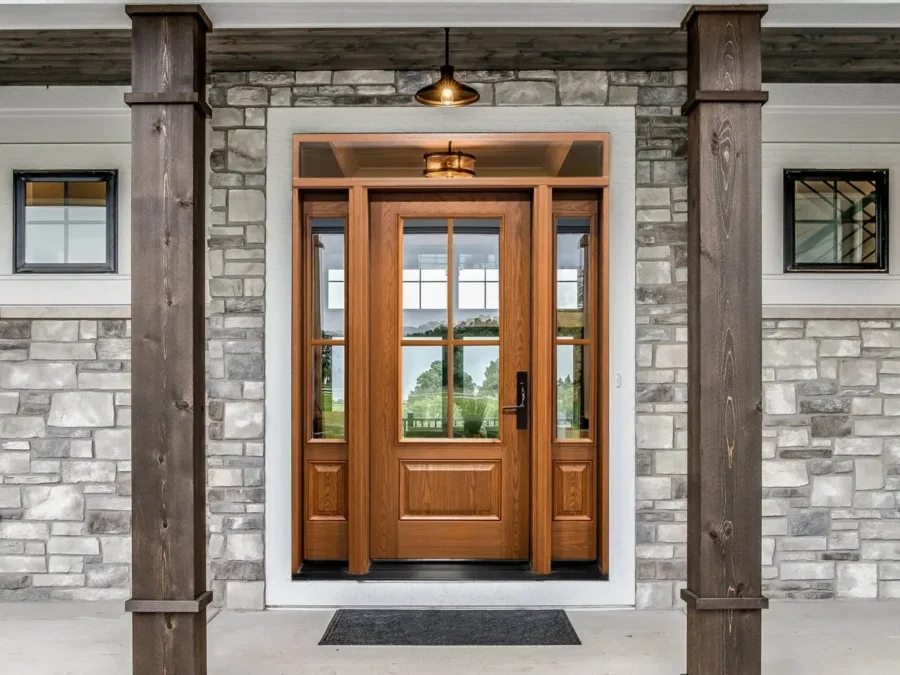
The door that ignores the weather
Fibreglass is a composite skin over a polyurethane core: no metal to conduct cold, no timber to drink water. It handles direct sun without cupping, salt spray without corroding and a wind-driven January rain without swelling — which is why it ends up on the west and south walls of most houses we quote.
- Core rated to R-11 — the warmest slab of the three materials we fit
- Moulded grain in oak, mahogany or fir, stainable rather than only paintable
- No rust, no rot, no seasonal swelling: dimensionally stable across the full year
- Holds its finish on a south or west wall where dark steel would bake
- Composite frame and adjustable sill, same multi-point locking as our steel doors
- R-11 core insulation
- 0 refinishing seasons lost
- 25+ yrs typical service life
Grain, glass and colour
Every unit is made to the measured opening. Stain and paint are factory-applied, so the finish cures properly instead of drying on your porch.

Craftsman with grain
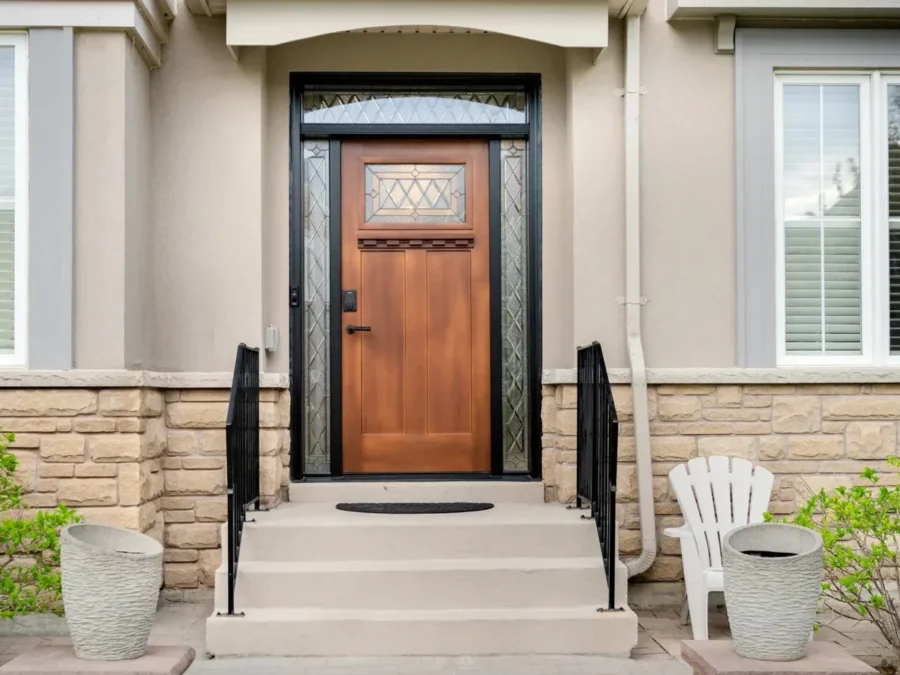
Deep oak grain, shelf and dentil detail, upper lites. The face that suits century homes around the downtown core without the maintenance of real timber.
Full-lite glass
Sealed triple-glazed decorative glass in a stained frame. Brings daylight into a dark hall while keeping the whole-door ER where it needs to be for the rebate.
Smooth painted
The grainless version: a flat skin finished in a solid colour. Modern, low-key and the easiest of the three to match to new windows and trim.
With transom above
Door and transom built as one insulated unit. The header above the opening is where heat usually escapes; a factory-sealed transom removes that joint entirely.
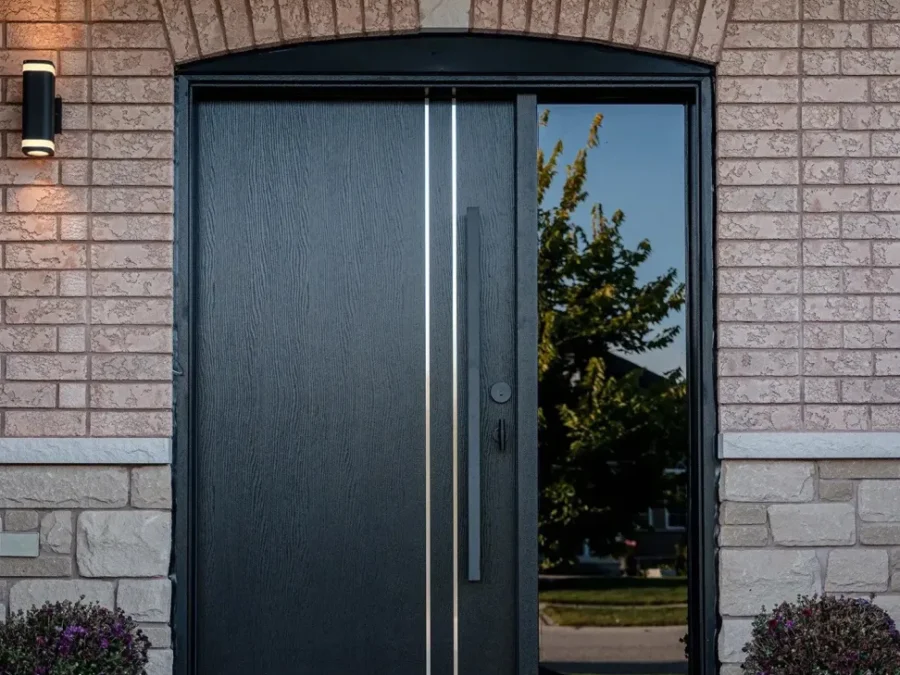
Forty-three fibreglass designs
Every design below is a full catalogue page: tap a card to see the door in place, the finishes it comes in and the popular sidelite and double-door configurations.
-

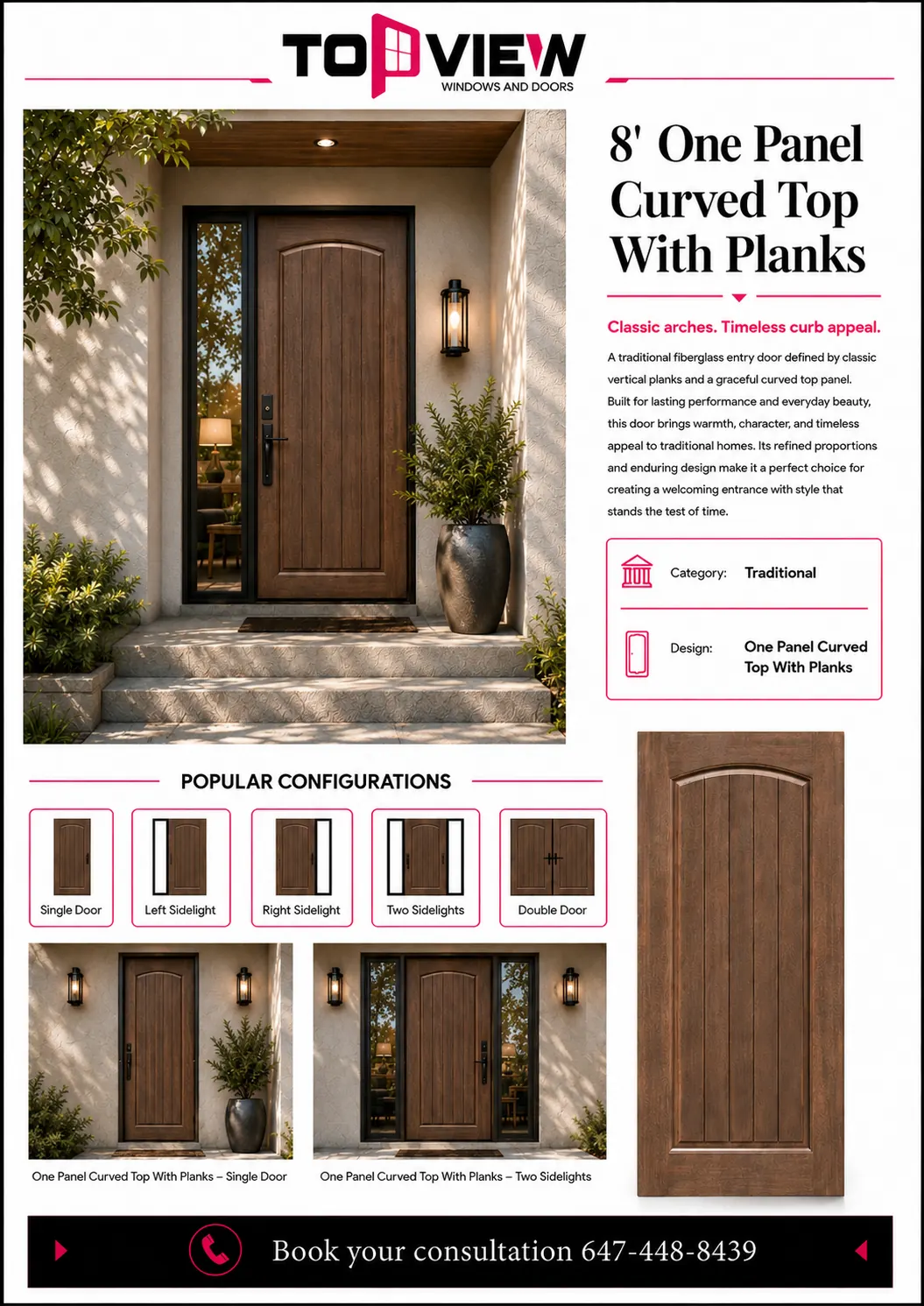
8' One Panel Curved Top With Planks
Classic arches. Timeless curb appeal. A traditional fiberglass entry door defined by classic vertical planks and a graceful curved top panel.
-

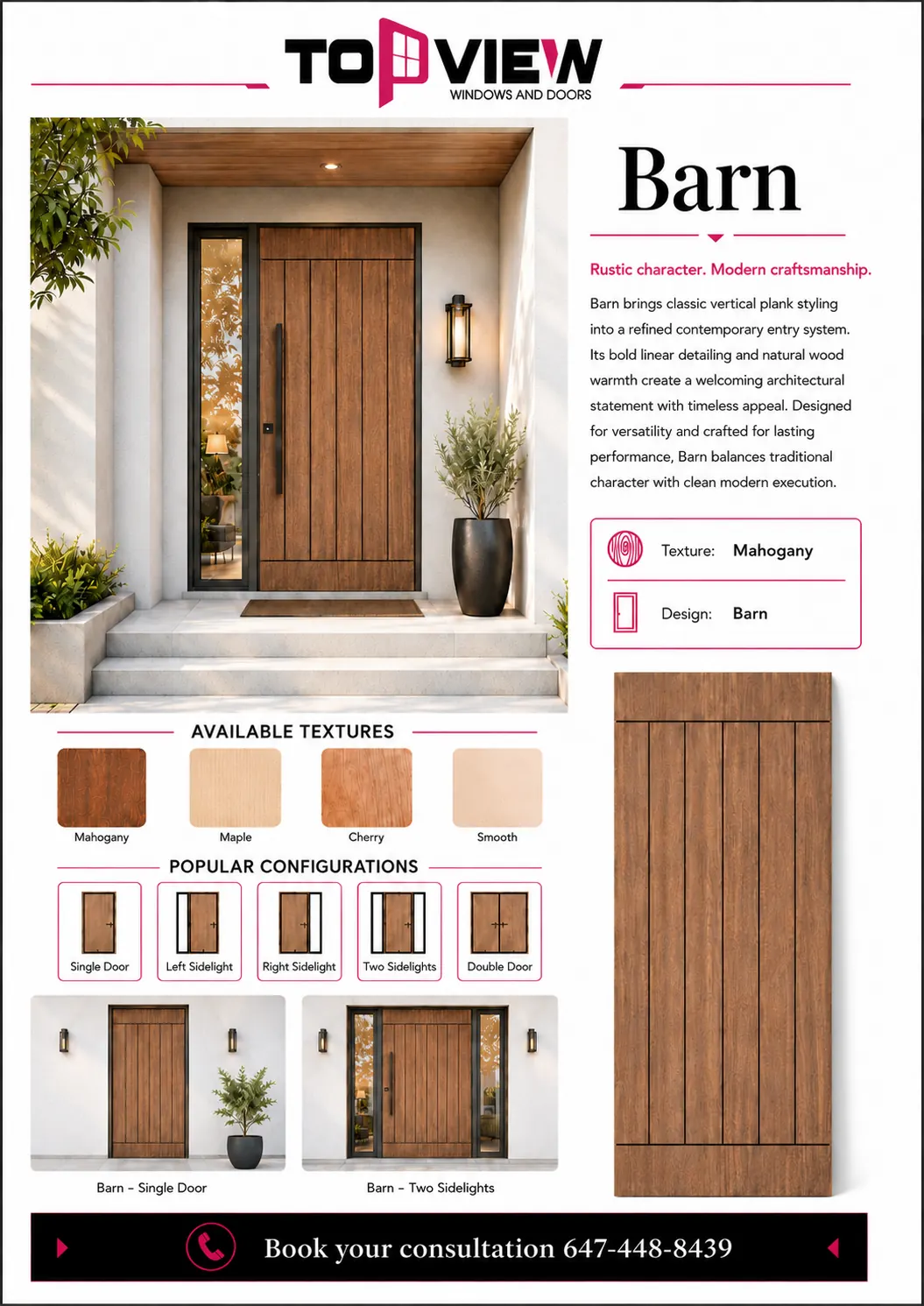
Barn
Rustic character. Modern craftsmanship. Barn brings classic vertical plank styling into a refined contemporary entry system. Its bold linear detailing and natural wood warmth create a welcoming architectural statement with timeless appeal.
-

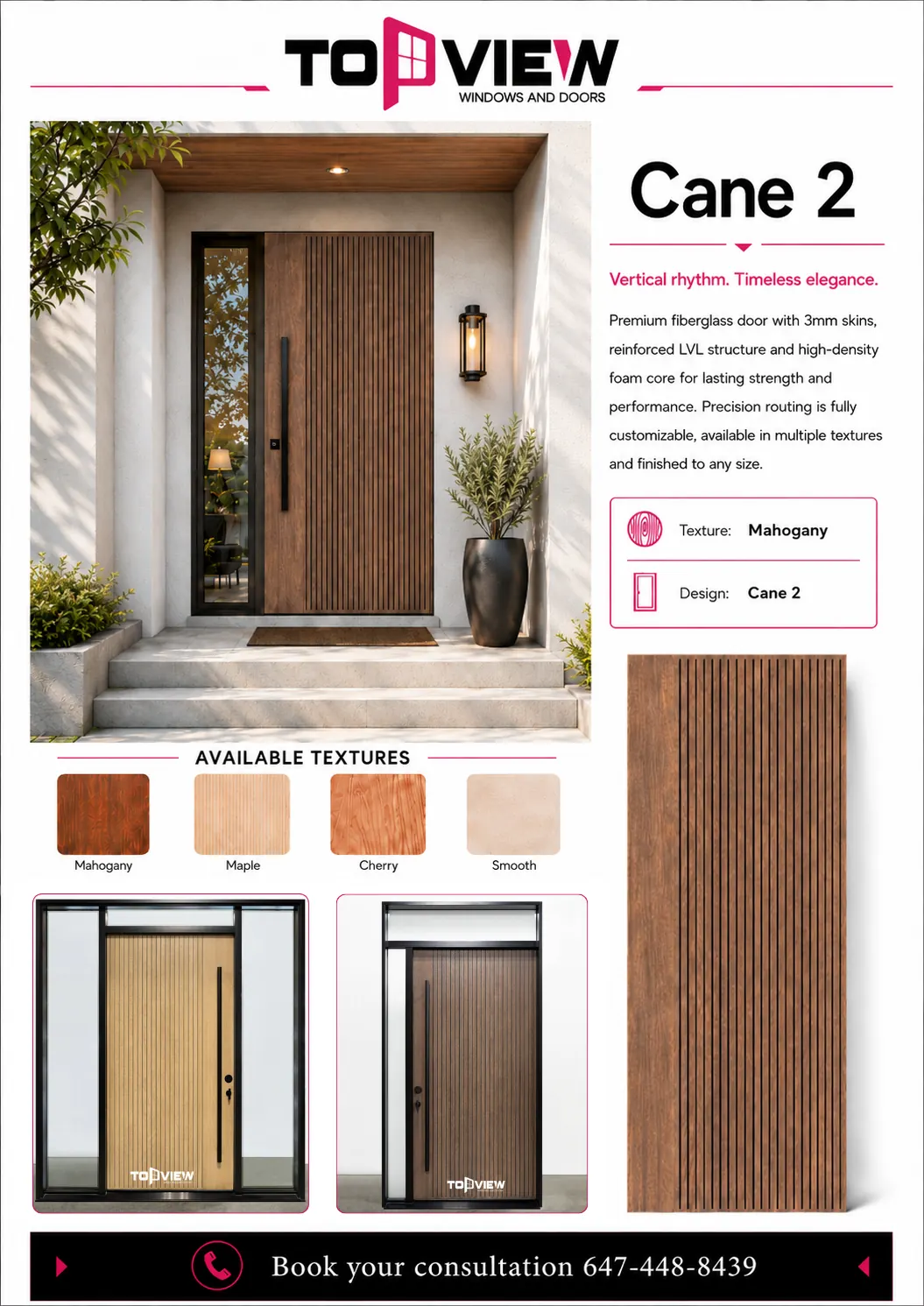
Cane 2
Vertical rhythm. Timeless elegance. Premium fiberglass door with 3mm skins, reinforced LVL structure and high-density foam core for lasting strength and performance.
-

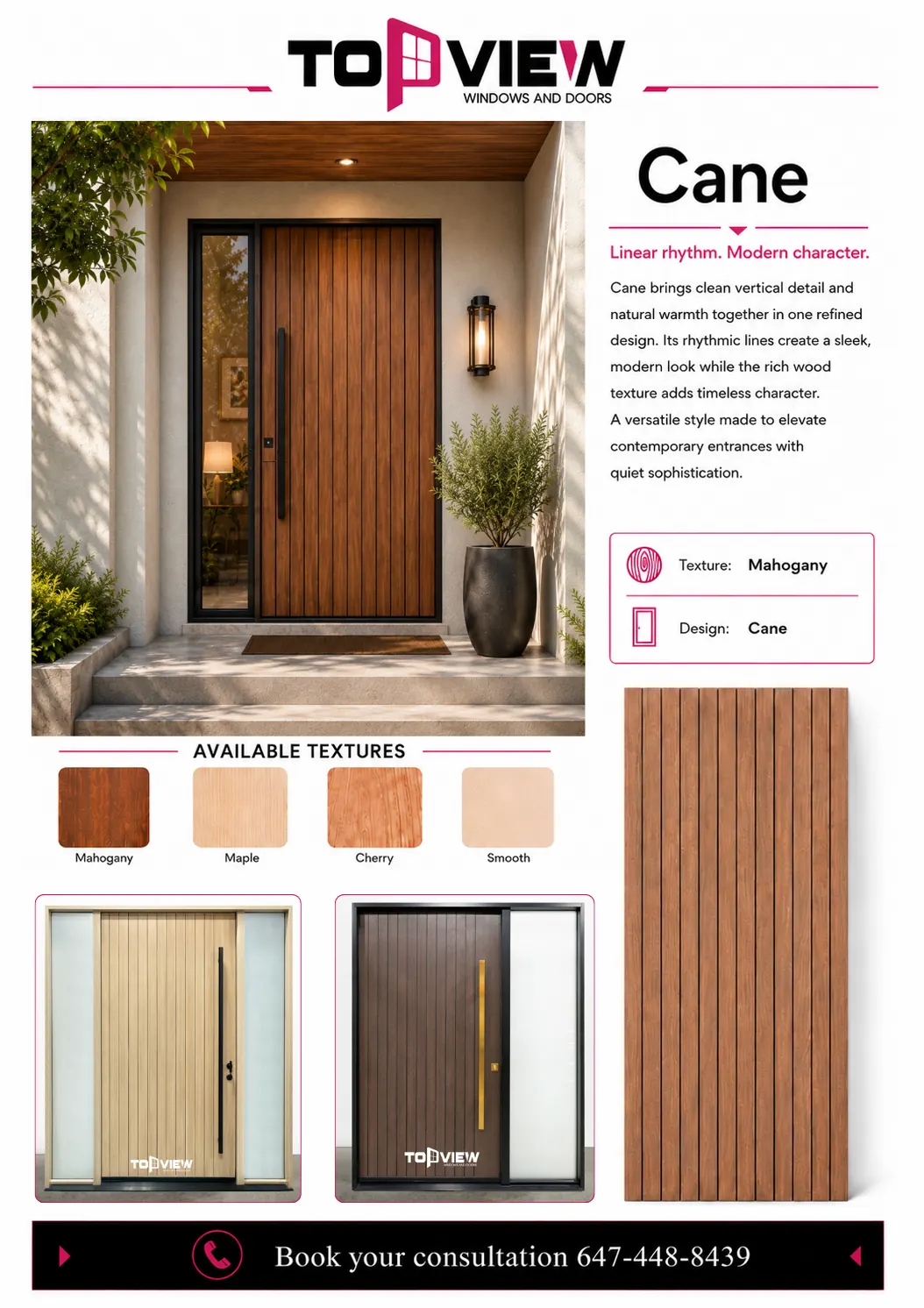
Cane
Linear rhythm. Modern character. Cane brings clean vertical detail and natural warmth together in one refined design. Its rhythmic lines create a sleek, modern look while the rich wood texture adds timeless character.
-

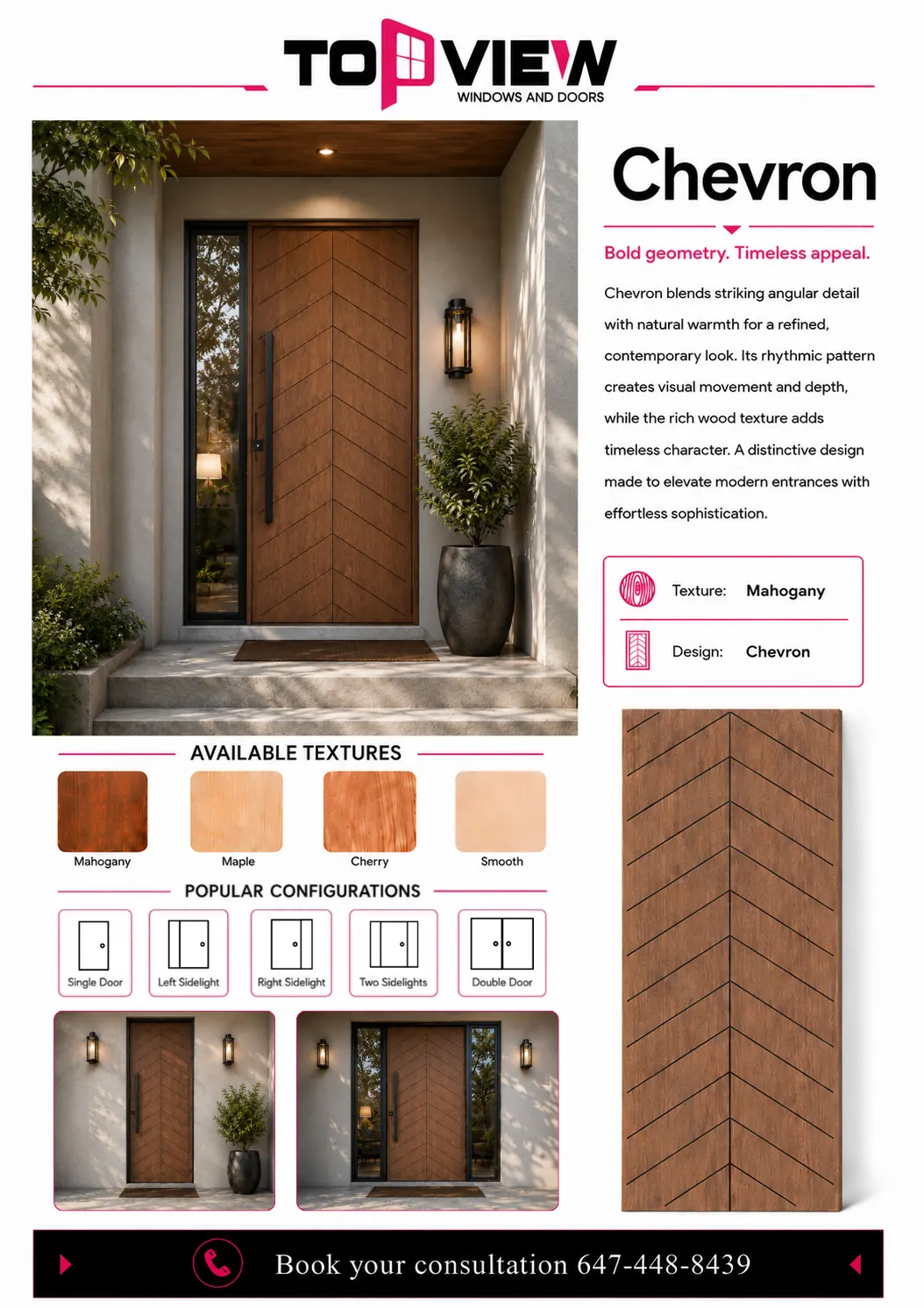
Chevron
Bold geometry. Timeless appeal. Chevron blends striking angular detail with natural warmth for a refined, contemporary look. Its rhythmic pattern creates visual movement and depth, while the rich wood texture adds timeless character.
-

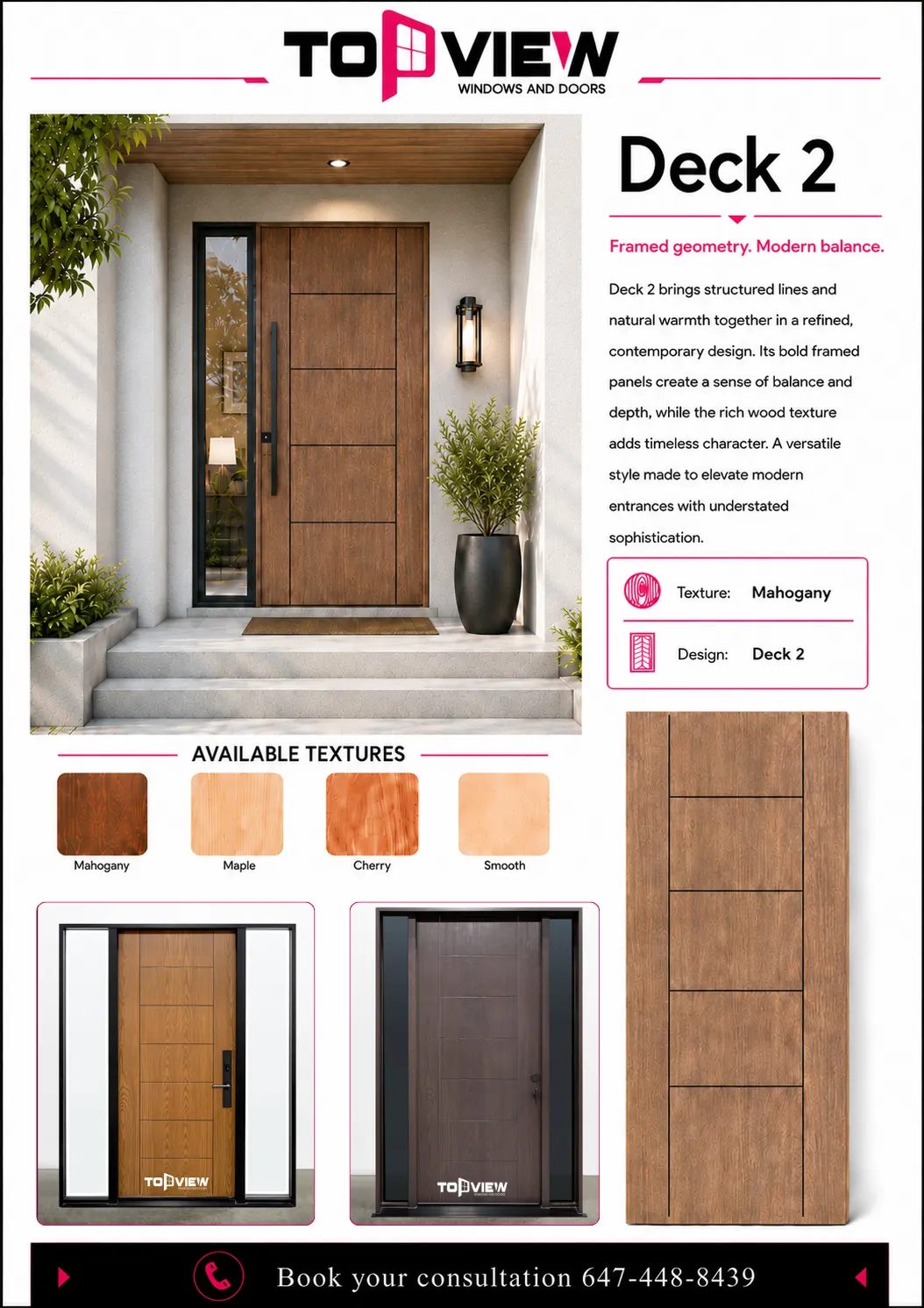
Deck 2
Framed geometry. Modern balance. Deck 2 brings structured lines and natural warmth together in a refined, contemporary design. Its bold framed panels create a sense of balance and depth, while the rich wood texture adds timeless character.
-

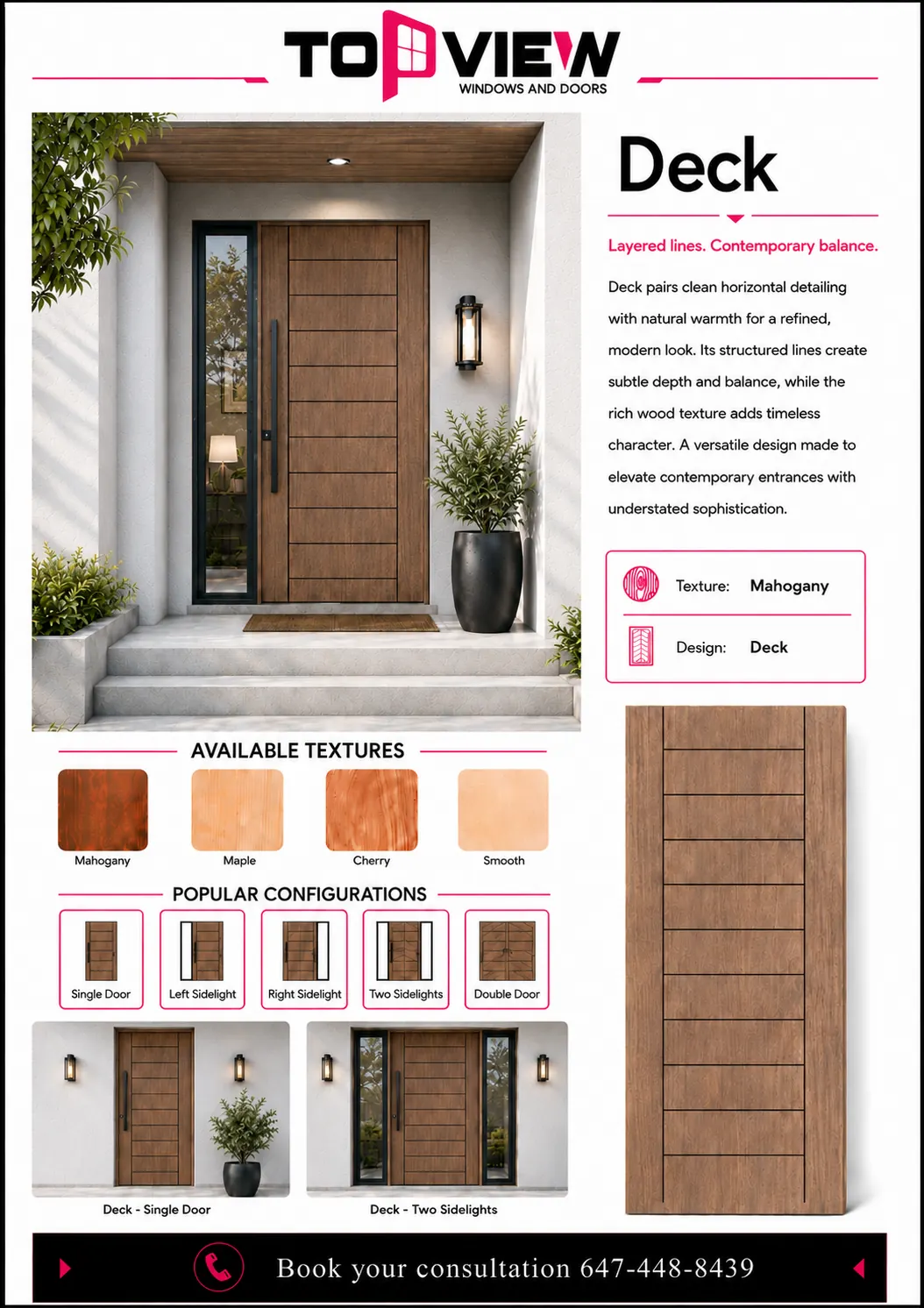
Deck
Layered lines. Contemporary balance. Deck pairs clean horizontal detailing with natural warmth for a refined, modern look. Its structured lines create subtle depth and balance, while the rich wood texture adds timeless character.
-

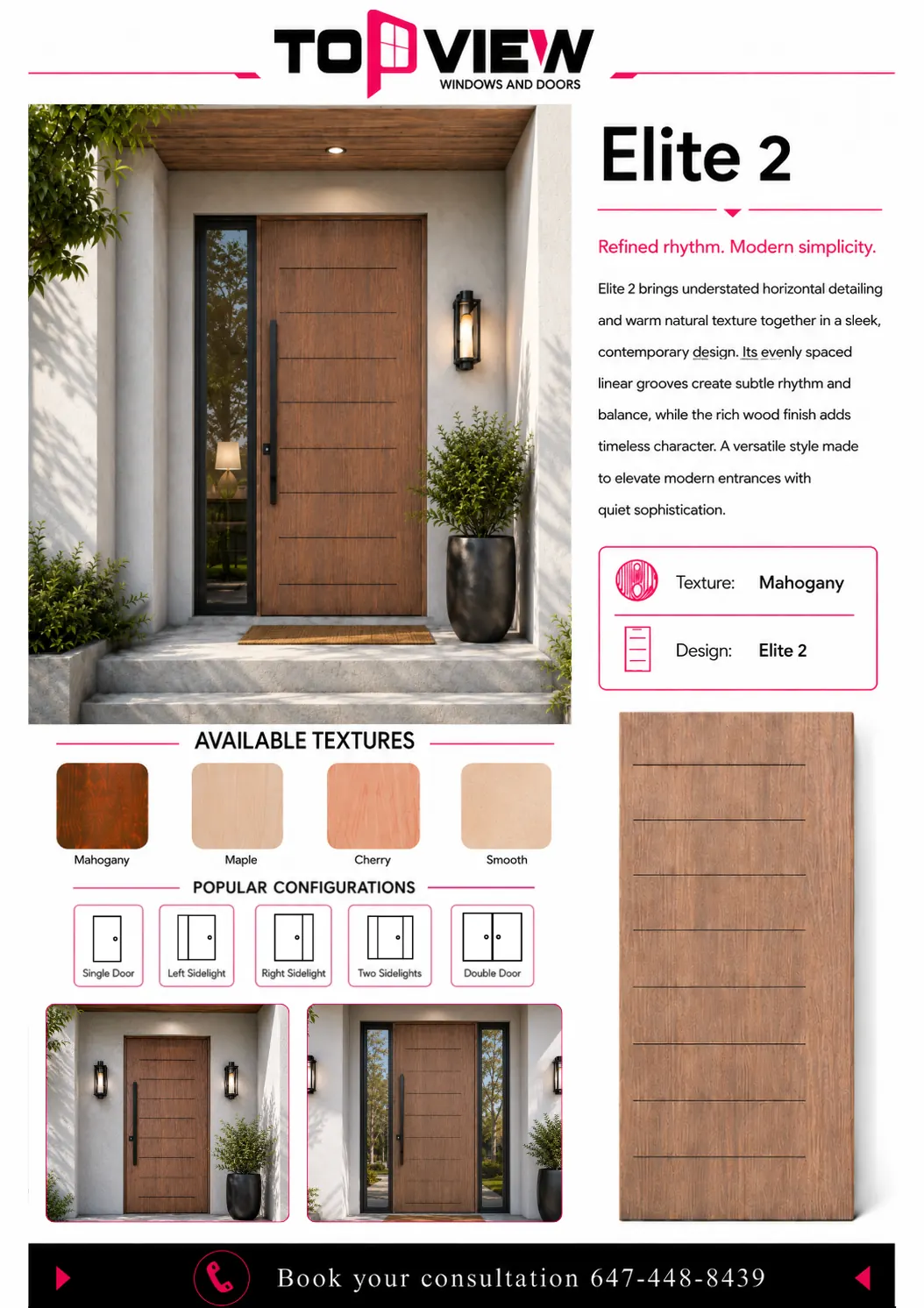
Elite 2
Refined rhythm. Modern simplicity. Elite 2 brings understated horizontal detailing and warm natural texture together in a sleek, contemporary design.
-
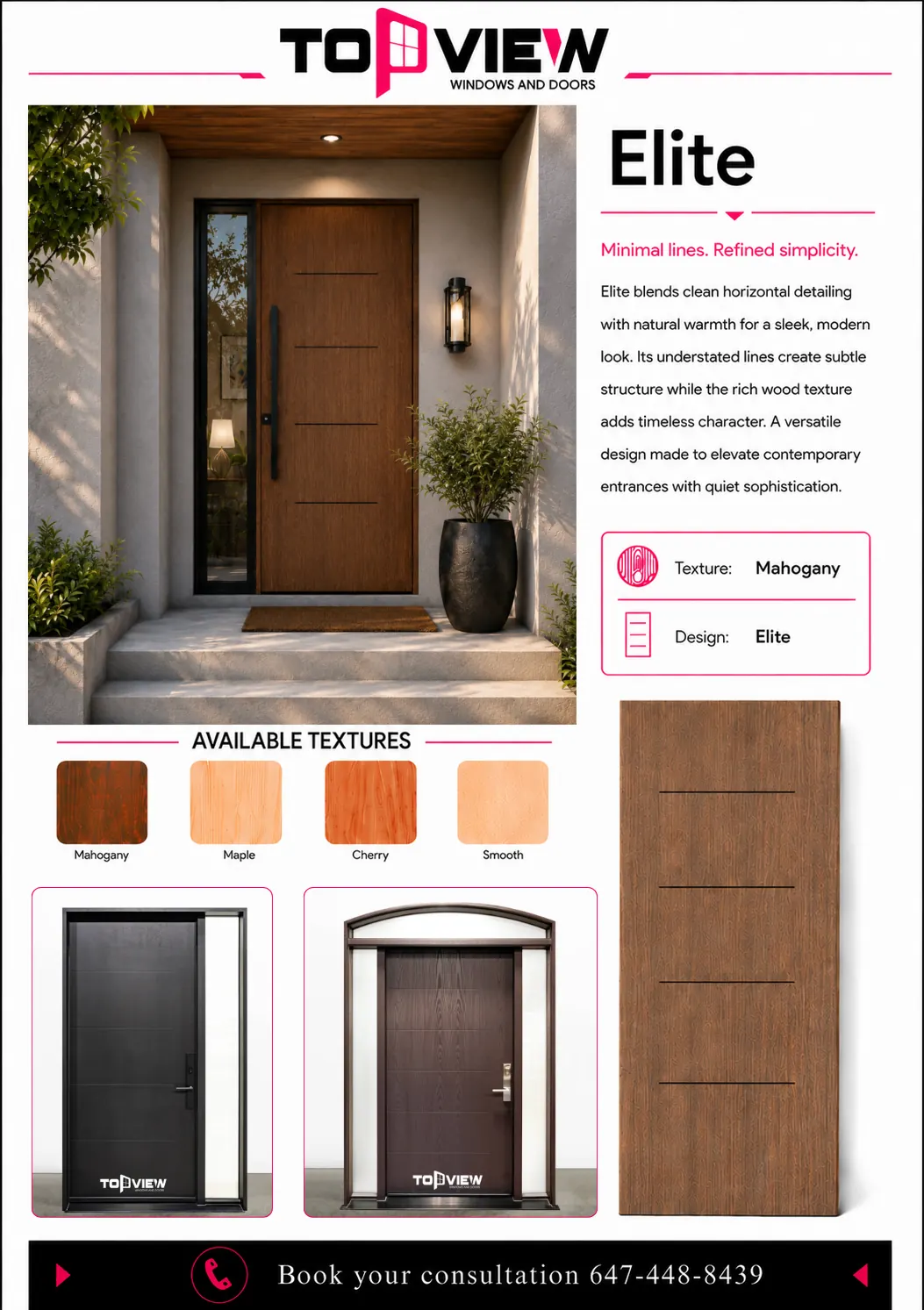
Elite
Minimal lines. Refined simplicity. Elite blends clean horizontal detailing with natural warmth for a sleek, modern look. Its understated lines create subtle structure while the rich wood texture adds timeless character.
-

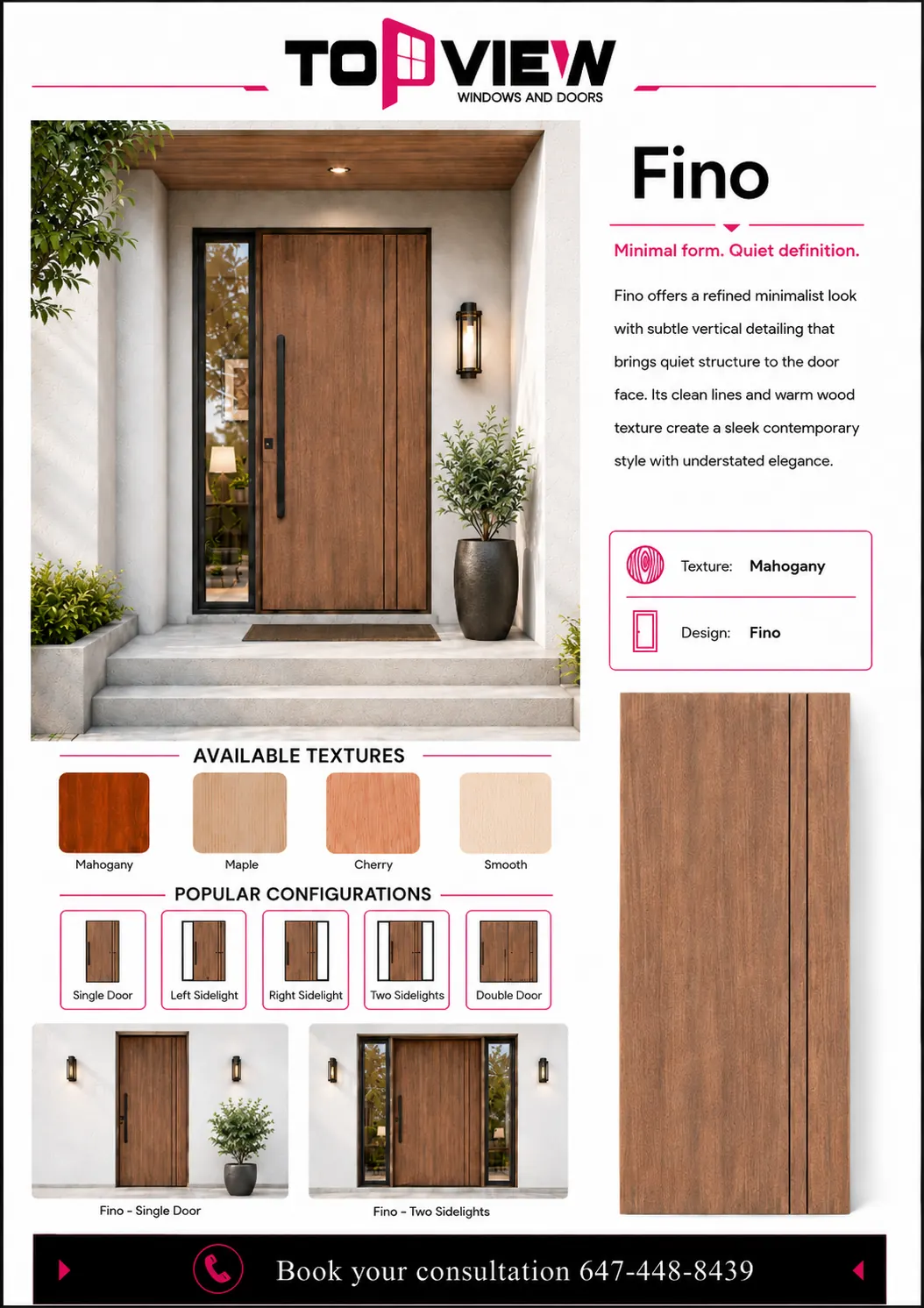
Fino
Minimal form. Quiet definition. Fino offers a refined minimalist look with subtle vertical detailing that brings quiet structure to the door face.
-

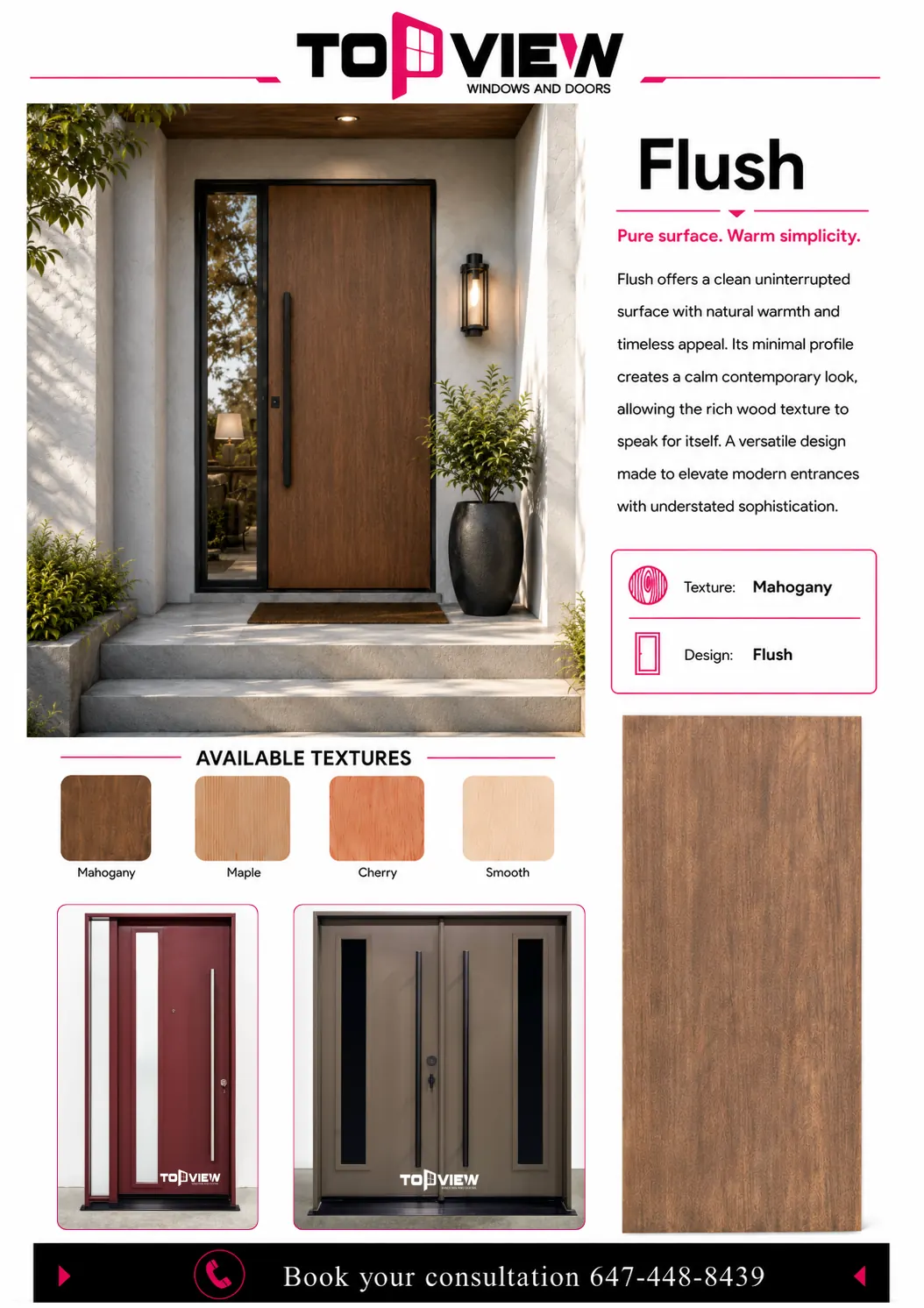
Flush
Pure surface. Warm simplicity. Flush offers a clean uninterrupted surface with natural warmth and timeless appeal. Its minimal profile creates a calm contemporary look, allowing the rich wood texture to speak for itself.
-
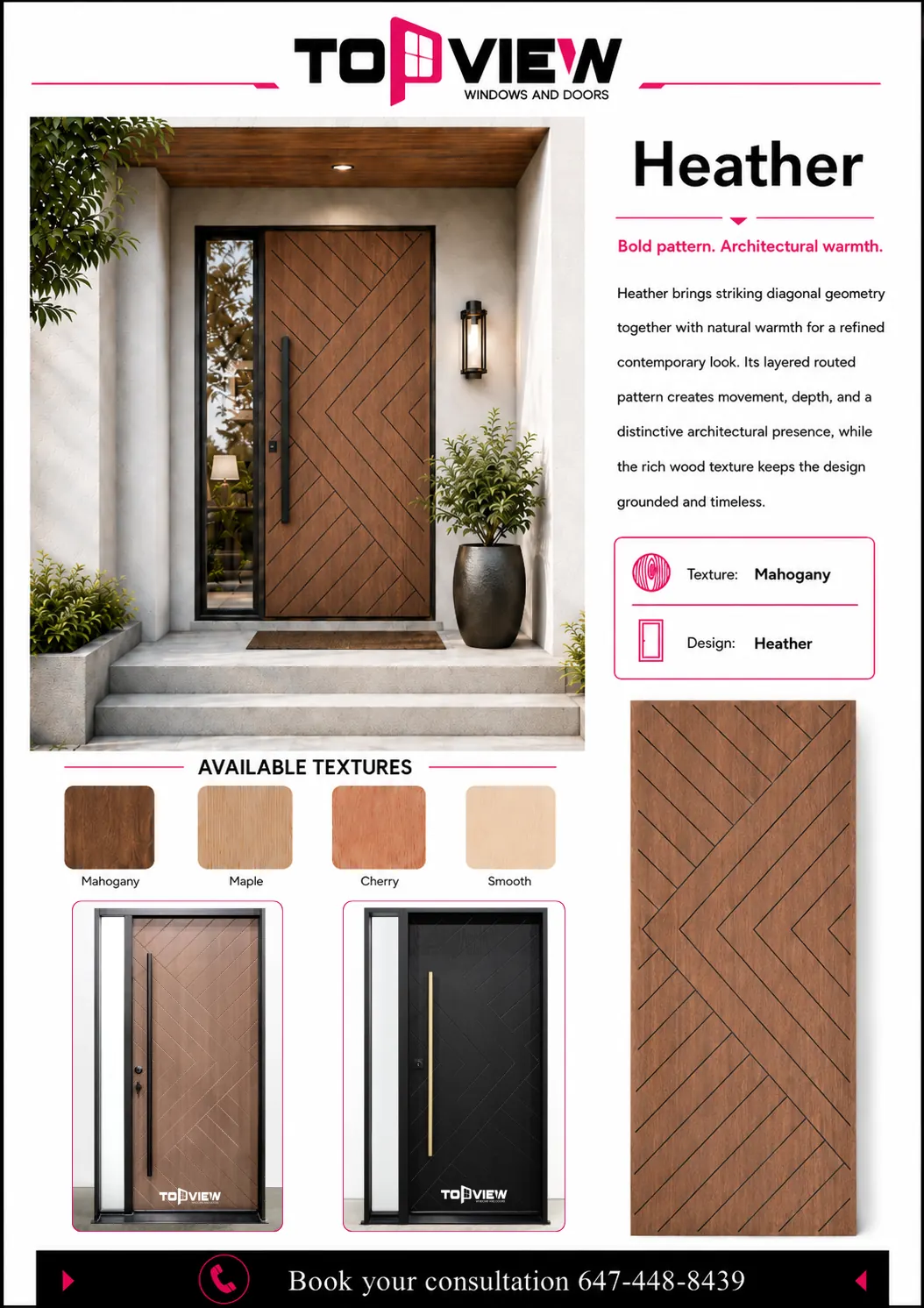
Heather
Bold pattern. Architectural warmth. Heather brings striking diagonal geometry together with natural warmth for a refined contemporary look.
-

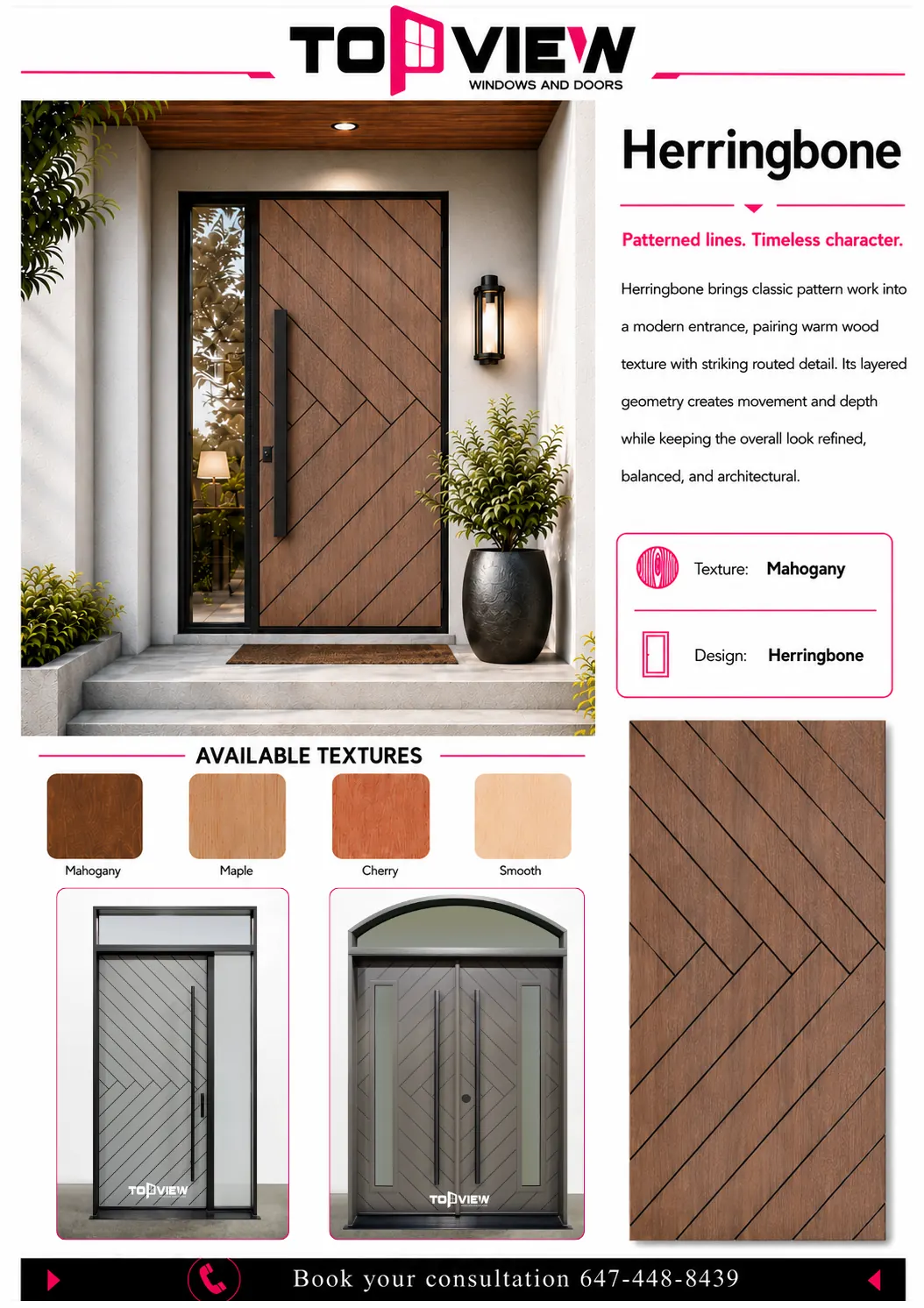
Herringbone
Patterned lines. Timeless character. Herringbone brings classic pattern work into a modern entrance, pairing warm wood texture with striking routed detail.
-

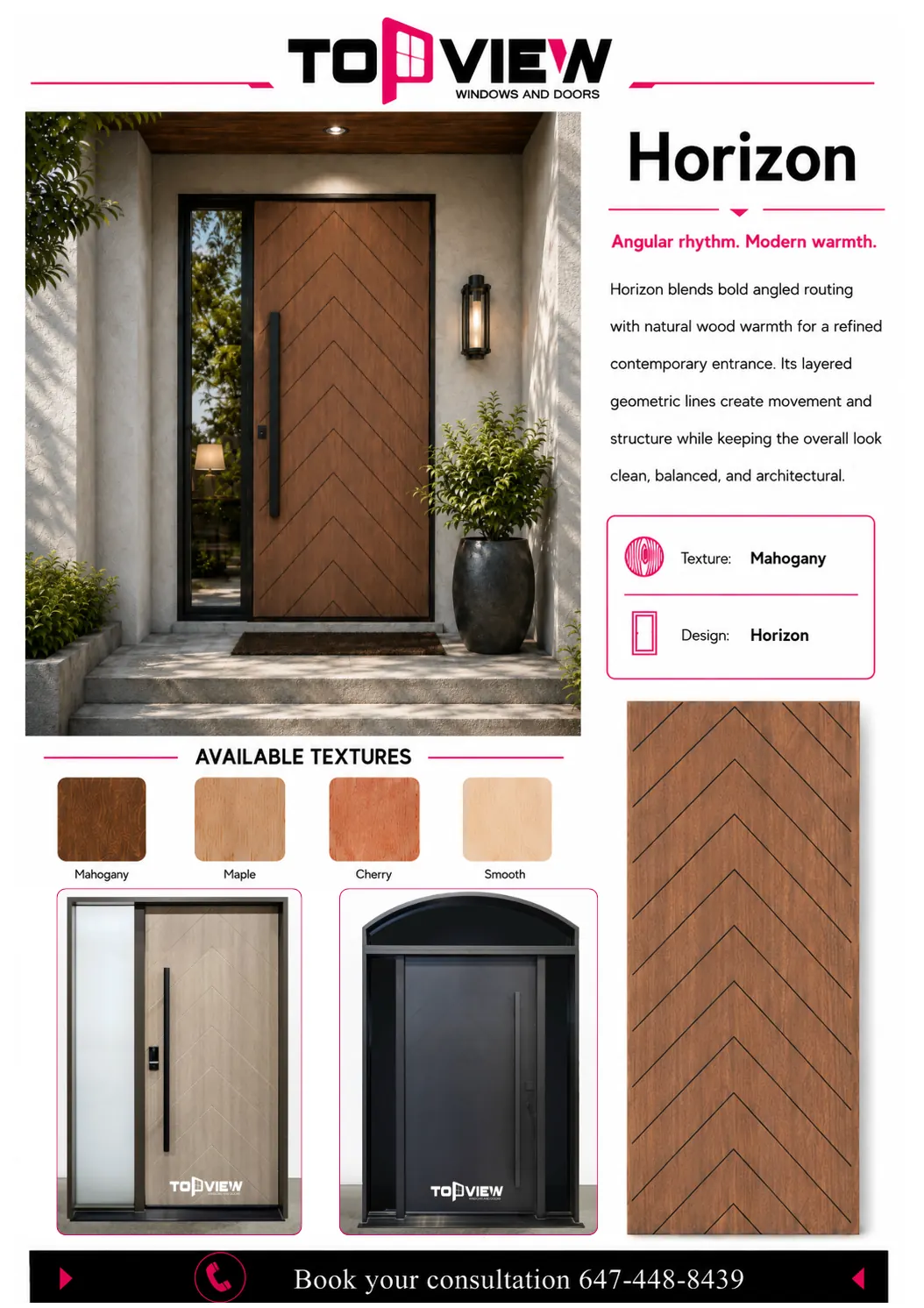
Horizon
Angular rhythm. Modern warmth. Horizon blends bold angled routing with natural wood warmth for a refined contemporary entrance.
-

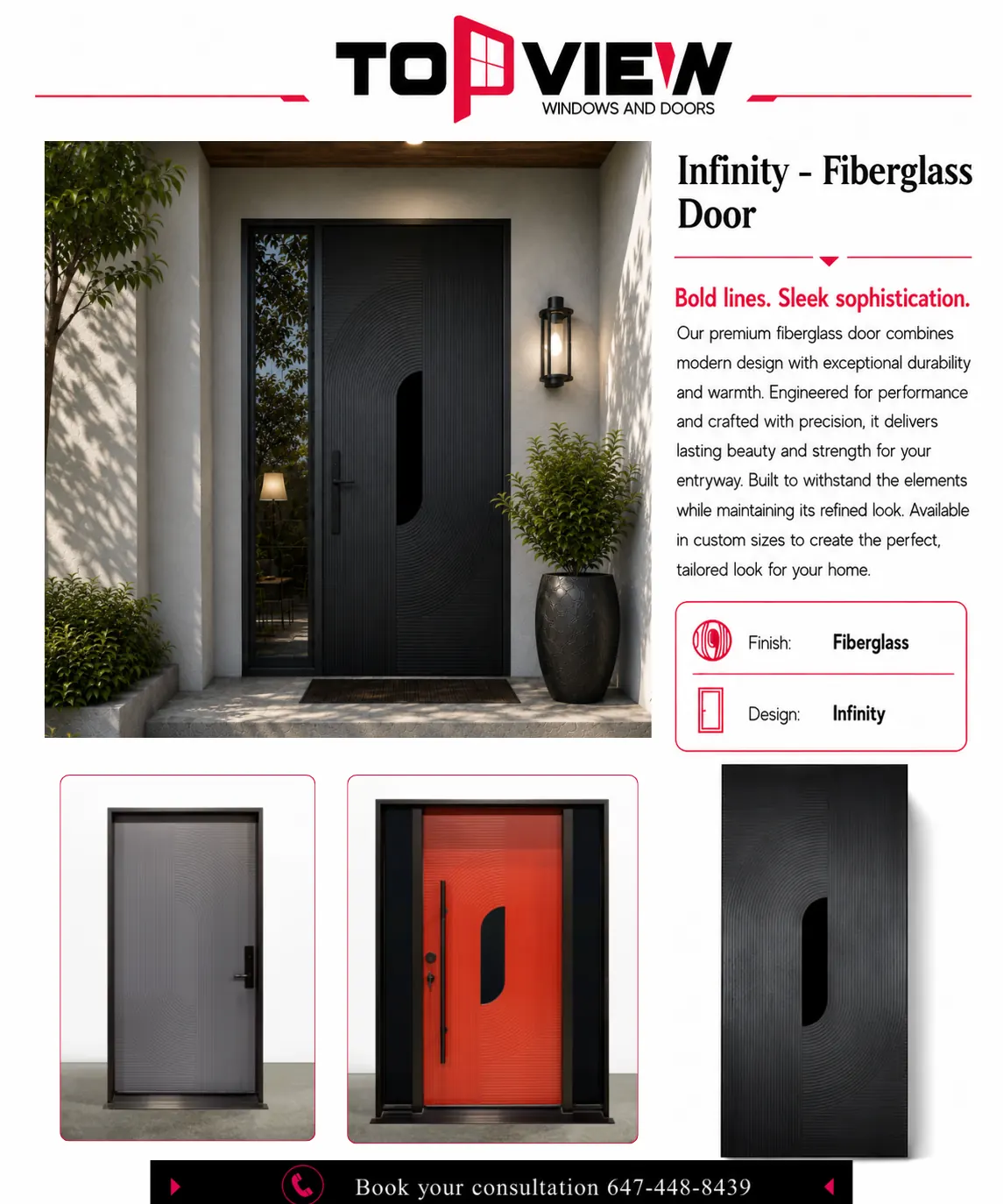
Infinity
Bold lines. Sleek sophistication. Our premium fiberglass door combines modern design with exceptional durability and warmth. Engineered for performance and crafted with precision, it delivers lasting beauty and strength for your entryway.
-

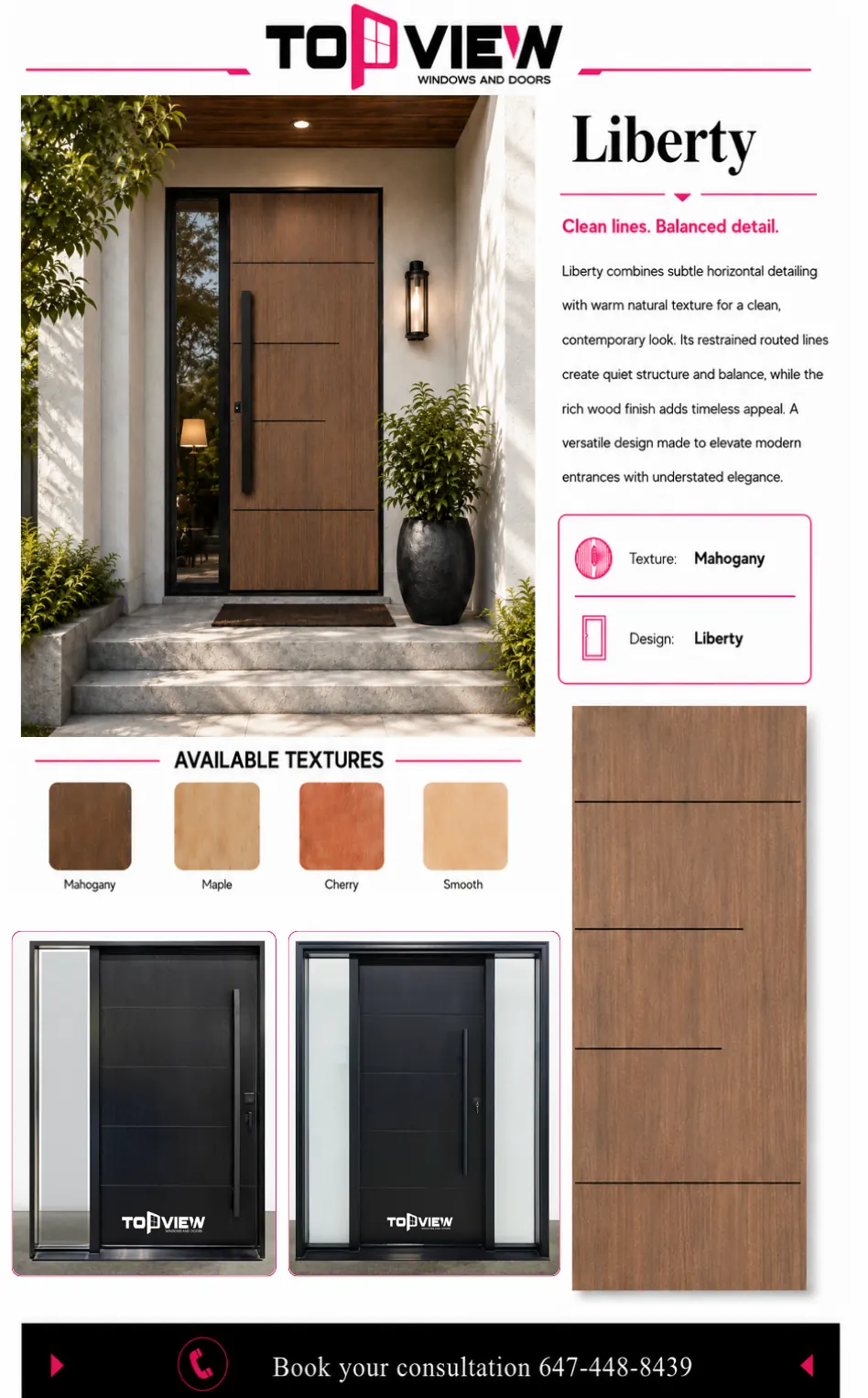
Liberty
Clean lines. Balanced detail. Liberty combines subtle horizontal detailing with warm natural texture for a clean. contemporary look.
-

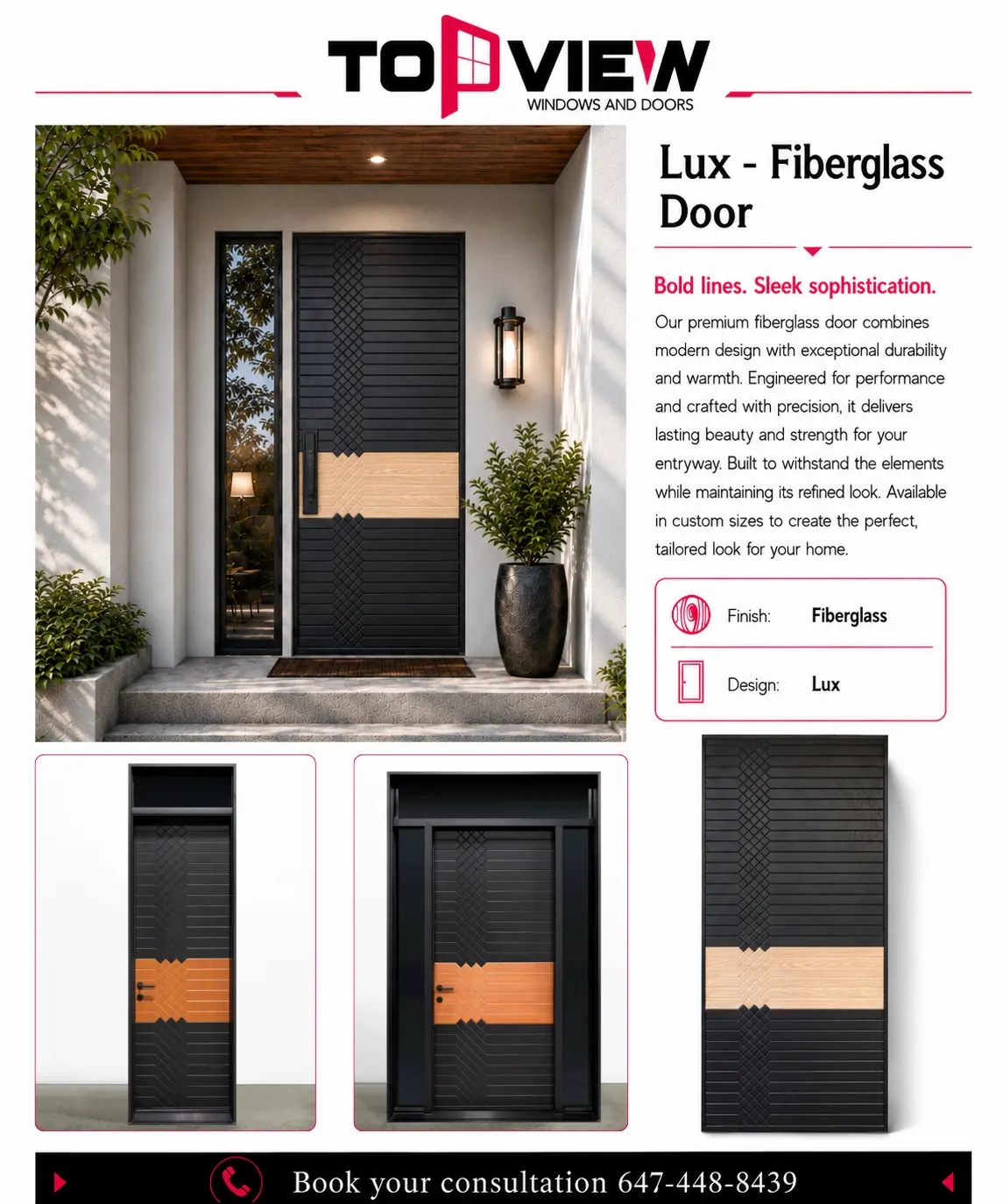
Lux
Bold lines. Sleek sophistication. Our premium fiberglass door combines modern design with exceptional durability and warmth. Engineered for performance and crafted with precision, it delivers lasting beauty and strength for your entryway.
-

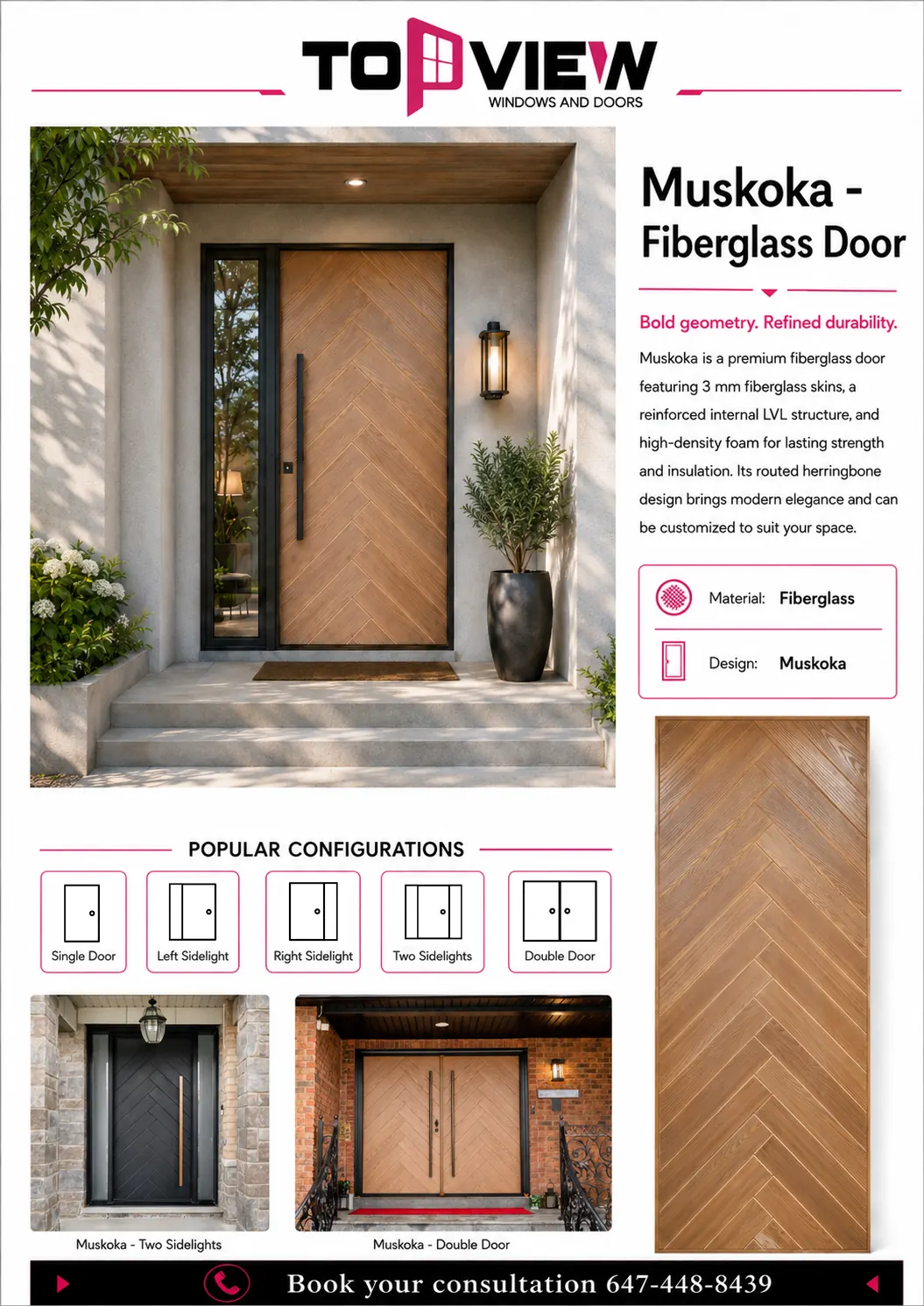
Muskoka
Bold geometry. Refined durability. Muskoka is a premium fiberglass door featuring 3 mm fiberglass skins, a reinforced internal LVL structure, and high-density foam for lasting strength and insulation.
-
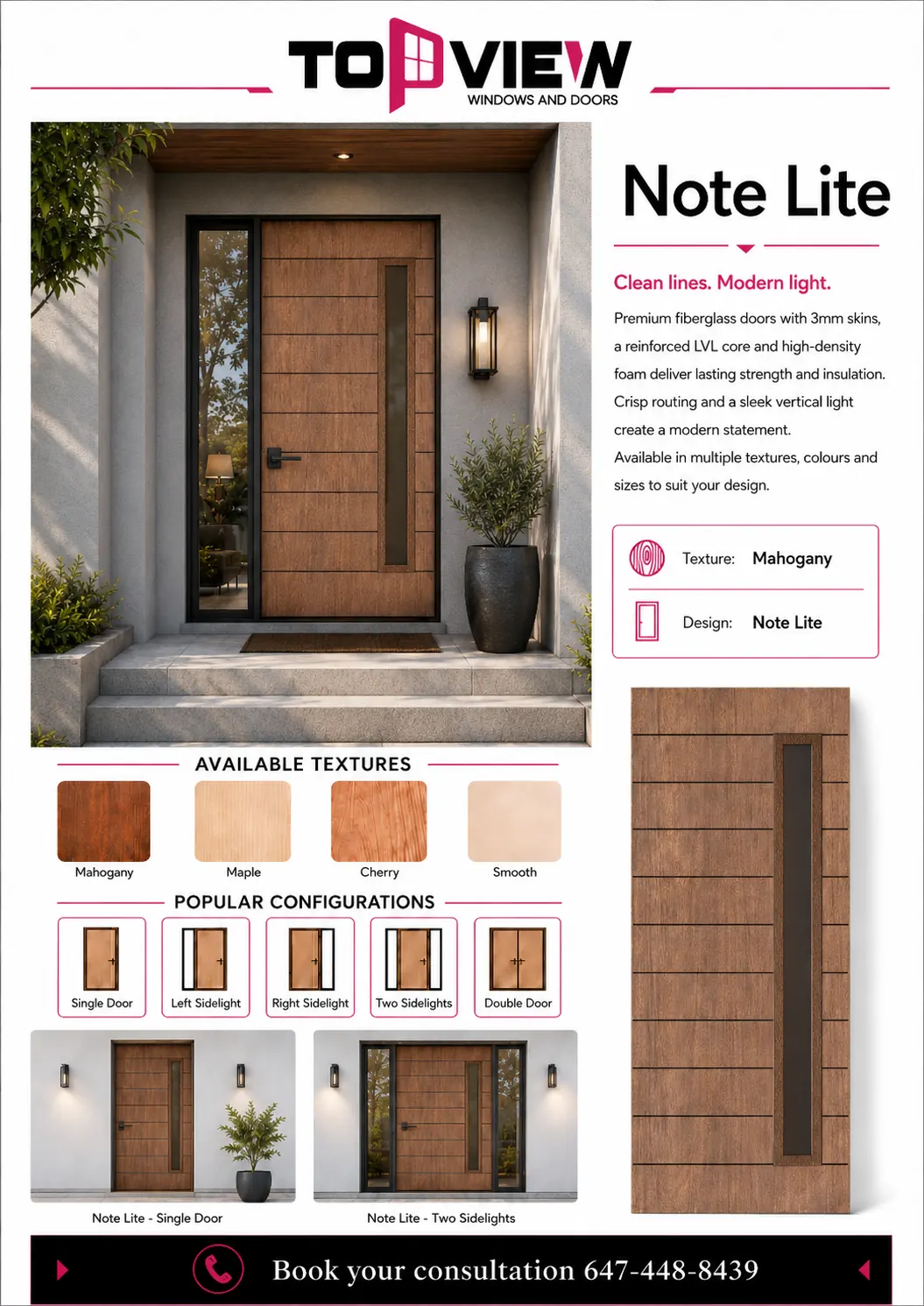
Note Lite
Clean lines. Modern light. Premium fiberglass doors with 3mm skins, a reinforced LVL core and high-density foam deliver lasting strength and insulation. Crisp routing and a sleek vertical light create a modern statement.
-

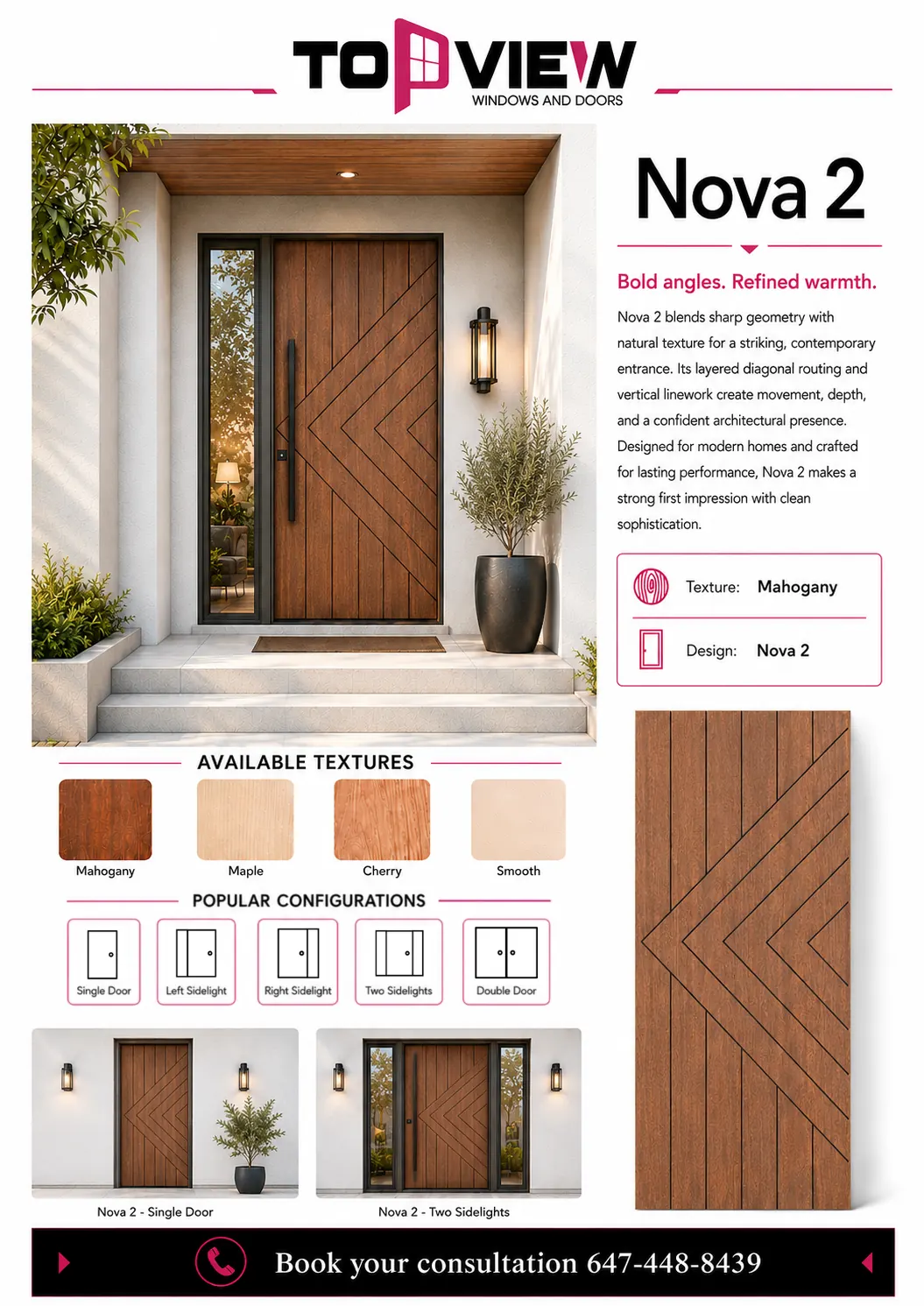
Nova 2
Bold angles. Refined warmth. Nova 2 blends sharp geometry with natural texture for a striking, contemporary entrance. Its layered diagonal routing and vertical linework create movement, depth, and a confident architectural presence.
-

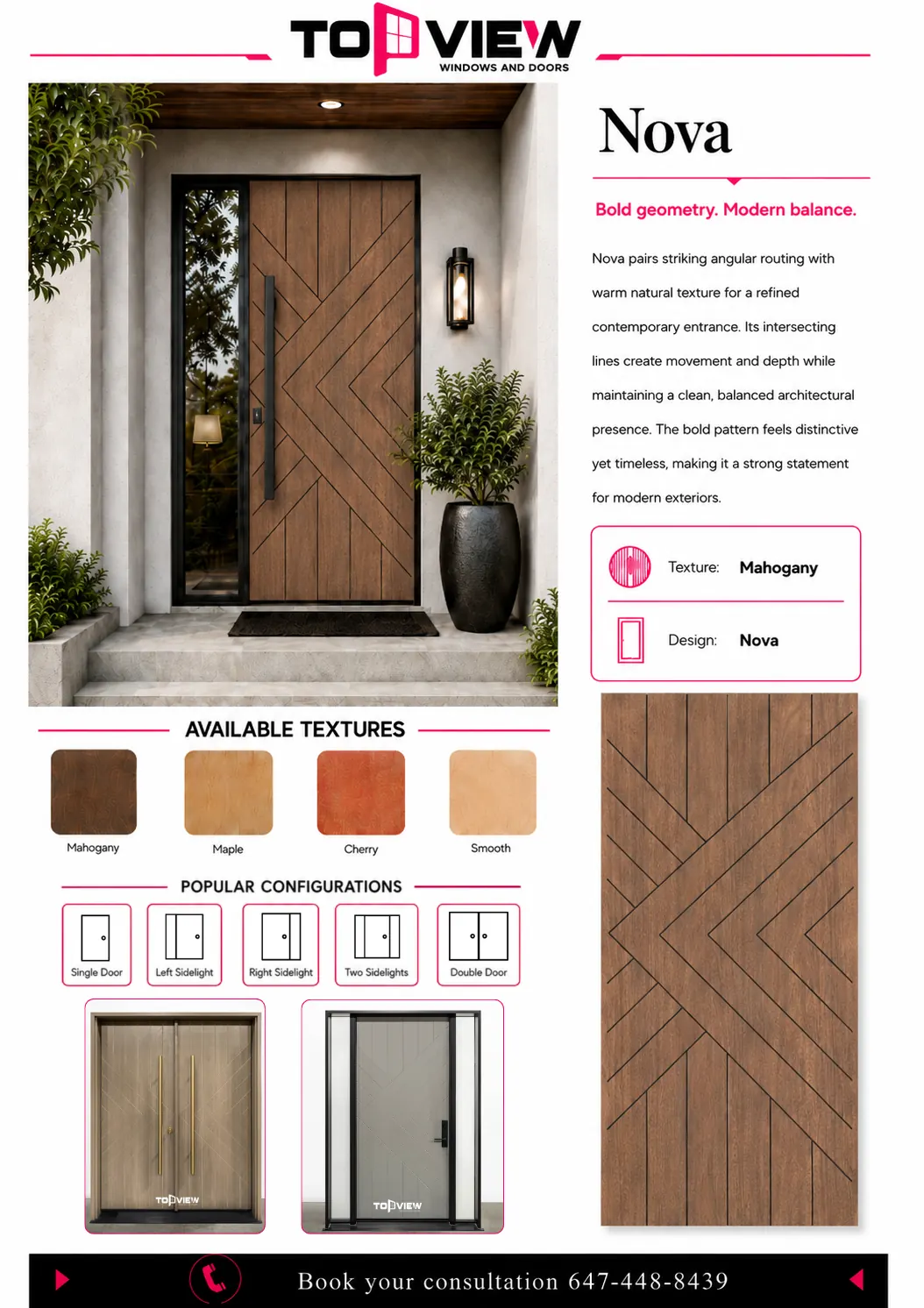
Nova
Bold geometry. Modern balance. Nova pairs striking angular routing with warm natural texture for a refined contemporary entrance. Its intersecting lines create movement and depth while maintaining a clean, balanced architectural presence.
-
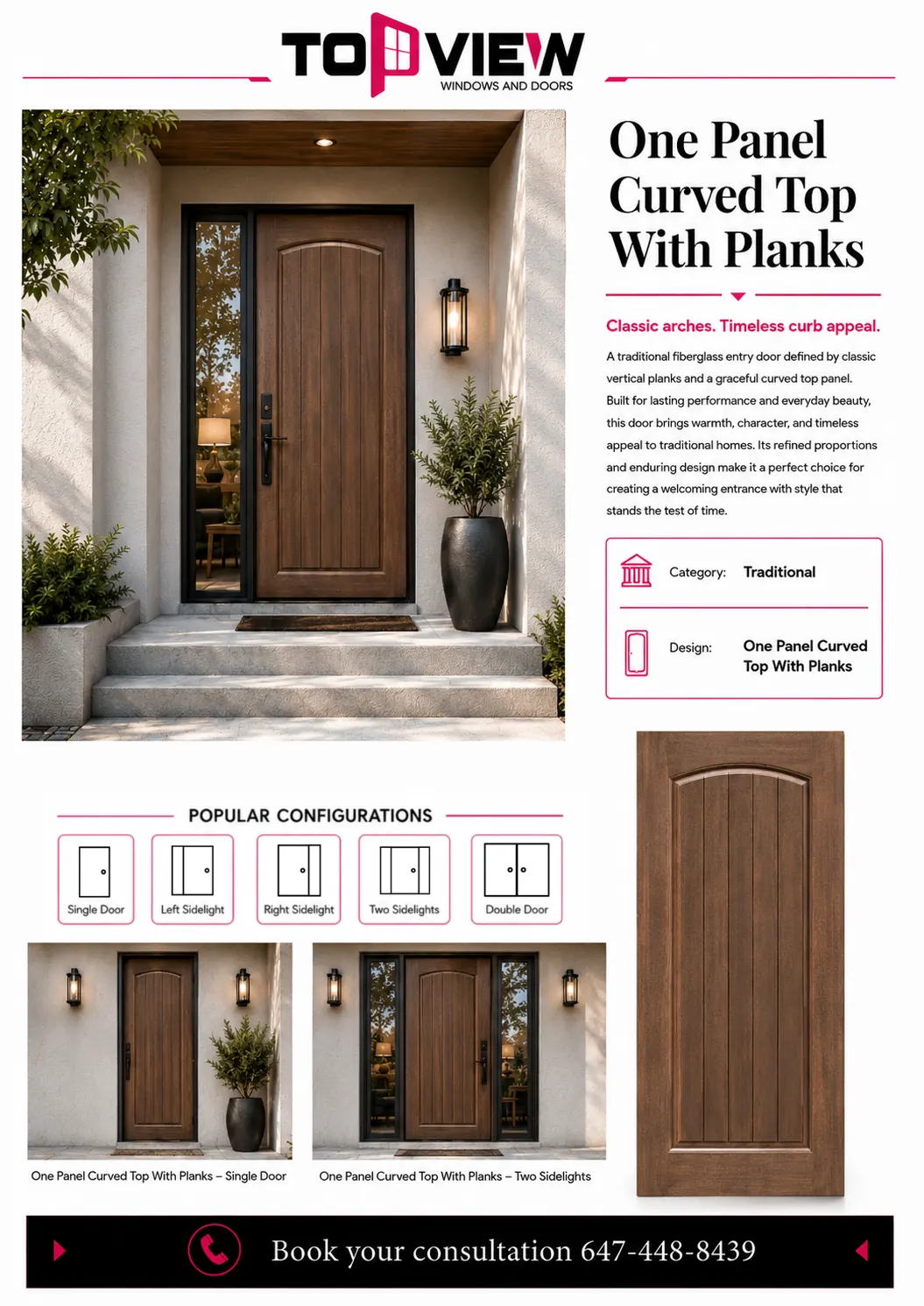
One Panel Curved Top With Planks
Classic arches. Timeless curb appeal. A traditional fiberglass entry door defined by classic vertical planks and a graceful curved top panel.
-

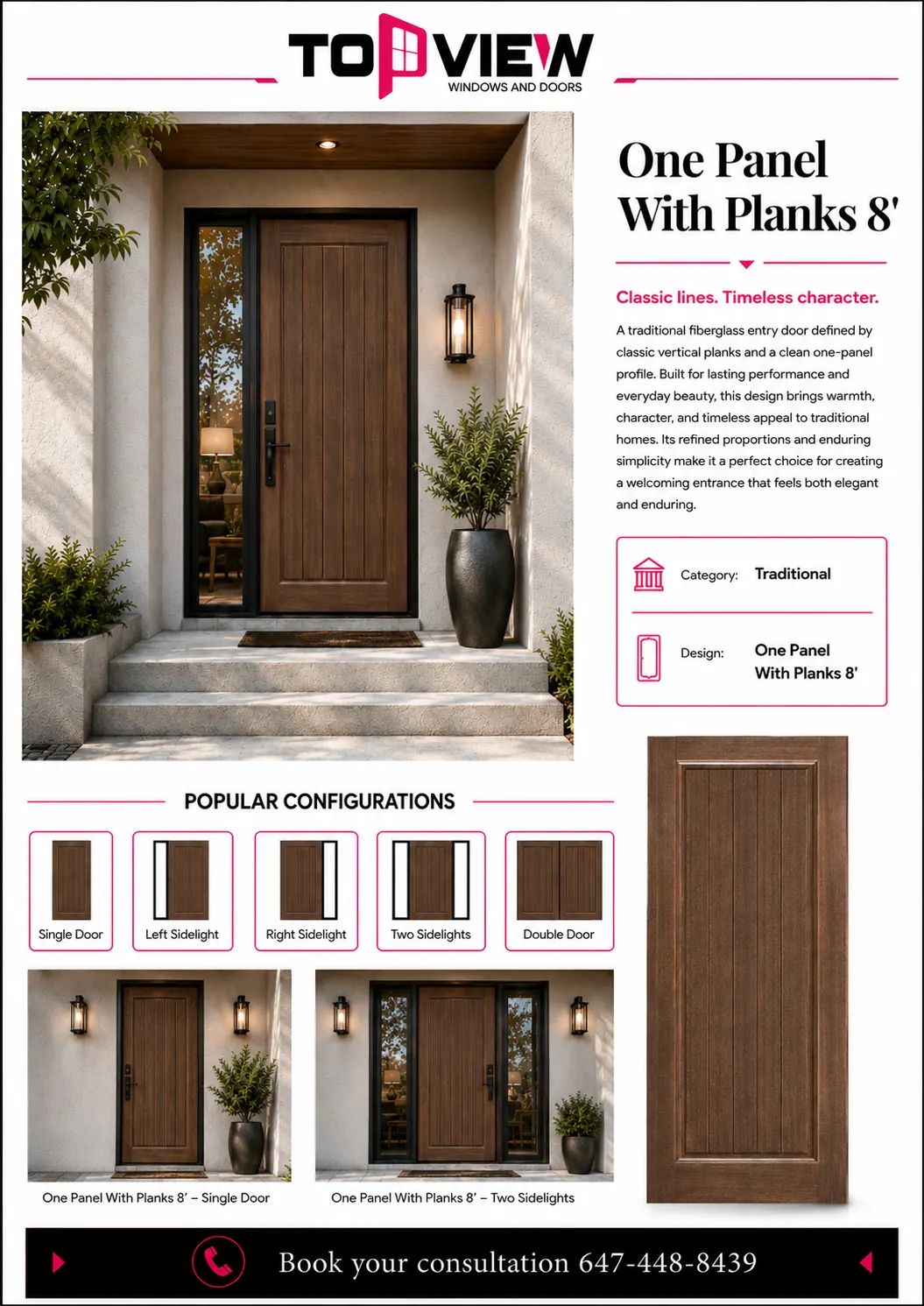
One Panel With Planks 8'
Classic lines. Timeless character. A traditional fiberglass entry door defined by classic vertical planks and a clean one-panel profile.
-
Paris 2.0
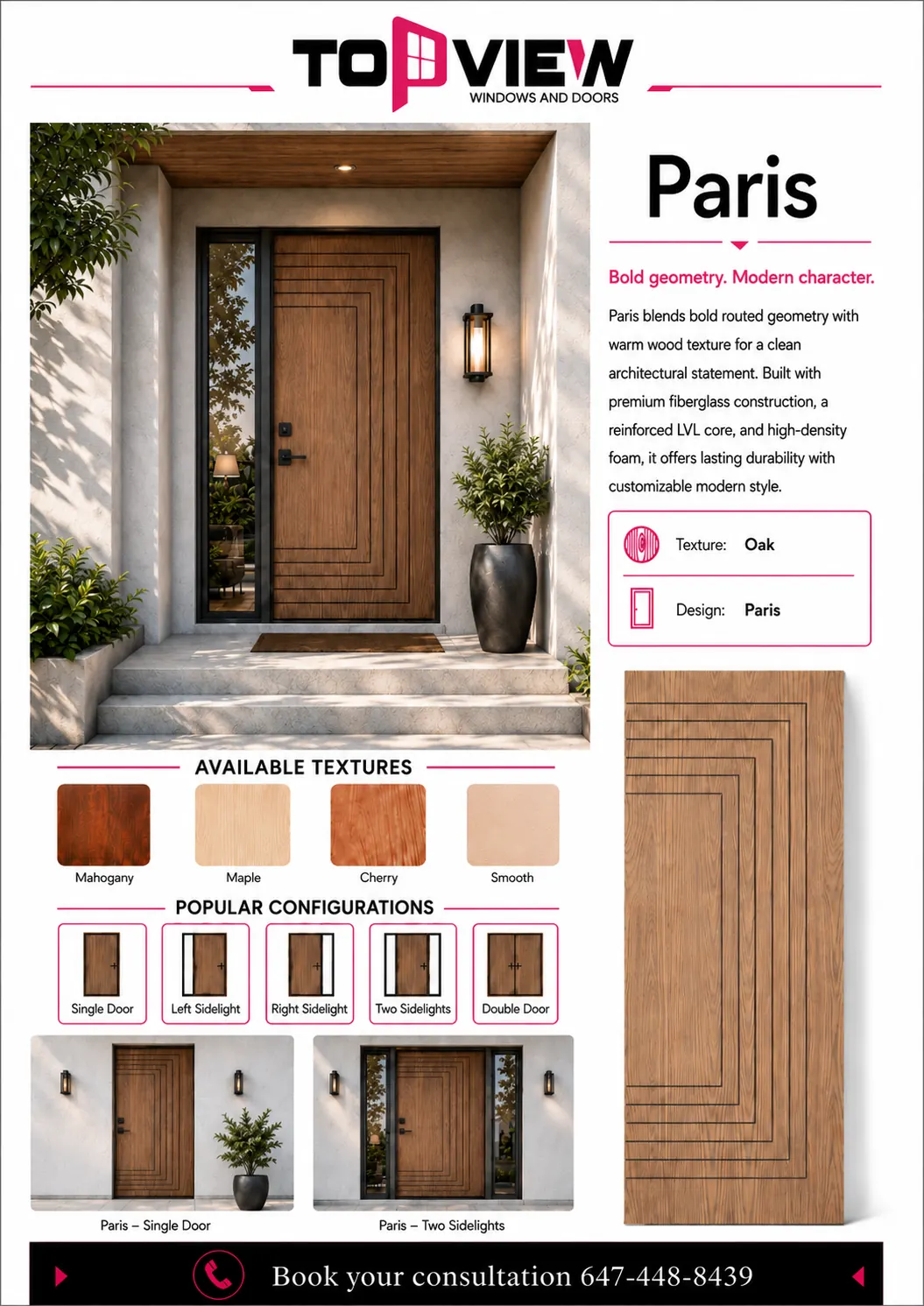
Bold geometry. Modern character. Paris blends bold routed geometry with warm wood texture for a clean architectural statement.
-

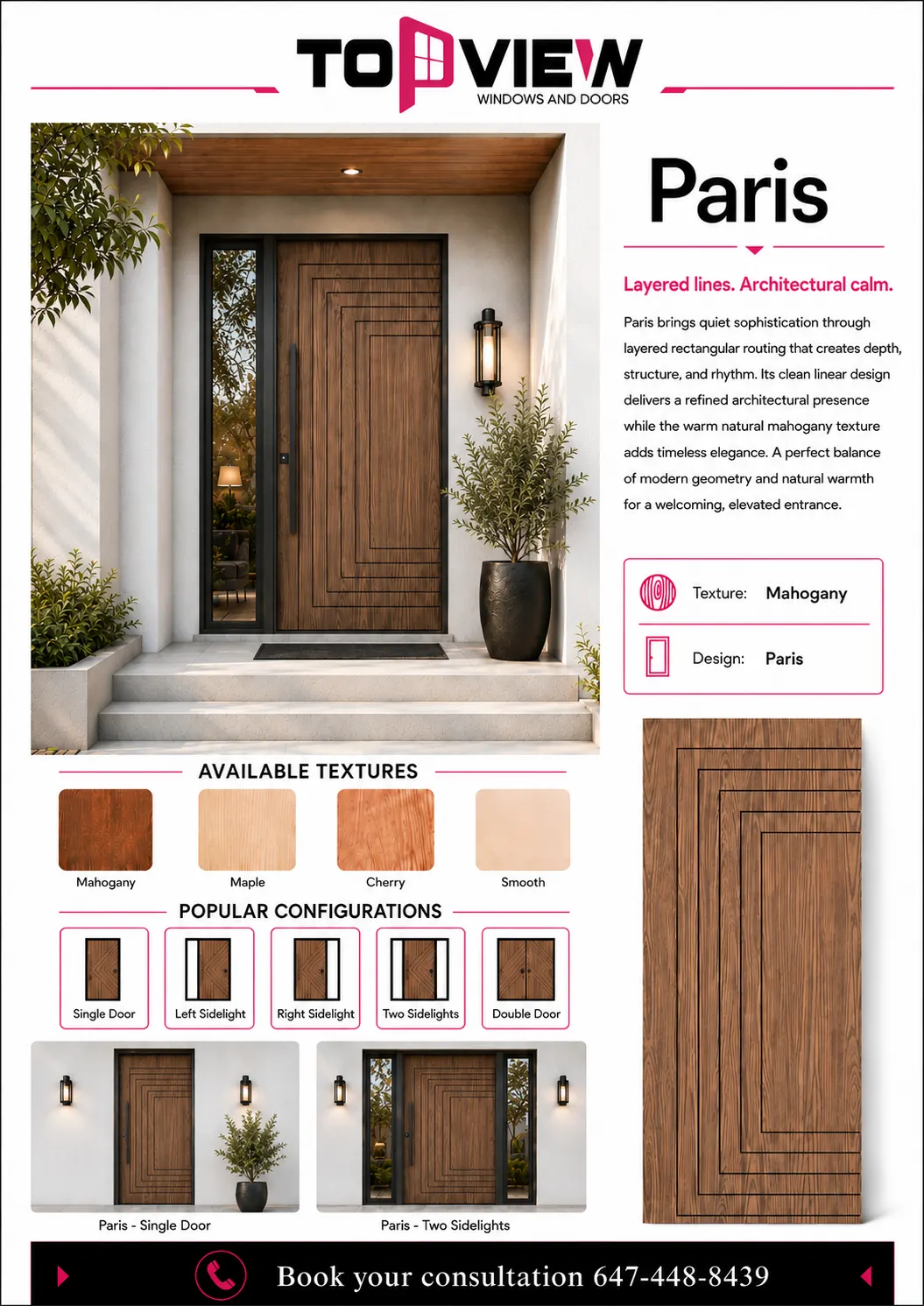
Paris
Layered lines. Architectural calm. Paris brings quiet sophistication through layered rectangular routing that creates depth, structure, and rhythm.
-

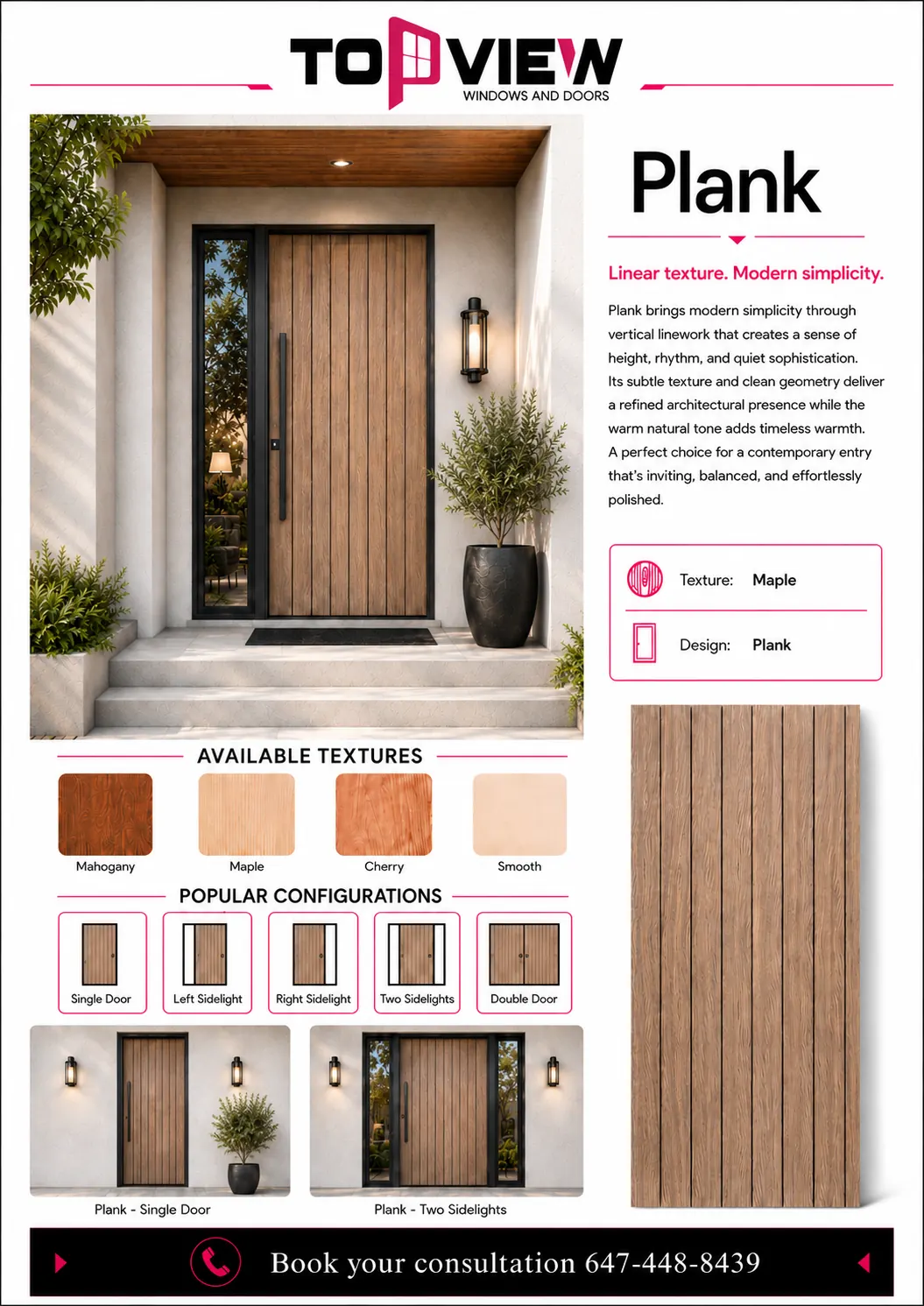
Plank
Linear texture. Modern simplicity. Plank brings modern simplicity through vertical linework that creates a sense of height, rhythm, and quiet sophistication.
-

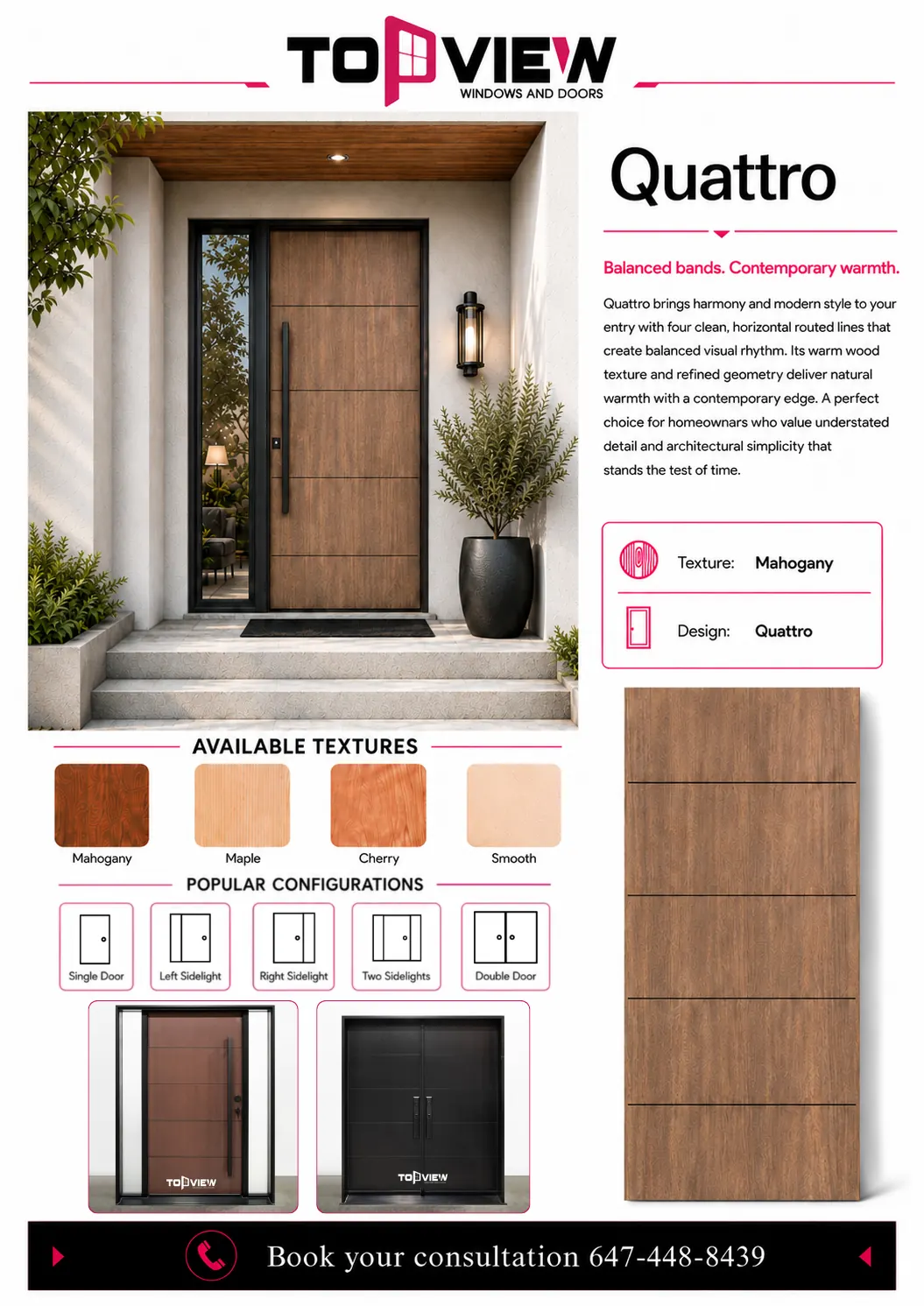
Quattro
Balanced bands. Contemporary warmth. Quattro brings harmony and modern style to your entry with four clean, horizontal routed lines that create balanced visual rhythm.
-

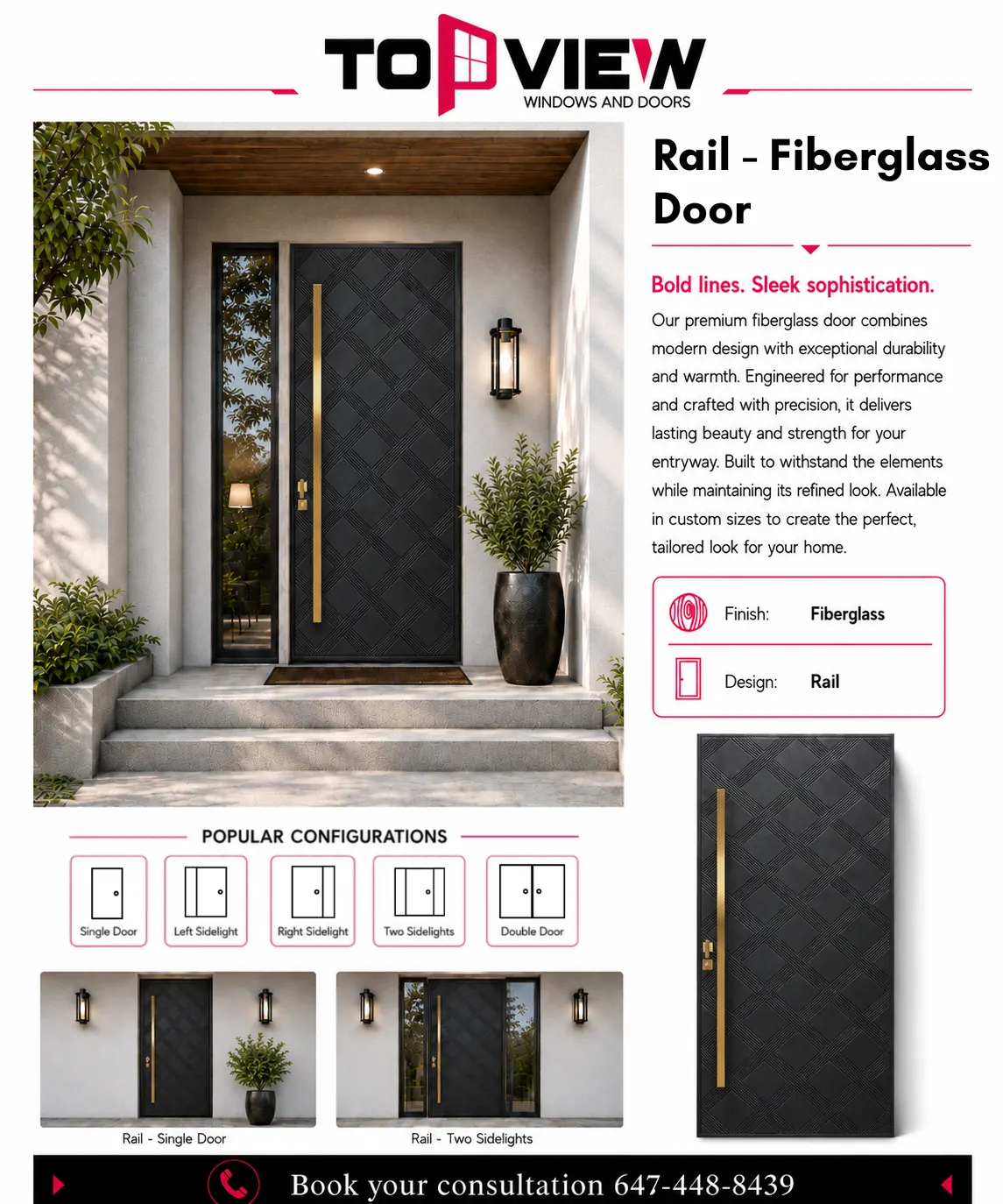
Rail
Door. Bold lines. Sleek sophistication. Our premium fiberglass door combines modern design with exceptional durability and warmth.
-

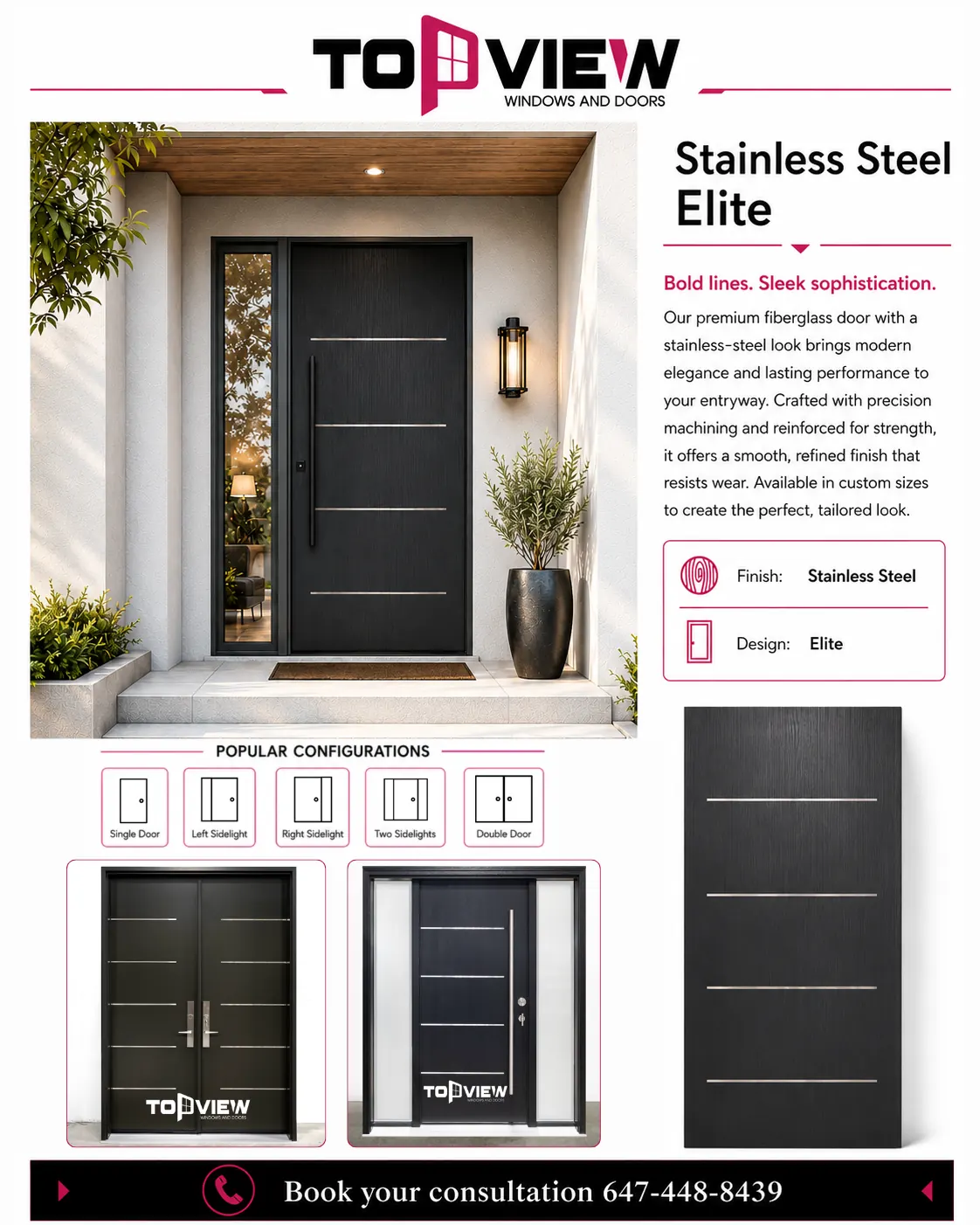
Stainless Steel Elite
Bold lines. Sleek sophistication. Our premium fiberglass door with a stainless-steel look brings modern elegance and lasting performance to your entryway.
-

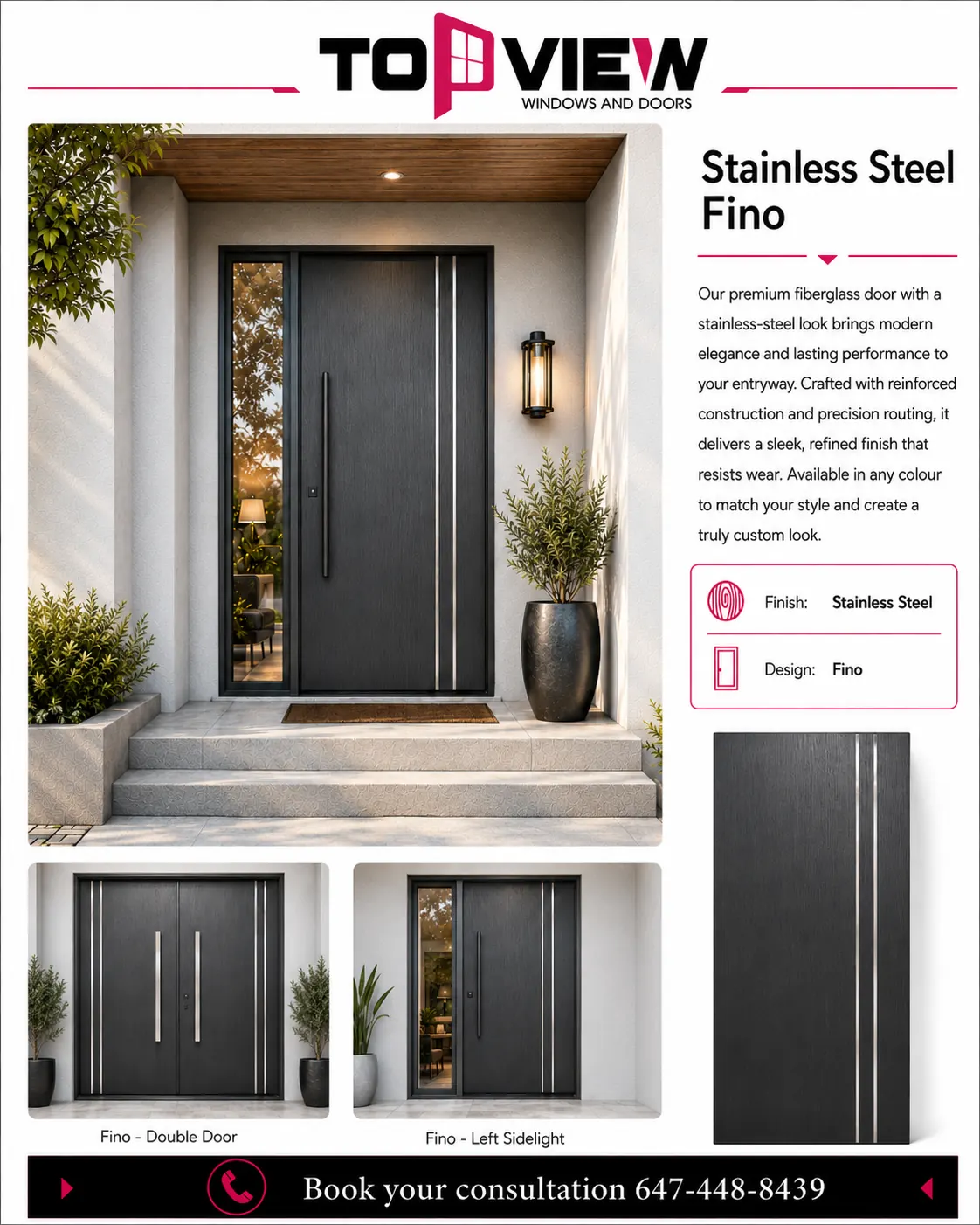
Stainless Steel Fino
Our premium fiberglass door with a. stainless-steel look brings modern elegance and lasting performance to your entryway. Crafted with reinforced construction and precision routing, it delivers a sleek, refined finish that resists wear.
-

Stainless Steel Quad 2.0
Bold lines. Sleek sophistication. Our premium fiberglass door with a stainless-steel look brings modern elegance and lasting performance to your entryway.
-

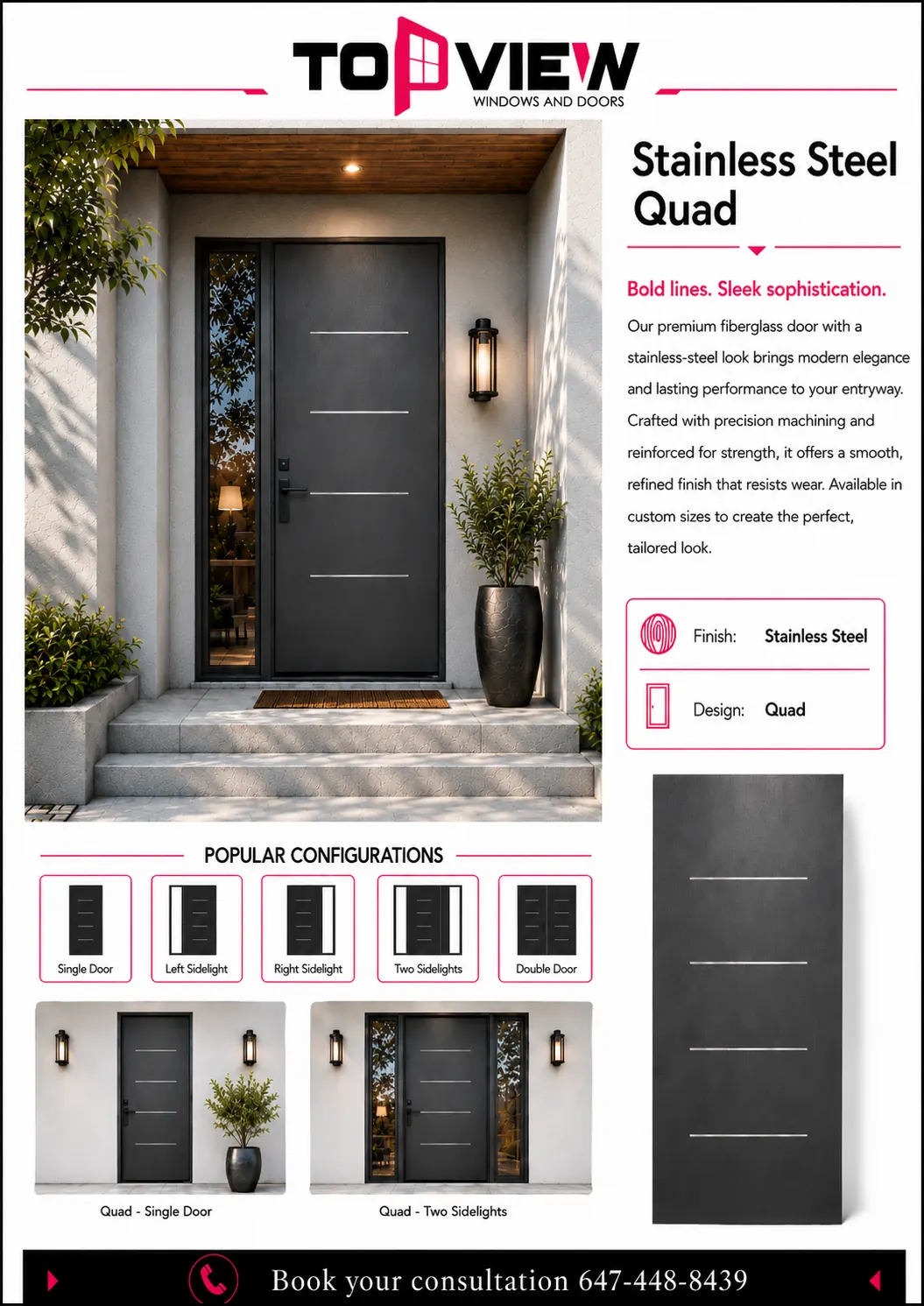
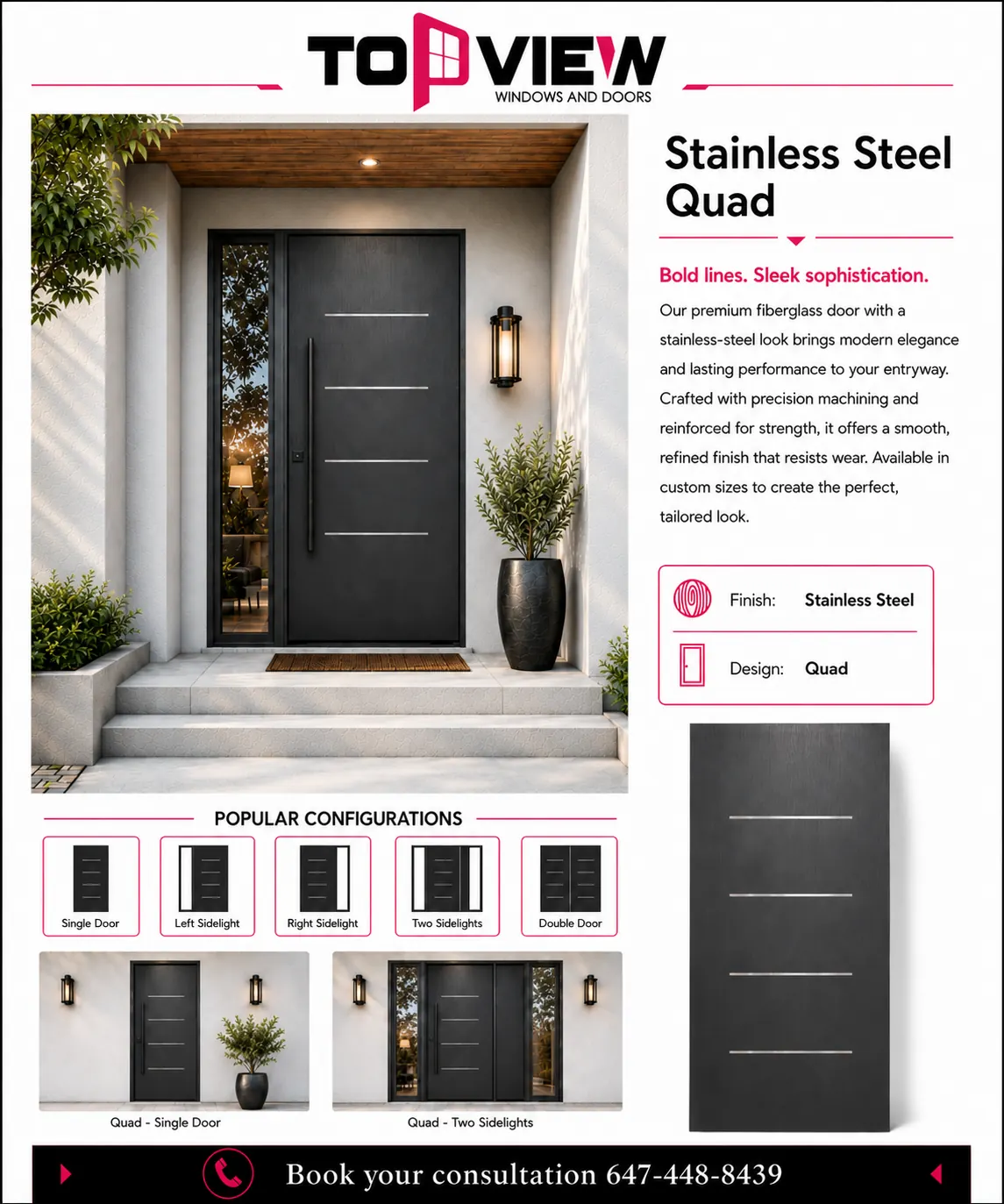
Stainless Steel Quad
Bold lines. Sleek sophistication. Our premium fiberglass door with a stainless-steel look brings modern elegance and lasting performance to your entryway.
-

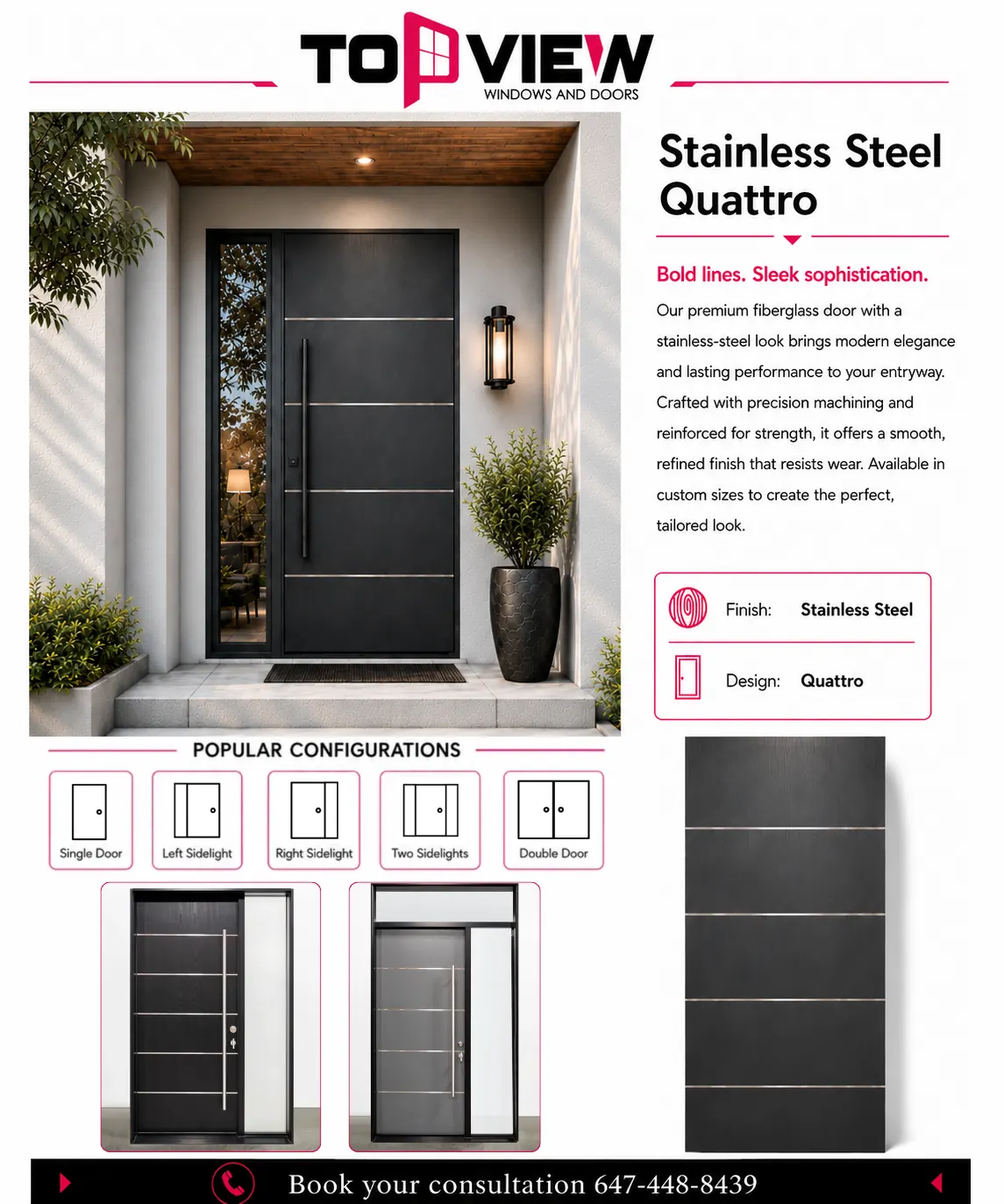
Stainless Steel Quattro
Bold lines. Sleek sophistication. Our premium fiberglass door with a stainless-steel look brings modern elegance and lasting performance to your entryway.
-

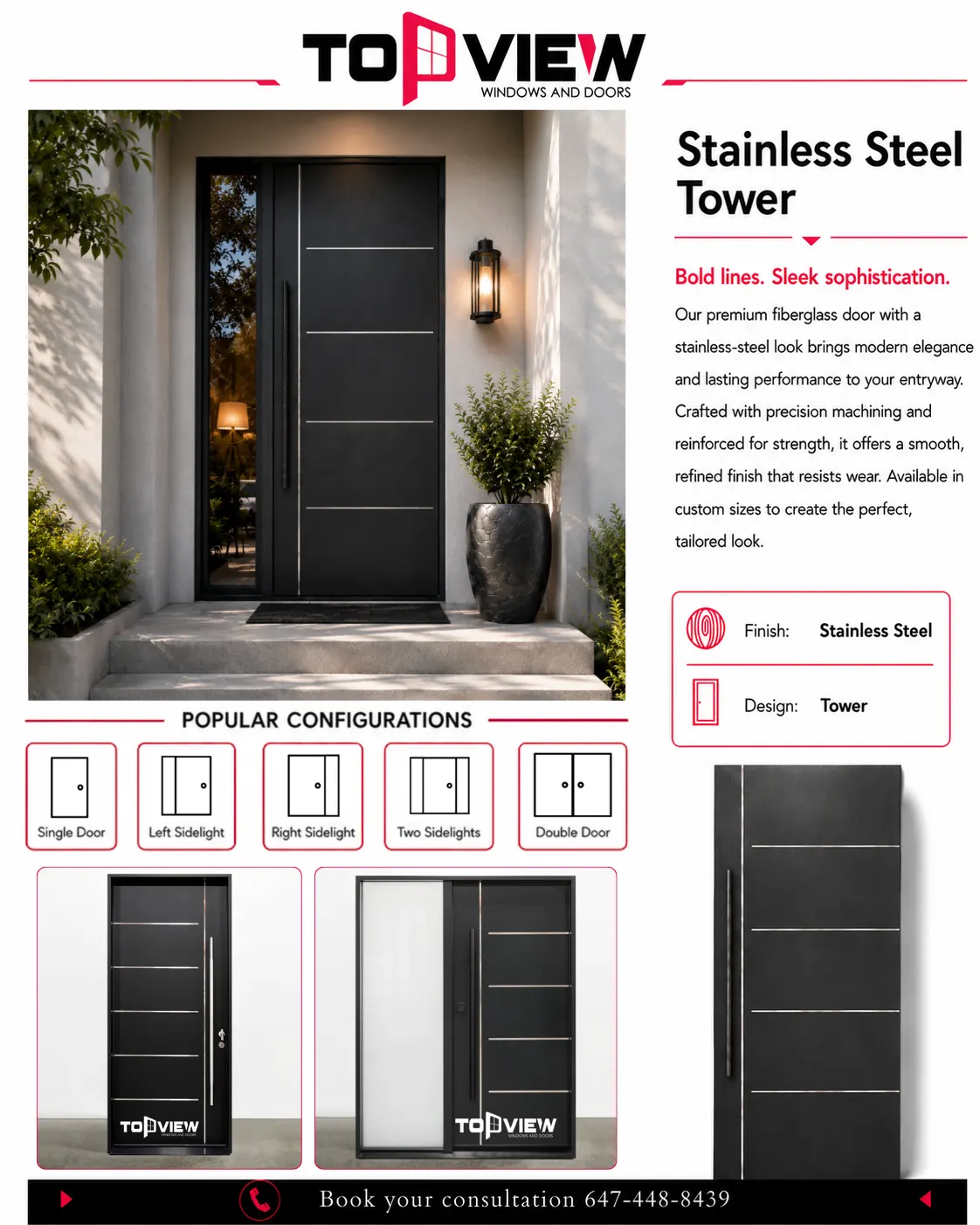
Stainless Steel Tower
Bold lines. Sleek sophistication. Our premium fiberglass door with a stainless-steel look brings modern elegance and lasting performance to your entryway.
-

Stainless Steel Vision 2.0
Sleek lines. Modern strength. Stainless Steel Vision blends clean contemporary design with durable construction.
-

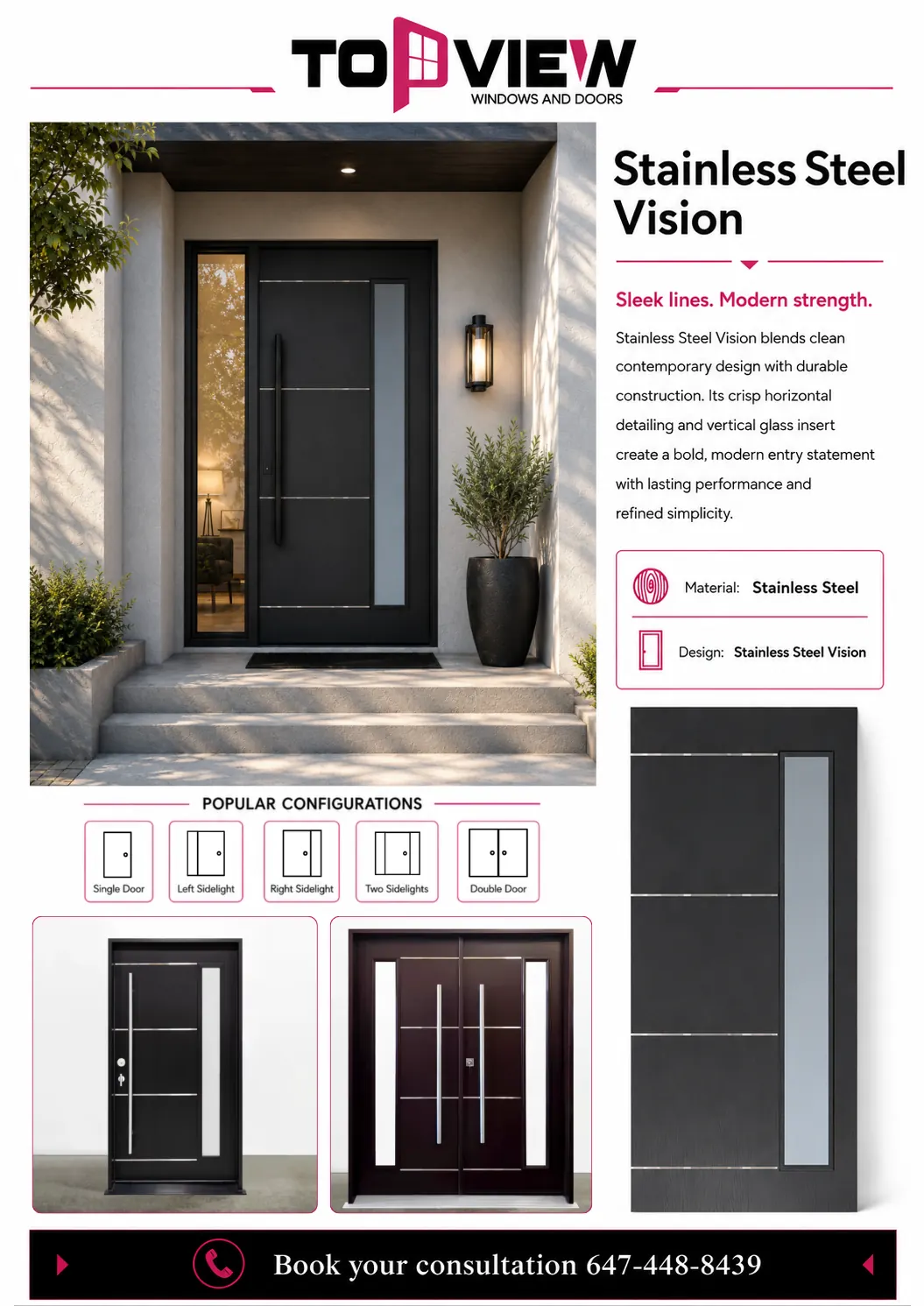
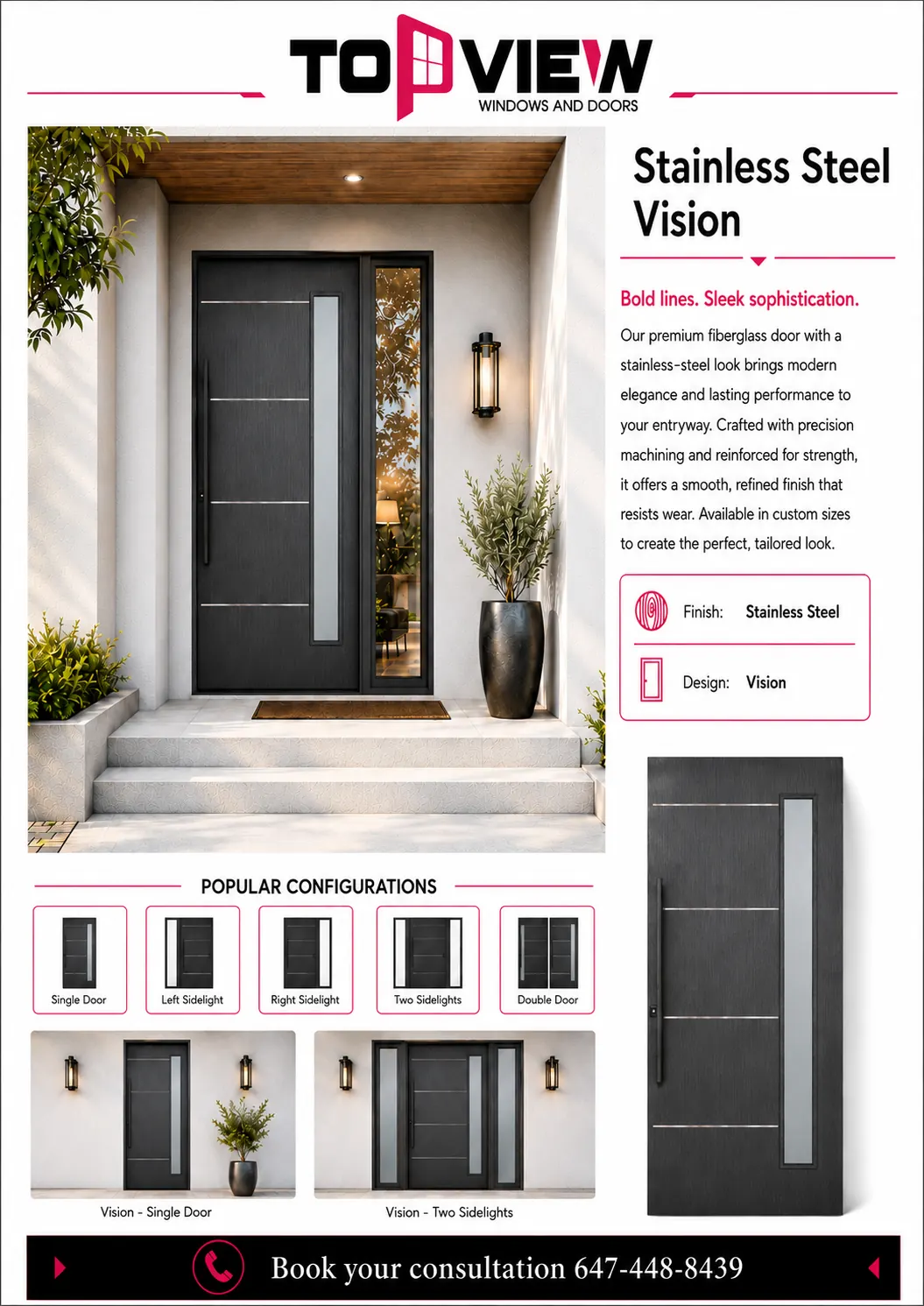
Stainless Steel Vision
Bold lines. Sleek sophistication. Our premium fiberglass door with a stainless-steel look brings modern elegance and lasting performance to your entryway.
-

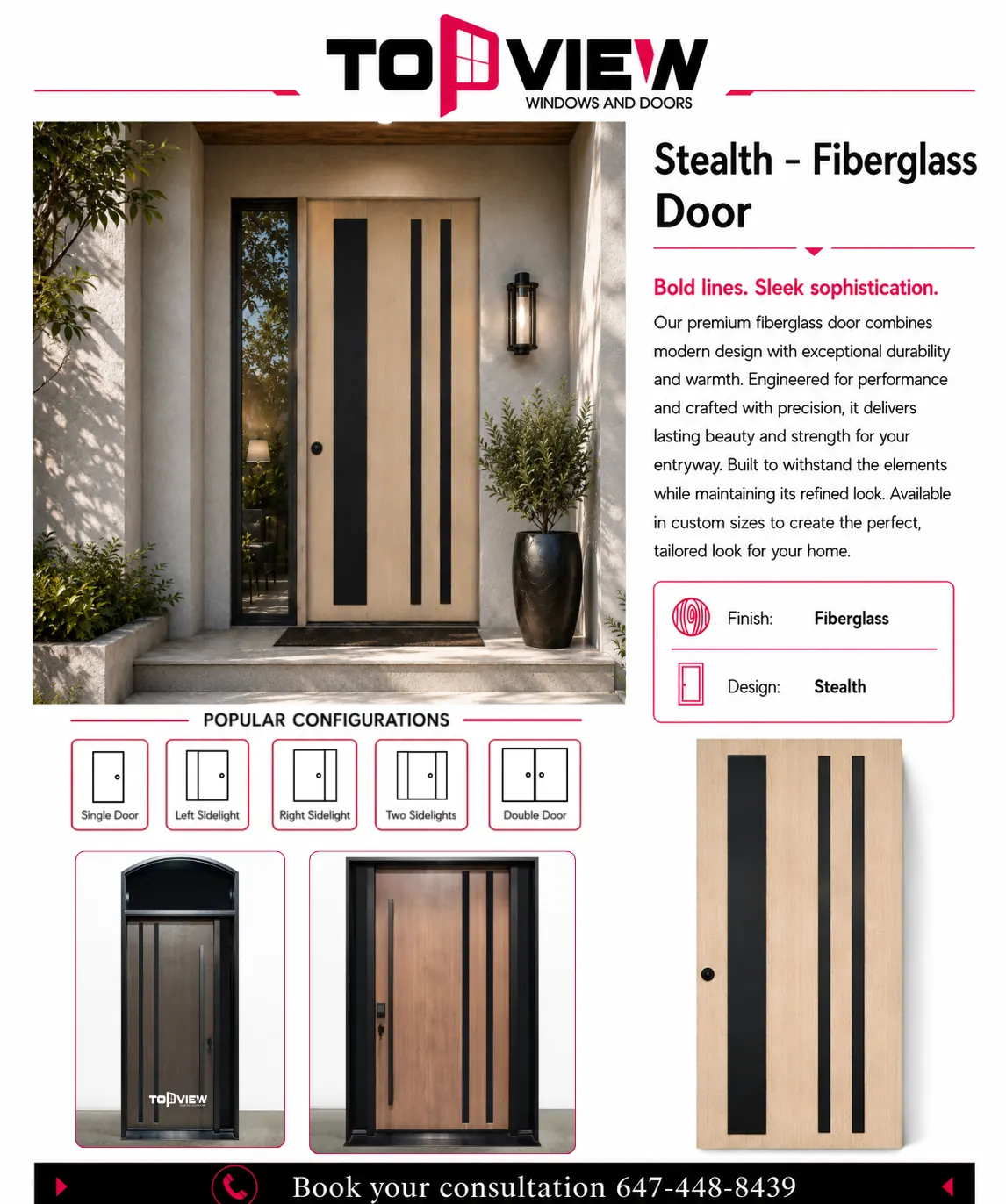
Stealth
Bold lines. Sleek sophistication. Our premium fiberglass door combines modern design with exceptional durability and warmth. Engineered for performance and crafted with precision, it delivers lasting beauty and strength for your entryway.
-
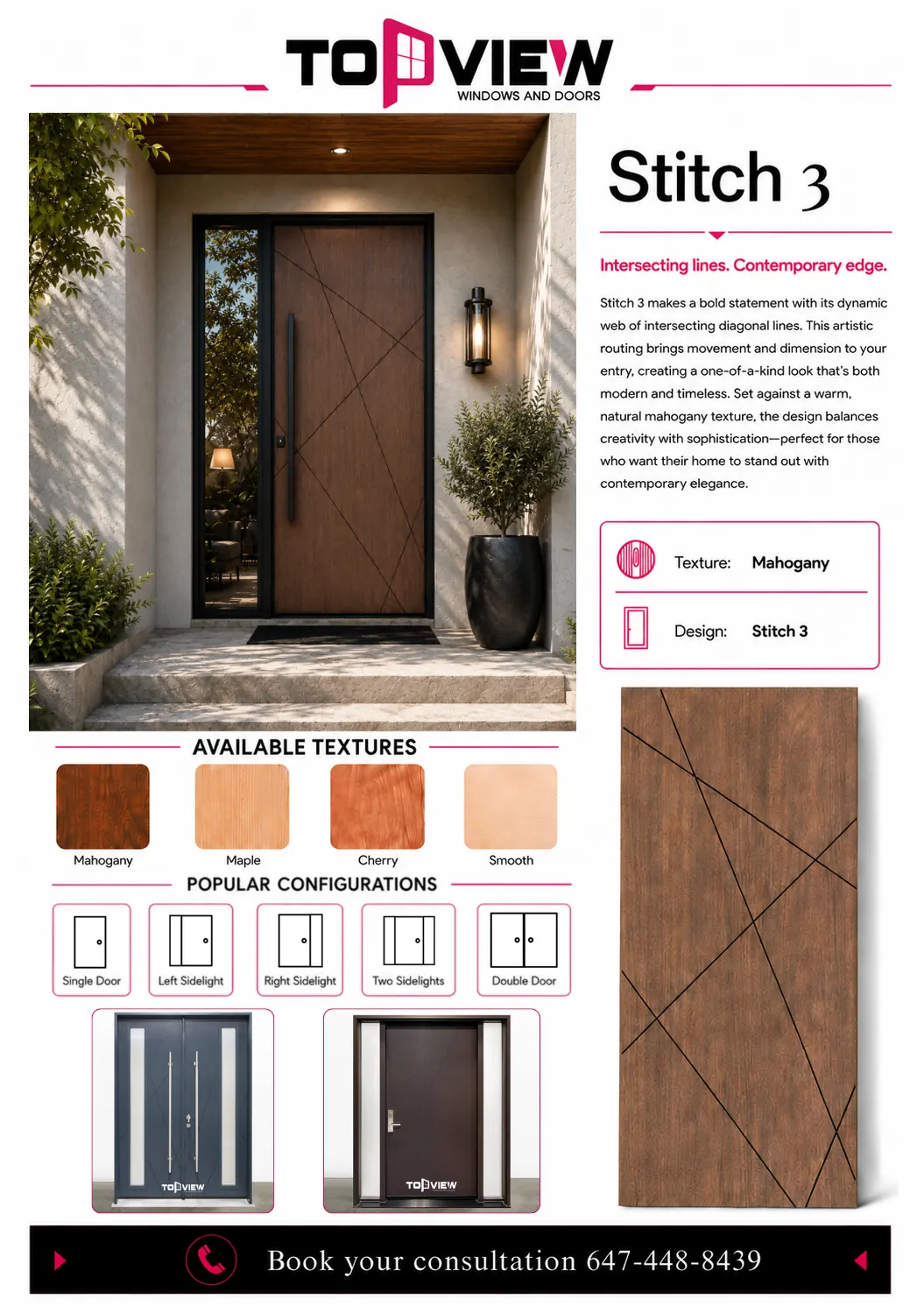
Stitch 3
Intersecting lines. Contemporary edge. Stitch 3 makes a bold statement with its dynamic web of intersecting diagonal lines.
-

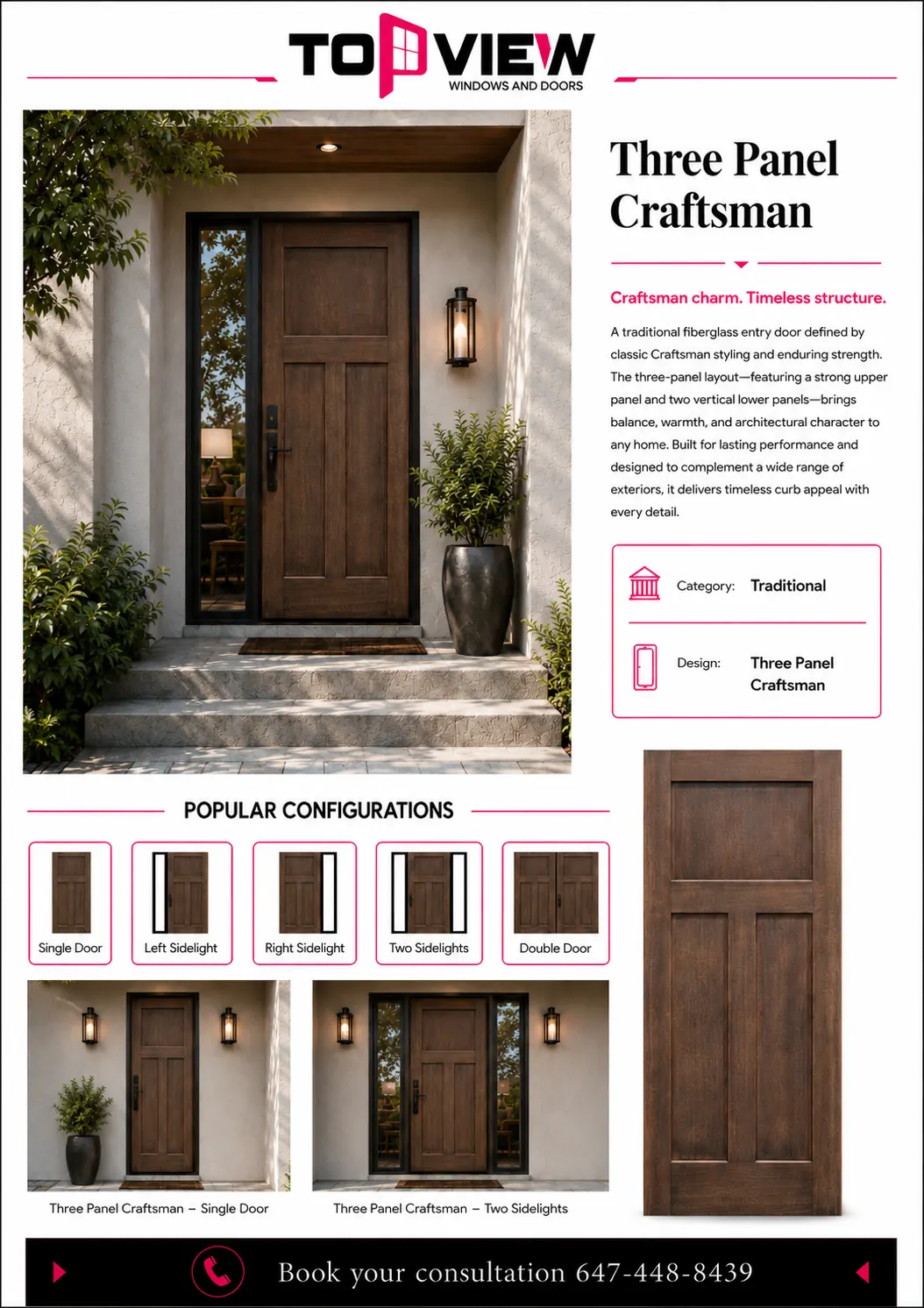
Three Panel Craftsman
Craftsman charm. Timeless structure. A traditional fiberglass entry door defined by classic Craftsman styling and enduring strength.
-
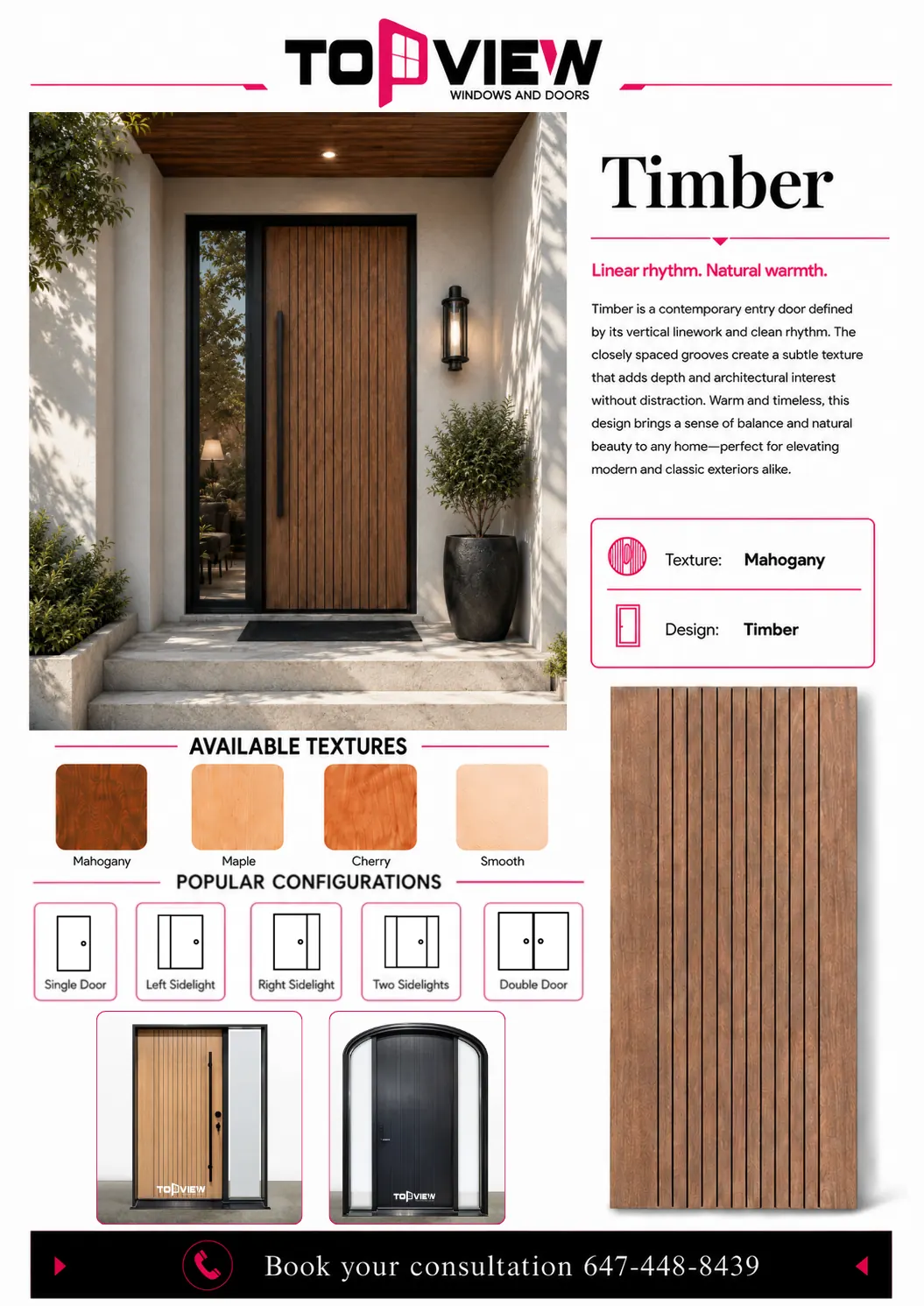
Timber
Linear rhythm. Natural warmth. Timber is a contemporary entry door defined by its vertical linework and clean rhythm. The closely spaced grooves create a subtle texture that adds depth and architectural interest without distraction.
-

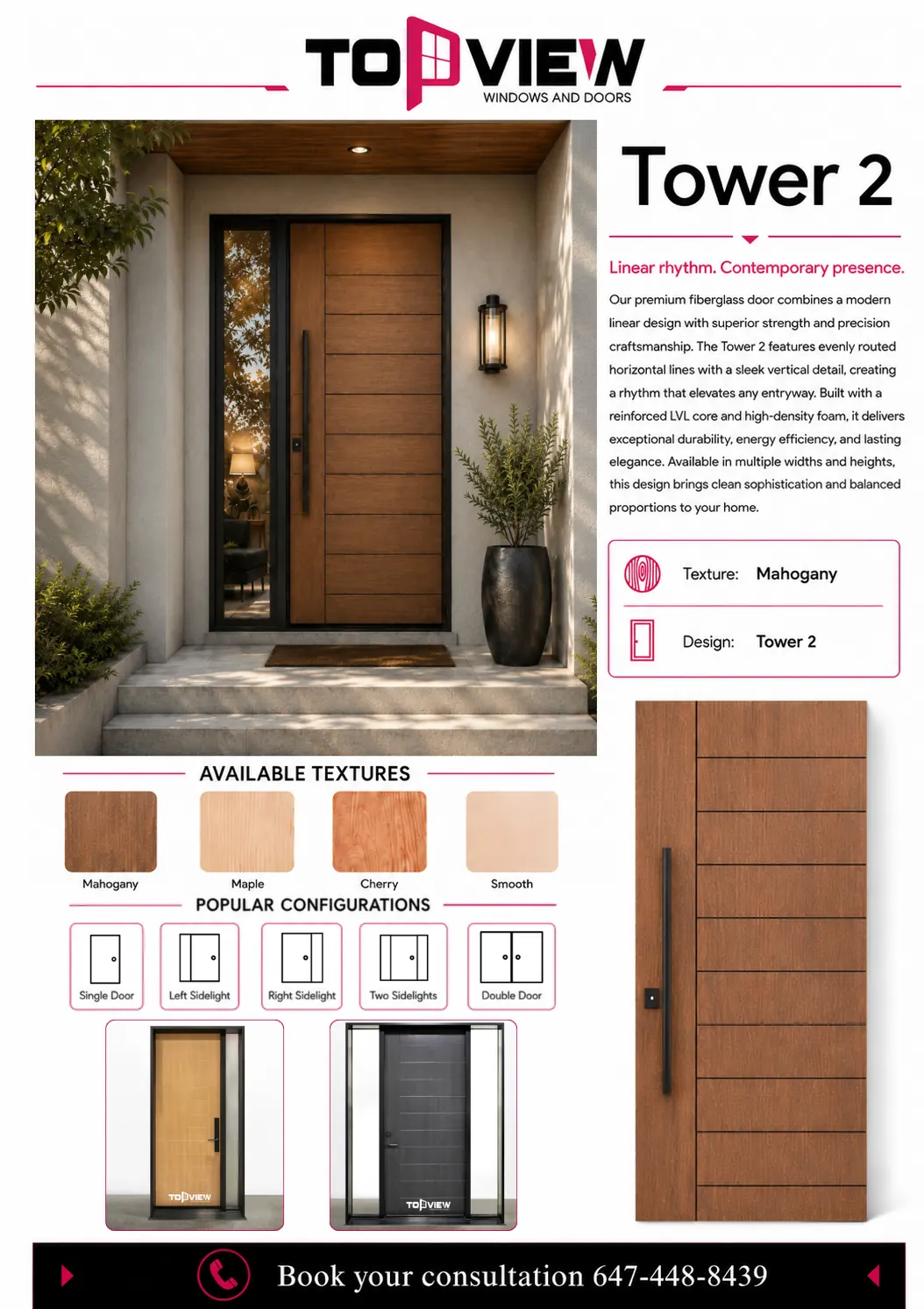
Tower 2
Linear rhythm. Contemporary presence. Our premium fiberglass door combines a modern linear design with superior strength and precision craftsmanship.
-

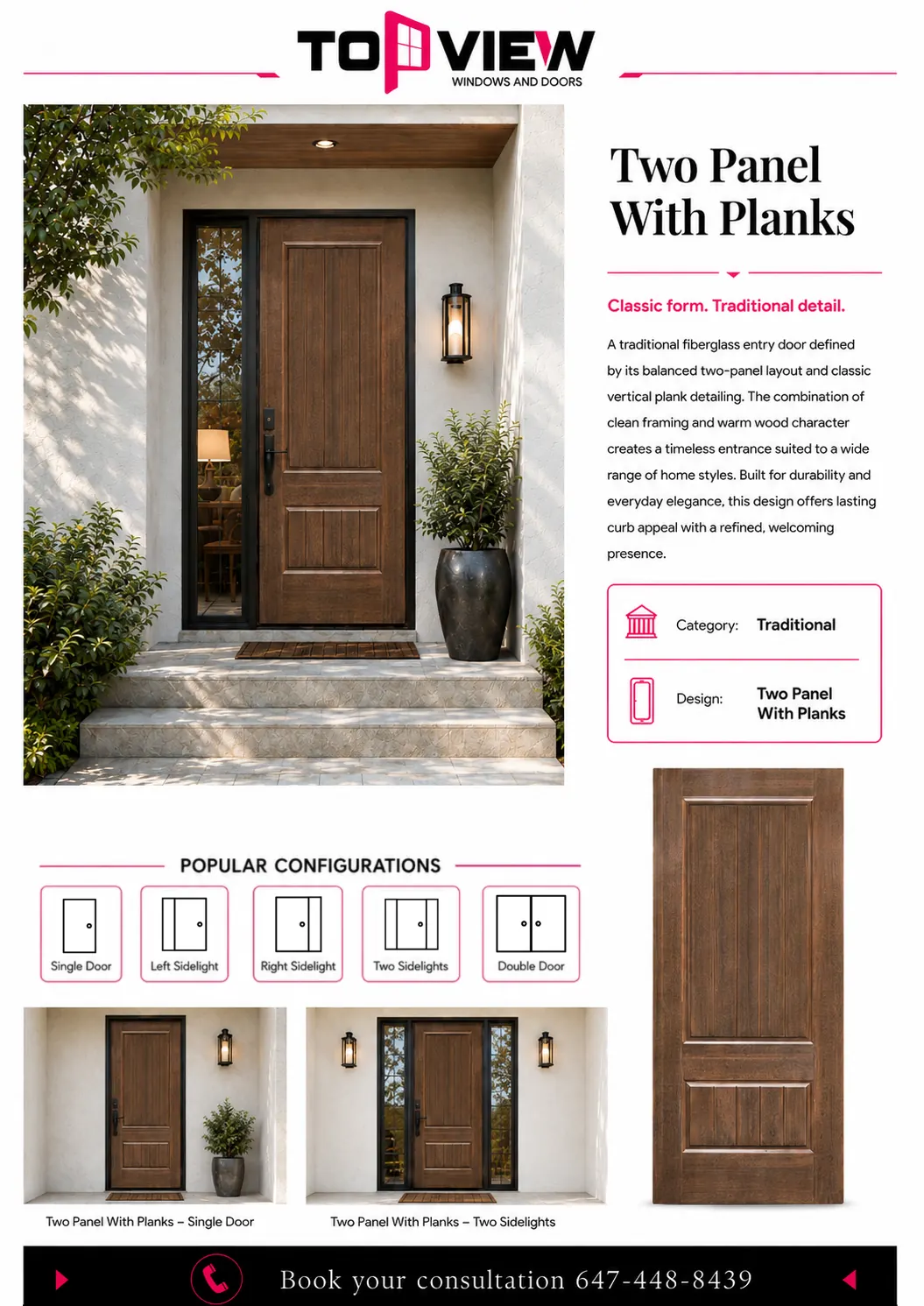
Two Panel With Planks
Classic form. Traditional detail. A traditional fiberglass entry door defined by its balanced two-panel layout and classic vertical plank detailing.
-

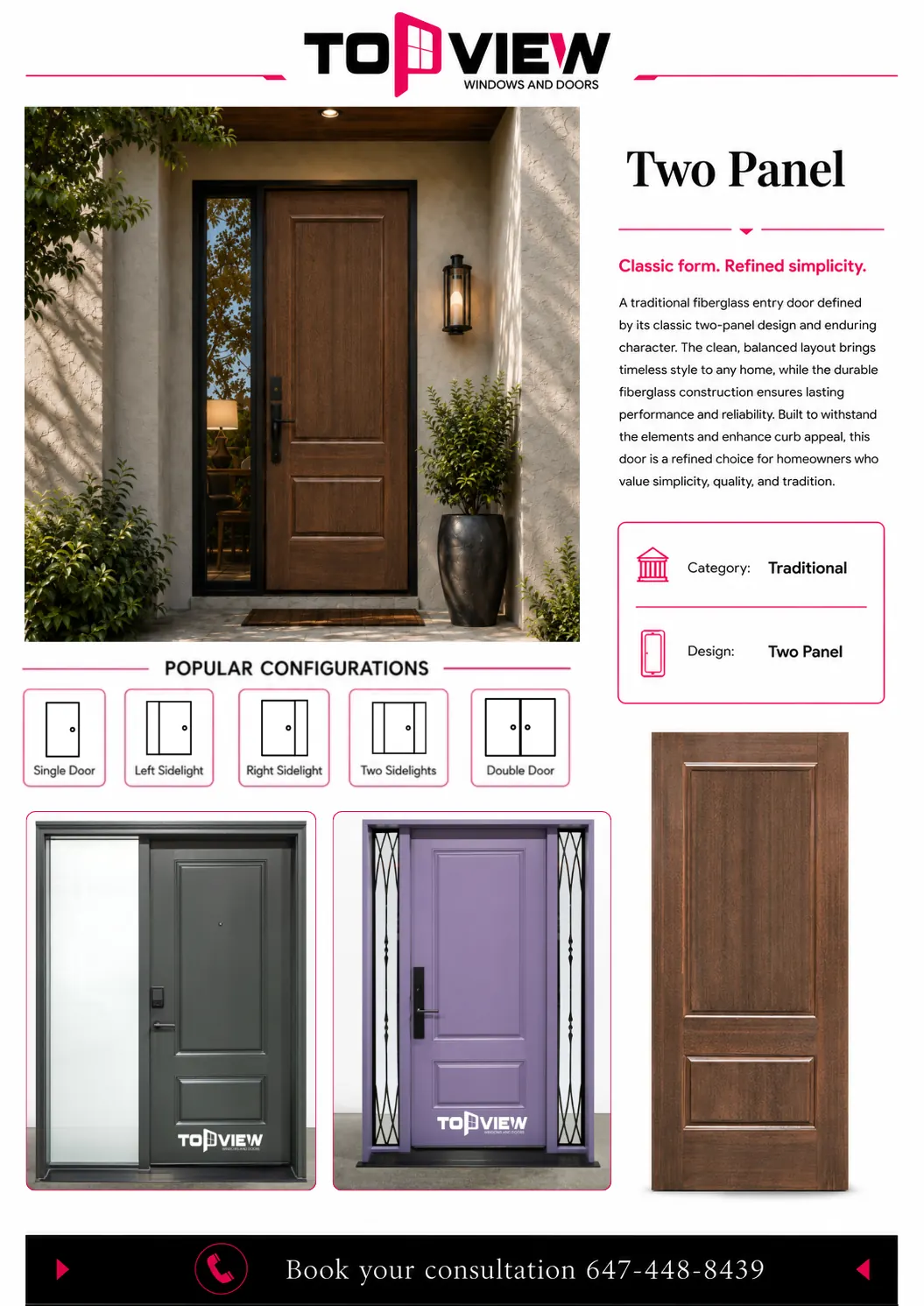
Two Panel
Classic form. Refined simplicity. A traditional fiberglass entry door defined by its classic two-panel design and enduring character.
Every fibreglass door we install
-
Slab and core
Compression-moulded fibreglass skins over a polyurethane core up to R-11, with composite stiles and rails so the edges cannot wick moisture.
-
Frame, sill and sill pan
Rot-proof composite jamb, adjustable aluminum sill with a thermal break, and a sill pan beneath — the same water detail we use on every entry door.
-
Multi-point hardware
Three-point locking, reinforced strike into the framing, security hinges and a one-inch deadbolt throw. Security does not change with the material.
-
Finish and warranty
Factory stain or paint with a colour warranty, compression weatherstrip on four sides, and exterior capping finished to match the window trim.
Fibreglass door installation across Simcoe County
Barrie, Innisfil, Oro-Medonte, Wasaga Beach and the townships between them. One day per opening, the 13% HST off your quote, and the paperwork prepared for the Enbridge Home Renovation Savings rebate at $100 per rough opening where the project qualifies.
What you gain, and what it costs
Fibreglass sits above steel on price and below custom timber, and it is the material we recommend when the opening faces weather or when the house wants a wood look without the upkeep.
- Warmer core than steel and no thermal bridging through the skin
- Costs more than steel for the same size — the premium buys stability and finish
- Cannot be dented, but a deep gouge is harder to repair invisibly than paint on steel
- For a modern look with slim frames and big glass, aluminum does what fibreglass cannot
Signs your entry door is done
Wood and older composite doors go the same way. Once the slab itself has moved, adjusting the strike only buys a season.
- The slab has cupped or twisted and touches the stop only at one corner
- Finish is flaking or chalky on the sun-facing side
- You can see daylight at the top corner with the door closed and locked
- The bottom rail is soft, dark or delaminating
- Cold air pours in at the hinge side when the wind gets up
- Any glass insert has fogged — the sealed unit has failed
From measure to finished opening
Five steps, the same on every entry door we fit.
-
Free measure at your door
We measure the rough opening, check the frame for rot and square, and look at how the wall is finished. Twenty minutes, no charge, no pressure.
-
Written quote
One price for slab, frame, hardware, capping and disposal, with the 13% HST discount already applied. Nothing gets added on install day.
-
Order and build
Your door is built to the opening we measured. Two to five weeks depending on colour, glass and hardware — we confirm the date once the unit is in.
-
Installation day
Old unit out, sill pan in, new frame shimmed plumb and foamed with low-expansion foam, hardware set and adjusted. One day for a single entry door.
-
Walk-through and paperwork
We show you the lock adjustment, hand over the warranty, and prepare what the Enbridge rebate needs if your project qualifies.
Fibreglass doors we have fitted
Stained grain, sealed glass and capping cut on site — replacements in existing openings across Simcoe County.

Craftsman fibreglass with dentil shelf
Full-lite fibreglass, oak stain
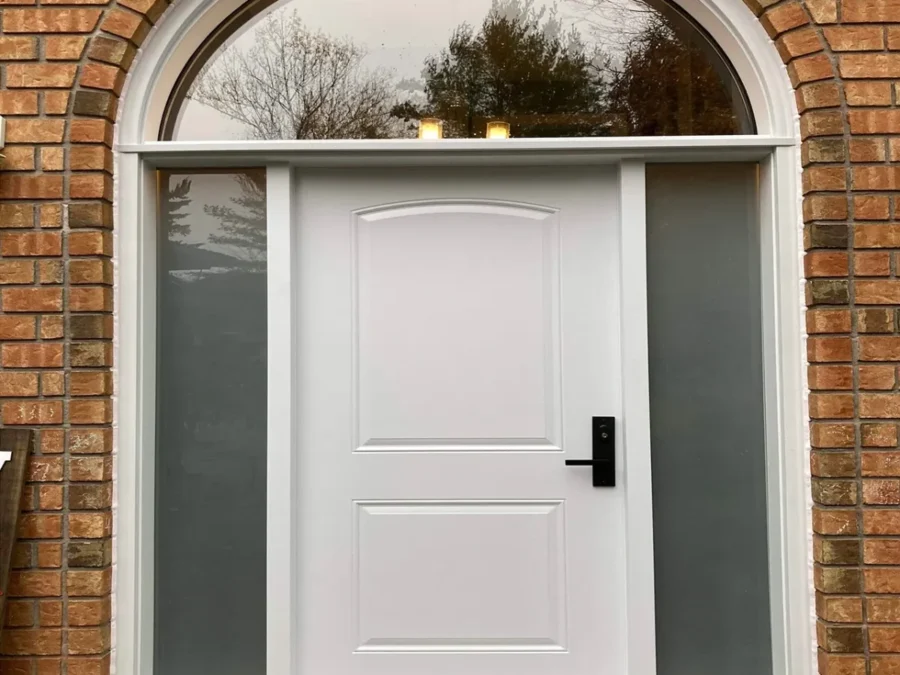
Door with transom, painted white
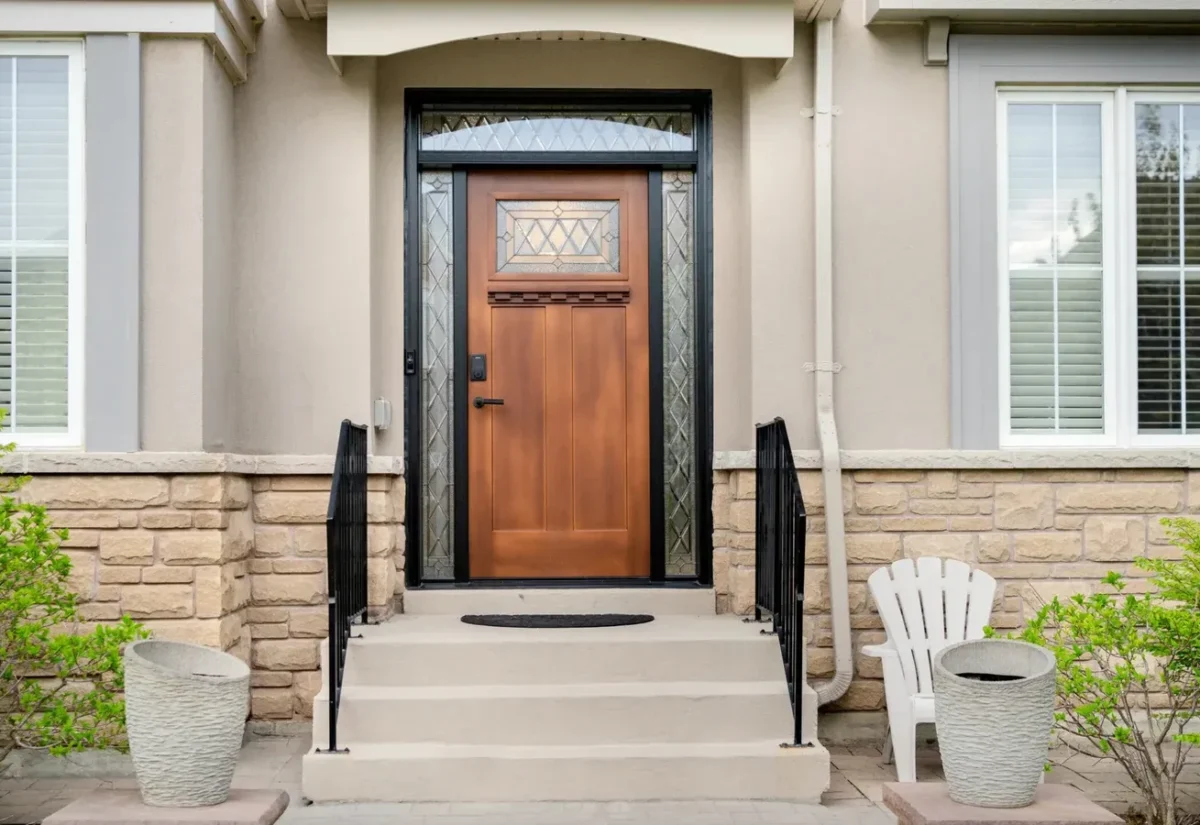
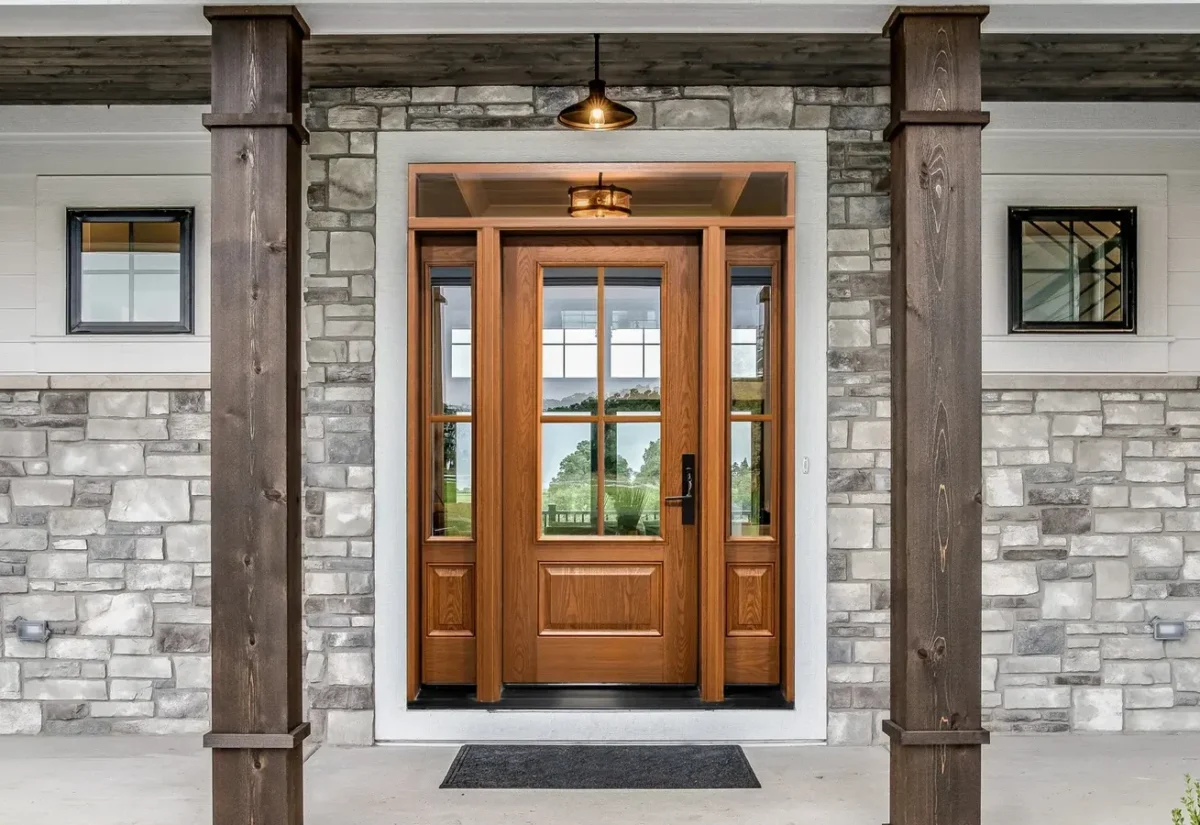
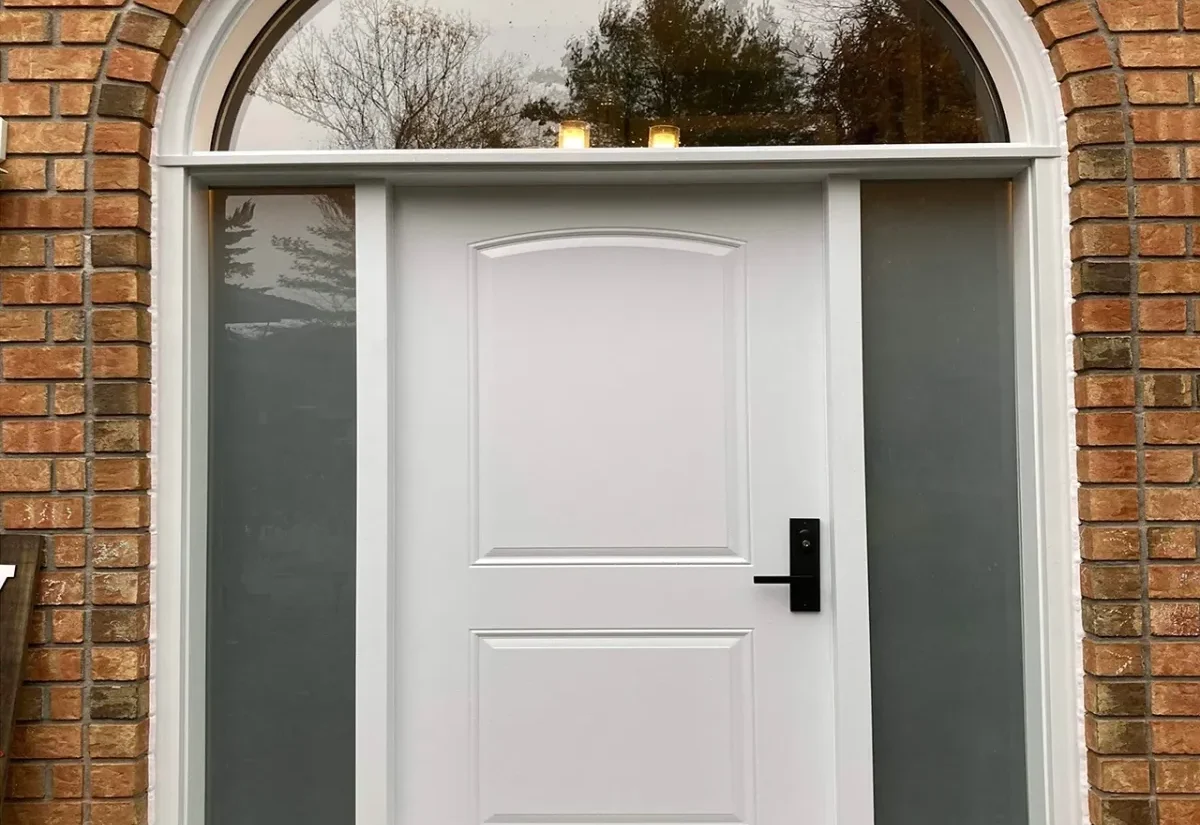
«We wanted the look of a stained wood door without sanding it every other summer. Three winters in, it still looks like the day it went on.»
Fibreglass doors — the questions we get
Finish, insulation, cost and how it compares.
For insulation and stability, yes: the core runs warmer and the slab does not conduct cold the way a metal skin can. For raw impact resistance, steel is still the tougher face — see our steel doors if security is the deciding factor.
Yes. The moulded grain takes gel stain the way oak does, and the finish is applied at the factory so it cures under controlled conditions. Bring us a sample of your trim and we will match it before the door is built.
Expect roughly 20 to 40 percent more for the same size and hardware, depending on glass and finish. The premium buys a warmer core and a face that will not dent — worth it on an exposed elevation, less critical on a sheltered side door.
If the unit is ENERGY STAR® certified, it counts as one rough opening at $100 through the Home Renovation Savings Program, run by Enbridge Gas with Save on Energy and funded to 30 November 2026. We quote certified product and supply the documentation.
Far less than paint on steel or timber. Factory finishes carry a colour warranty, and fibreglass does not expand and contract enough to crack the coating — the usual reason a painted door starts to look tired after a few summers.
On a tight budget or where raw impact resistance matters most, steel is the better buy. On a wide opening with a lot of glass — a pivot entrance, a wall of sliding panels — aluminum is the only material that carries it. The comparison across all materials is on our entry doors page.