Updated October 31, 2026
It’s time to replace your front door when you can feel a draft with it closed, see rot, rust or fog between the glass panes, have to force it to latch, feel the inside face go ice-cold, or still rely on a single worn deadbolt. One sign can often be repaired; two or more usually mean replacement is the better money. Windows, doors and skylights can account for up to 35% of a home’s heat loss, according to Natural Resources Canada. Here is how to check each sign in five minutes before a Barrie winter.
Quick checklist: repair or replace?
| Sign | 5-minute test | Usually enough to repair | Time to replace |
|---|---|---|---|
| Draft | Tissue strip along the edges on a windy day | Worn weatherstripping or door sweep | Warped slab or frame out of square |
| Rot, rust or foggy glass | Screwdriver test on the bottom rail; look between the panes | Fogged glass insert on an otherwise sound door | Soft wood or rust at the bottom |
| Hard to close or lock | Does it latch with a light push? | Hinge or strike plate adjustment | Frame has shifted |
| Ice-cold inside face | Hand on the door on a cold morning | — | Solid or uninsulated slab |
| Single old deadbolt | Check the jamb around the strike plate | New hardware in a solid frame | Soft or split wood jamb |
In Barrie and across Simcoe County the front door takes the worst of the season: snow piled against the sill, salt and slush on the threshold, and swings from a thaw to a hard freeze in the same week. A door that is already failing in October will not get better by February.
1. Can you feel a draft with the door closed?
Stand by the closed door on a cold, windy day. If you feel moving air, or the entry is clearly colder than the rest of the house, the seal is gone. Hold a lit incense stick or a strip of tissue along the edges: where it flickers, air is getting in.
Worn weatherstripping and a tired door sweep can be replaced on their own, and that is the first thing to try. If the draft comes back because the slab has warped or the frame has moved out of square, no amount of caulking will close the gap. That is when replacement makes sense. A new insulated fibreglass door or steel door comes with compression weatherstripping and an adjustable sill that seal on all four sides.
2. Is there rot, rust or fog in the glass?
Look at both faces of the door, and especially the bottom 30 cm, where snow sits and salt collects.
- Wood rot. Push a screwdriver into the bottom rail and the frame near the sill. If the wood is soft or crumbles, the door has lost both its seal and its strength.
- Rust and dents on steel. Once the coating wears through, rust spreads under the paint and lets moisture reach the insulated core.
- Fog between the panes. Condensation inside a glass insert means the sealed unit has failed and the gas fill has escaped. On some doors the glass insert can be replaced on its own; if the door also has other problems on this list, replacing the whole unit is usually the better money.
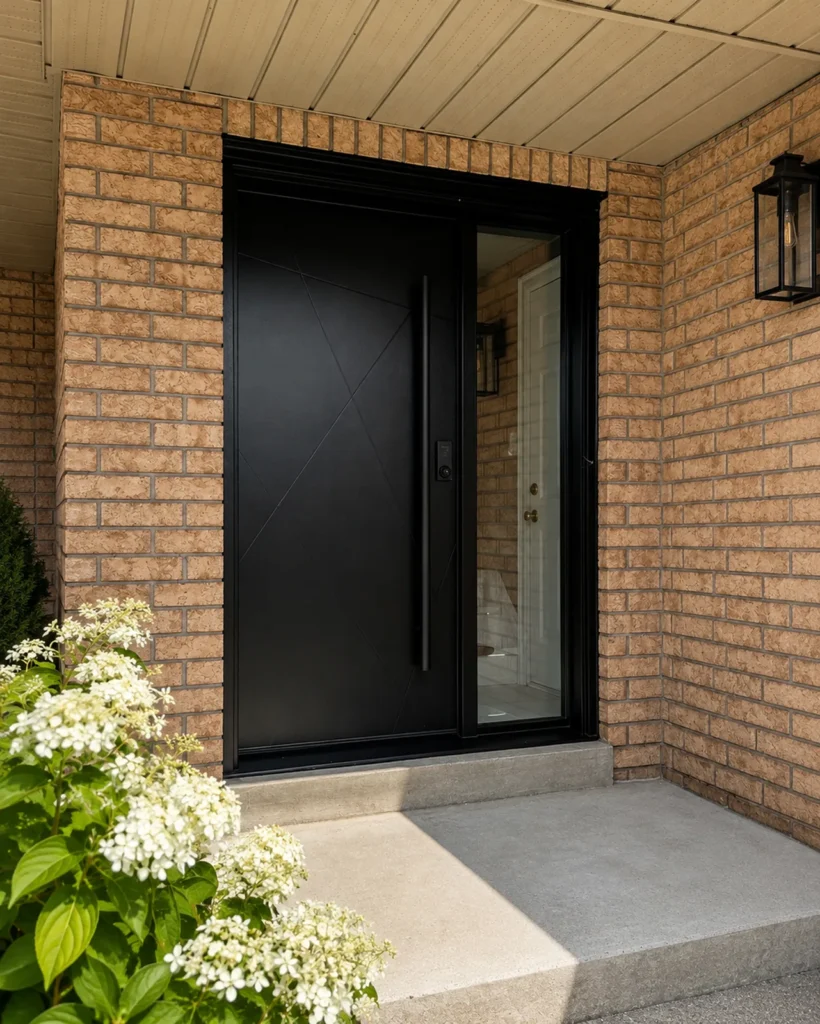
Fibreglass doors take a wood-grain finish without the risk of rot, and insulated steel doors are the strongest value choice. Our guide to choosing an entrance door compares them side by side.
3. Do you have to force it to close or lock?
A front door should latch with a light push. If you have to lean on it, lift it, or jiggle the key, the slab or frame has shifted. Ontario’s freeze-thaw swings and a settling house throw the lock and strike plate out of line.
This matters for more than comfort. A door that does not latch fully does not compress its weatherstripping, so it leaks air and water, and a sticking door is a problem when you need to get out quickly. Sometimes adjusting the hinges and strike plate fixes it. If the frame itself is out of square, the fix is a new door hung plumb and level in a properly shimmed and insulated opening.
4. Does the inside face go ice-cold in winter?
Put your hand on the inside of the door on a cold morning. An old solid-wood or uninsulated door can feel almost as cold as the outside. That cold surface cools the whole entry and makes the furnace work harder.
Natural Resources Canada notes that doors with an insulated core are more thermally resistant than solid doors. Modern steel and fibreglass entry doors have a foam core. If your heating bills keep climbing and the entry is the cold spot in the house, the door is a likely cause.
5. Is your lock a single old deadbolt in a soft frame?
The weak point on an older door is often the frame, not the lock: a soft wood jamb can split around the strike plate. A single deadbolt in an old wood frame offers little resistance.
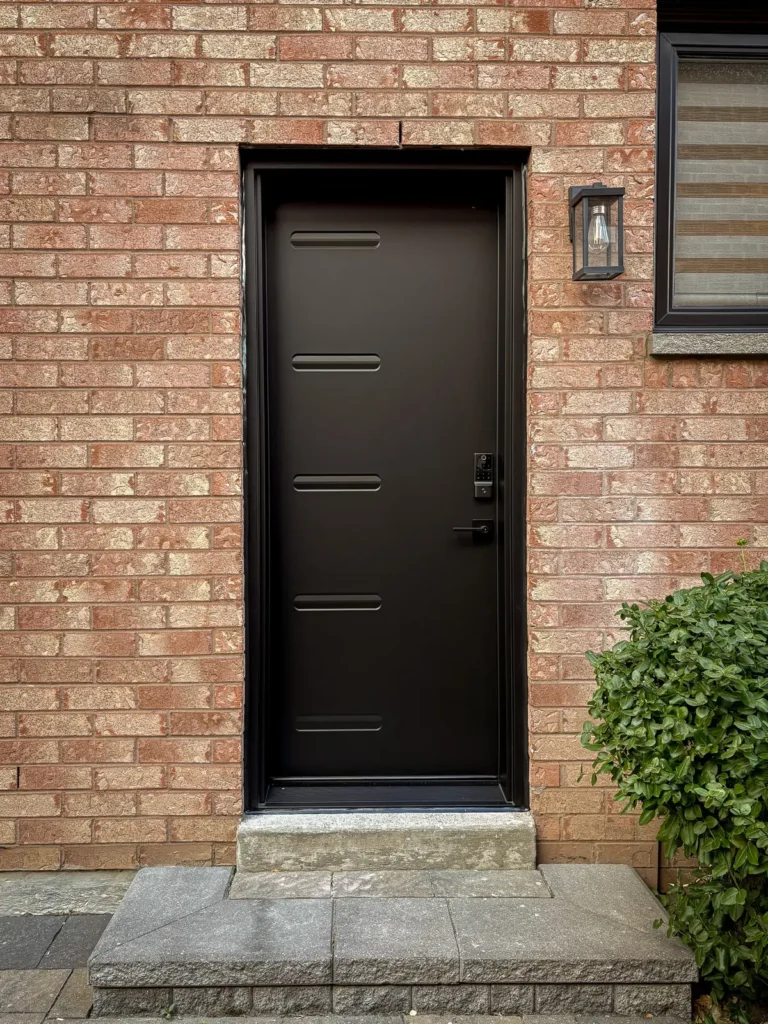
Our secured entrance doors lock at three points instead of one, with a reinforced strike plate anchored into the stud and a steel-reinforced frame and hinge side.
Repair or replace: a quick rule
Replace the weatherstripping, sweep or hardware if the door itself is sound and only one thing is wrong. Replace the door if two or more of the signs above apply, if there is rot or rust at the bottom, or if the frame is out of square. Not sure which one you have? Send us a photo.
Who replaces front doors in Barrie and Simcoe County?
TopView Windows & Doors replaces entry doors in Barrie, Innisfil, Bradford, Newmarket and homes across Simcoe County and York Region. Entry doors go in 5–6 weeks after you sign, and a standard door replacement is a half-day job.
Not sure if your door will make it through another winter? Send us a photo of your door on WhatsApp and we will tell you whether it needs a repair or a replacement, or call (647) 448-8439.